Last Updated: October 21, 2026
- Top Pick: YATOJUZI 500pcs Fake Ice Cubes Clear Vase Fillers Fish Tank Aquarium Decorations DIY Craft Accessories Acrylic Crushed Rocks Plastic Diamonds Gems for Dinning Table Centerpiece Wedding Birthday Party
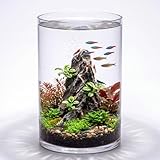
- Best Value: Vimvins 2 Gallon Glass Fish Tank, Easy to Maintain Small Aquarium for Betta/Snails/Shrimp and Aquatic Planting.
- Premium Choice: AWXZOM Small Nano Rimless Tank, Clear Glass Fish Tank, 1.1 Gallon, 7.8×5.5×5.9inch/20x14x15cm, Betta Fish Tank

TL;DR: Glass tanks are cheaper, scratch-resistant, and won’t yellow — ideal for most hobbyists. Acrylic is lighter, stronger under impact, and bends into custom shapes but scratches easily and costs 2–3x more. For standard rectangular setups, glass wins on value. For large display tanks 150+ gallons or oddly shaped builds, acrylic makes sense.
Aquarium Glass vs Acrylic: Which Tank Material Actually Wins in 2026?
The aquarium glass vs acrylic debate never gets old — and it shouldn’t. The material your tank is made from affects everything: optical clarity, structural integrity, maintenance burden, and long-term cost. Get this wrong and you’re stuck with a 75-gallon commitment that drives you crazy every time you try to scrape algae.
As an Amazon Associate we earn from qualifying purchases at no extra cost to you.




I’ve kept both over 15+ years of aquascaping. This breakdown covers real-world tradeoffs — not marketing copy from manufacturers.
🛒 Best Price Today on Amazon
Prime members get fast, free shipping on everything above, plus member-only deals. New members get a 30-day free trial — cancel anytime.
Start 30-Day Prime Free Trial →See Today’s Amazon DealsTop Picks at a Glance




As an Amazon Associate we earn from qualifying purchases. Product prices and availability are accurate as of the date/time indicated.



As an Amazon Associate we earn from qualifying purchases. Product prices and availability are accurate as of the date/time indicated.


As an Amazon Associate we earn from qualifying purchases. Product prices and availability are accurate as of the date/time indicated.
Material Comparison: The Core Specs
| Property | Glass | Acrylic |
|---|---|---|
| Scratch resistance | Excellent (9H hardness) | Poor (scratches with algae pads) |
| Optical clarity | Slight green tint (tempered) | Water-clear, no tint |
| Weight (per gallon) | ~10 lbs/gal | ~5 lbs/gal (50% lighter) |
| Impact resistance | Shatters under point impact | 17x stronger than glass |
| UV yellowing | None | Yellows over 10–15 yrs without UV stabilizers |
| Typical price (50 gal) | $150–$350 | $300–$700 |
| Custom shapes | Limited (flat panes) | Seamless curves, cylinders, bow-fronts |
| Thermal insulation | Low | Slightly better (relevant for chillers) |
| Silicone seams | Visible seams, can fail | Chemically bonded — no silicone joints |
Where Glass Wins
Scratch resistance is the biggest real-world advantage. Planted tank hobbyists scrape algae constantly — CO2 drives algae growth and you’ll be running a blade across the glass weekly. With acrylic, standard algae pads leave micro-scratches that accumulate into a hazy surface over 2–3 years. Glass stays optically clear indefinitely.
Glass also doesn’t require special acrylic-safe cleaning products. You can use standard aquarium scrapers, razor blades on stubborn spots, and virtually any algae magnet without worry. That matters when you’re deep into a water change at 11pm and just grabbing whatever’s handy.
Cost is the other obvious win. A quality 40-gallon breeder in glass runs $120–$200. The same volume in cast acrylic from a reputable brand starts at $280 and climbs fast. For most hobbyists running multiple tanks — a dedicated shrimp tank, a livebearer breeding setup, a hospital tank — glass just makes economic sense.
Where Acrylic Wins
Weight and impact are acrylic’s genuine strengths. A 125-gallon glass tank weighs roughly 210 lbs empty — before substrate, rocks, water, or stand. The same volume in acrylic cuts that to ~105 lbs. For second-floor installations or custom cabinetry with weight limits, this matters structurally.
Acrylic also won’t catastrophically shatter from a point impact — a dropped rock, a slip with a powerhead during maintenance. Glass failure in a large tank is a flooding event. Acrylic typically cracks locally and holds water long enough to respond.
Custom shapes are exclusively acrylic territory. Cylindrical pillars, seamless panoramic bow-fronts, integrated sumps bonded to display tanks — none of that exists in glass at a reasonable price. If your aquascape vision involves non-rectangular geometry, acrylic is the only practical path.
Acrylic also insulates marginally better — relevant if you’re running a chiller during summer months or need stable temperature in a lightly climate-controlled room. The insulation factor is small (maybe 1–2°F difference) but combined with lighter weight, it helps with chiller efficiency. See our guide to aquarium chiller selection for summer for how tank material factors into cooling load calculations.
Acrylic Scratch Repair: Better Than You Think
One underrated point: acrylic scratches can actually be polished out. Novus Plastic Polish (3-step system) removes light-to-moderate scratching without draining the tank if you work on the exterior. Glass scratches — from gravel contact during moves, from calcium buildup removal — are permanent.
So long-term clarity potential flips: glass starts optically superior but has no recovery path; acrylic degrades then can be restored. For show tanks where appearance is the point, this matters.
What About Rimless vs Braced?
Both materials come rimless or braced. Glass rimless tanks require thicker glass to handle bow pressure — a rimless 60-gallon typically uses 10mm or 12mm glass vs 8mm for braced. Acrylic handles rimless construction more naturally given its tensile strength. If rimless aesthetics are non-negotiable for your see aquarium led light planted comparison or Co2 Aquarium System Beginner Setup, factor in this cost difference.
Decision Framework
Choose glass if: budget is under $400, tank is under 100 gallons, standard rectangular shape, high maintenance frequency (planted tanks, cichlid tanks), floor installation, multiple-tank fishroom.
Choose acrylic if: tank is 150+ gallons, second-floor or weight-restricted location, custom shape required, display tank in living space where aesthetics dominate, reef sump integrated builds.
FAQ
Does acrylic yellow and is it reversible?
Budget acrylic yellows within 5–8 years from UV exposure and heat. Cast acrylic with UV stabilizers (common in quality brands) resists this for 15+ years. Once yellowed, exterior polish helps slightly but deep UV yellowing affecting the full thickness is not reversible. Buy UV-stabilized cast acrylic, not extruded, for long-term display tanks.
Can I use a standard algae magnet on acrylic?
Not safely. Most algae magnets use abrasive pads rated for glass. Use acrylic-safe magnets (felt pads, soft foam) and check for any trapped gravel before wiping — a single piece of gravel dragged across acrylic leaves a visible scratch. Dedicated acrylic scrapers exist; keep them separate from glass tools.
Is tempered glass safe for drilled sumps?
No. Tempered glass cannot be drilled after tempering — attempting it shatters the pane. Only non-tempered (annealed) glass can be drilled for bulkheads. Most commercial aquariums temper the bottom pane and leave side panes annealed — verify before ordering drilling. Acrylic drills cleanly anywhere.
What thickness do I need for a 75-gallon glass tank?
Standard 75-gallon (48″x18″x21″) uses 6mm (1/4″) glass with center brace — sufficient for the span. Going rimless on that footprint requires 10mm minimum. General rule: for every additional 12″ of height on side panes over 18″, go up one glass thickness. Manufacturer specs take precedence over field rules.
Does tank material affect water chemistry or pH?
Neither glass nor standard acrylic leaches chemicals that meaningfully affect aquarium chemistry. Cheap acrylic with uncured plasticizers can off-gas initially — cure new tanks with a few water changes before stocking. Silicone seams in glass tanks are inert once cured. Neither material impacts pH, hardness, or nitrogen cycle. Substrate and hardscape choices are what actually drive chemistry — see our see aquarium substrate planted tank guide for that discussion.
Related Guides
- Aquarium Stocking Density & Bioload Guide: How Many Fish Can You Keep?
- Nano Aquarium Setup Guide: Best Mini Tanks and Equipment
- Aquarium UV Sterilizer Guide
Frequently Asked Questions
Which scratches more easily?
Acrylic scratches very readily, from a single grain of sand caught under a magnet cleaner or even a careless fingernail. Glass is much harder and normally survives routine cleaning intact. The counterpoint is that acrylic scratches can be polished out at home, whereas a scratch in glass is permanent.
Which is stronger and safer for a large tank?
Acrylic is many times more impact resistant and roughly half the weight for a comparable tank, which matters enormously above 150 gallons and on moving day. Glass is more rigid and resists bowing without heavy bracing. Very large custom tanks are usually acrylic for exactly these reasons.
Does one look better?
Acrylic is optically clearer with no green tint and allows seamless bonded corners. Standard glass has a green edge tint, though low-iron glass removes most of it and is now common on rimless tanks. Acrylic can yellow slightly over many years under strong lighting, while glass does not.
Which is better for saltwater?
Both work well. Acrylic insulates better and is easier to drill for plumbing, which suits reef systems, but salt creep and coralline algae mean more frequent cleaning and every clean risks a scratch. Many reefers deliberately choose glass so they can use a blade to remove coralline.
Which is cheaper and easier to find?
Glass is cheaper and available off the shelf in every standard size up to around 125 gallons. Acrylic costs more per gallon and often means a custom order with a wait, though savings on shipping, stand construction and installation labour can close the gap on very large builds.
Best 30-Gallon Fish Tank Stand 2026
Best Mesh Lid for Aquarium: Top Compared DIY Screen Picks