Last Updated: October 21, 2026
- Livebearer Species: Key Differences for Breeding
- Top Picks at a Glance
- Breeding Tank Size and Configuration
- Fry-Safe Filtration: The Critical Detail
- Water Parameters for Livebearer Breeding Success
- Plants and Cover for Fry Survival
- Feeding Fry: Size and Frequency
- Frequently Asked Questions
- Related Articles
- Related Guides
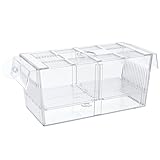
- Top Pick: BaoZqua Dual-Chamber Fish Breeder Box for Fish Tank, Guppy Fry Nursery
- Best Value: Pawfly Aquarium Fish Breeding Box Acrylic Hatchery Incubator Tank with Suction Cups Medium Isolation Box for Baby Fish Shrimp Betta and Guppy
- Premium Choice: Pawfly Aquarium Fish Breeding Box Acrylic Hatchery Incubator Tank with Suction Cups Small Isolation Box for Baby Small Fish Shrimp and Betta

TL;DR: Livebearers (guppies, mollies, platies, swordtails) are beginner-friendly breeders but fry survival rates below 50% are common without a dedicated breeding tank. This tutorial covers water parameters, tank setup, fry-safe filtration, and feeding so you can raise a full clutch rather than watching adults eat their own offspring.
Livebearer Breeding Tank Setup: Guppies, Mollies, Platies & Swordtails
Livebearers give birth to free-swimming fry rather than laying eggs — which sounds easier to raise than egg-scatterers, and it is, provided you’ve addressed the two main failure points: filtration that doesn’t consume fry and enough cover/separation to prevent immediate cannibalism. A purpose-built livebearer breeding setup doesn’t need to be expensive or complex, but it does need to be thought through before the female drops her first clutch.
As an Amazon Associate we earn from qualifying purchases.




Before setting up a breeding tank, cycle it first — skip this step and you’ll lose fry to ammonia spikes within 48 hours of the drop. Our water test kit guide covers the parameters to monitor daily during fry rearing, where tolerances are tighter than in adult tanks.
🛒 Best Price Today on Amazon
Prime members get fast, free shipping on everything above, plus member-only deals. New members get a 30-day free trial — cancel anytime.
Start 30-Day Prime Free Trial →See Today’s Amazon DealsLivebearer Species: Key Differences for Breeding
| Species | Gestation (days) | Clutch Size | Temp Range | pH Target | Fry Size at Birth |
|---|---|---|---|---|---|
| Guppy | 21–30 | 10–60 | 72–82°F (22–28°C) | 6.8–7.8 | ~6 mm |
| Molly | 60–70 | 20–100 | 72–82°F (22–28°C) | 7.5–8.5 | ~10 mm |
| Platy | 24–35 | 20–50 | 70–77°F (21–25°C) | 7.0–8.0 | ~8 mm |
| Swordtail | 28–40 | 20–100 | 72–82°F (22–28°C) | 7.0–8.0 | ~8 mm |
| Endler’s livebearer | 23–28 | 5–25 | 72–84°F (22–29°C) | 6.5–8.5 | ~5 mm |
Top Picks at a Glance

HITOP 600W Titanium Aquarium Heater: Digital Fish Tank Heater with External Controller, Submersible Aquarium Heater with Over-Temperature Protection for Saltwater and Freshwater 75-150Gallon

Petbank LCD Digital Aquarium Thermometer Fish Tank Water Terrarium Temperature

hygger 16W Full Spectrum Aquarium LED Light with 10 Levels Brightness, White Blue Red Green LEDs,6H8H12H Timer,RGB Light for 16~24IN Freshwater Fish Tank, Aquatic Plants Tropical Ornamental Fish
As an Amazon Associate we earn from qualifying purchases. Product prices and availability are accurate as of the date/time indicated.
Breeding Tank Size and Configuration
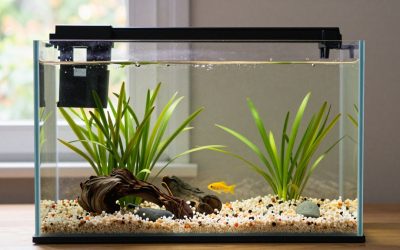
A 10-gallon dedicated breeding tank is the practical minimum for guppies, platies, and Endler’s. Mollies and swordtails produce larger clutches and grow faster — a 20-gallon long gives adequate swim space for growing fry without crowding-induced stress that stunts development.
Two configuration options:
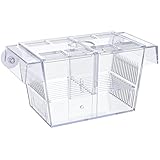
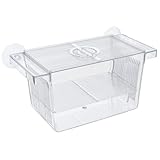
- Breeding trap method: A plastic floating trap confines the pregnant female, fry fall through slots too small for the mother. Pros: simple, cheap, no separate tank needed. Cons: stresses the female, trap size limits movement, and traps are only useful for the drop itself — fry still need a safe grow-out space.
- Dedicated grow-out tank method: Move the heavily pregnant female to the breeding tank a few days before expected drop. After birth, remove the female back to the main tank. Fry grow out in the dedicated tank until large enough to add to the community (typically 4–8 weeks). This is the superior method for survival rates.
Fry-Safe Filtration: The Critical Detail
Standard HOB or canister filter intakes are fry death traps — newborn guppies (6 mm) fit through most intake grates and are processed by the impeller. Three fry-safe filtration solutions:
- Sponge filter: The standard recommendation. Air-driven, gentle flow, massive bio-surface, zero impeller risk. A single medium sponge filter handles a 10-gallon breeding tank comfortably. Squeeze in established tank water when setting up to seed it instantly.
- Pre-filter sponge sleeve: Fit a foam pre-filter sleeve over any existing HOB or canister intake tube — physically blocks fry from entering while bacteria colonize the sponge. Available for $3–8, fits most standard intake diameters.
- Matten filter: A German design — a sheet of coarse sponge covers one end wall of the tank, water circulates through it driven by a powerhead or airstone behind the foam. Near-zero flow velocity on the display side, essentially impossible for fry to be aspirated. Best for dedicated breeding operations.
Flow rate for a breeding tank should be gentle — target 3–4x tank volume per hour maximum. High flow stresses fry and burns energy they should use for growth. The aquarium air pump guide covers sizing air-driven sponge filters correctly for small breeding tank volumes without producing excessive turbulence.
Water Parameters for Livebearer Breeding Success
Livebearers are generally harder water species — this is the parameter beginners most often get wrong. Guppies and mollies originate from coastal and brackish environments; they thrive at GH 10–20 and KH 6–12, which provides the mineral content for skeletal development and immune function in fry.
- Temperature: 78–80°F (25–27°C) for most species during breeding and fry rearing — upper range accelerates growth rate. Precise, stable temperature is more important than hitting an exact number. The HITOP 600W heater covers tanks up to 80 gallons; for a 10-gallon breeding tank, use a 50–100W unit with comparable precision. See our our pick for betta fish aquarium heater for appropriate sizing.
- pH: 7.2–7.8 is the universal livebearer sweet spot. Avoid below 7.0 for any of the common four species.
- Ammonia/Nitrite: Zero tolerance with fry — their surface-area-to-volume ratio means toxin absorption is proportionally higher than adults. Test daily for the first 2 weeks after birth.
- Nitrate: Keep below 20 ppm with frequent small water changes (10–15% every 2–3 days) rather than infrequent large changes that stress fry.
Monitor temperature with a reliable digital thermometer — analog stick-on thermometers drift and are inaccurate at the ±0.5°C precision that matters during fry rearing. The ZACRO digital thermometer for under $10 is the standard recommendation for any tank where precise temperature matters.
Plants and Cover for Fry Survival
Dense floating plant cover is the most impactful addition to a livebearer breeding tank. Hornwort, water sprite, guppy grass (Najas guadalupensis), and duckweed create a refugium at the surface where newborn fry can hide from even a removed mother — and provide first foods in the form of infusoria that colonize plant surfaces naturally.
The surface-to-bottom ratio matters: fry are surface-oriented for the first week. A tank that’s 18 inches deep with no surface cover is harder to manage than a 12-inch deep tank with 60% surface plant coverage. For a low-maintenance planted breeding tank, see our low-tech planted tank guide — no CO2 or high-intensity lighting needed for the floating plants that matter most in breeding setups.
Feeding Fry: Size and Frequency
Fry stomachs are proportionally tiny — 4–6 small feedings per day beats 1–2 large feedings for growth rate and survival. First foods in order of nutritional quality:
- Baby brine shrimp (BBS) freshly hatched: Optimal first food — small enough, highly digestible, triggers feeding response. Requires a BBS hatchery (simple DIY with plastic bottle, salt water, airline, airstone).
- Micro worms: Easy home culture, smaller than BBS, excellent for very small fry like Endler’s and guppies at birth.
- Finely powdered fry food: Commercial options like Hikari First Bites, Sera Micron — grind adult pellets to fine powder as a budget substitute.
- Infusoria: For the first 24–48 hours, fry too small for any of the above benefit from infusoria that naturally colonize a well-planted breeding tank.
After 3–4 weeks, fry typically reach 12–15 mm and can accept crushed adult food. At 4–6 weeks for guppies (8–10 weeks for mollies and swordtails), they’re large enough that adult fish won’t predate them in a community tank.
For shrimp-breeding setups that use similar principles with even tighter water parameter requirements, our freshwater shrimp tank setup guide covers the key differences in filtration and parameter management.
Frequently Asked Questions
How do I know when my livebearer is about to give birth?
Three reliable signs: (1) the gravid spot (dark area near the anal fin on females) becomes very large and square-shaped rather than round — visible through the abdomen as fry fill the body cavity; (2) the female becomes noticeably boxy when viewed from above; (3) behavioral changes — she seeks corners, hides near plants, or moves to the surface repeatedly. At this point move her to the breeding tank if you haven’t already — labor is typically within 24–72 hours of these signs.
Why are my livebearer fry dying after birth?
Most common causes in order: (1) ammonia/nitrite spike in an uncycled or stressed breeding tank — test immediately; (2) filtration intake consuming fry — check for pre-filter coverage; (3) temperature instability — swings of more than 2°F in 24 hours are stressful to neonates; (4) starvation — fry need food within 24 hours of birth, 4–6 times daily; (5) adult predation — remove the mother within a few hours of birth completion.
Can I breed livebearers in a community tank?
You can get some fry to survive in a heavily planted community tank, but survival rates are typically 5–20% vs. 70–90%+ in a dedicated breeding setup. Community tank breeding works as a “bonus” when you don’t need high yield. For deliberate breeding programs or maximizing stock, a dedicated breeding tank is not optional.
How many fry can I expect from a guppy per birth?
A young female (first or second birth) typically drops 10–25 fry. Mature females in peak condition drop 30–60, with exceptional specimens producing up to 100 fry per clutch. Guppies are superfetation breeders — females store sperm from multiple males and can produce multiple clutches (every 21–30 days) from a single mating. Isolate females after each birth if you want to control genetics and breeding pace.
Do I need a heater in a livebearer breeding tank?
Yes, unless your room temperature consistently stays above 75°F (24°C). Below 72°F, fry growth slows substantially and immune function drops. Temperature stability matters as much as the target temperature — a cheap thermostat heater that swings 4–5°F causes chronic stress that manifests as increased disease susceptibility and poor growth rates. Size the heater at 3–5W per gallon for breeding tanks to ensure rapid recovery from any heat loss.
Aquarium Fish Disease Diagnostic Guide: Symptoms, Causes, and Treatments
Aqueon vs Tetra Aquarium Kits Which Is Better: Top Compared