Last Updated: October 4, 2026
- Top Pick: Tetra Complete 55 Gallon Fish Tank Kit for Freshwater & Saltwater Fish
- Best Value: Tetra Complete 10 Gallon Fish Tank Kit for Freshwater & Saltwater Fish
- Premium Choice: Aqueon Aquarium Starter Kit with Smart Clean Filtration and LED Lighting, Freshwater and Saltwater Fish, Perfect for Tetras, Guppies, Platies, 10-Gallon

TL;DR: Axolotls are cold-water amphibians that fail in typical tropical fish setups — they need 60–68°F water, strong filtration with gentle flow, and zero substrate smaller than their head to prevent impaction. A 20-gallon long minimum, a quality canister or sponge filter, and a chiller for warm climates are non-negotiable. Best pick: ASIN B08BF7LQBK.
Axolotl Tank Setup: Complete Starter Kit 2026
The axolotl (Ambystoma mexicanum) is not a fish — it is a permanently aquatic salamander native to the lake complex of Xochimilco near Mexico City, and critically endangered in the wild. In captivity, axolotls have become one of the fastest-growing niches in the aquatics hobby, driven by their alien appearance, relative hardiness compared to marine fish, and genuinely engaging behavior. But the single most common mistake new axolotl keepers make is setting them up in a standard tropical fish tank: warmer water, inappropriate substrate, and surface-skimming filters that create the current axolotls cannot tolerate. This guide covers the complete kit — tank, filtration, substrate, temperature management, and cycling — for a setup that gives your axolotl the conditions it actually needs.
As an Amazon Associate we earn from qualifying purchases at no extra cost to you.


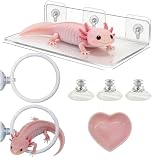

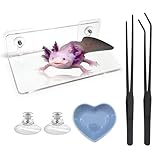
🛒 Best Price Today on Amazon
Prime members get fast, free shipping on everything above, plus member-only deals. New members get a 30-day free trial — cancel anytime.
Start 30-Day Prime Free Trial →See Today’s Amazon DealsWhy Axolotls Are Different From Tropical Fish
- Cold-water requirement: Axolotls thrive at 60–68°F (15–20°C). Above 72°F, metabolic stress begins; above 75°F, heat stress causes loss of appetite, fungal infections, and death within days. In warm climates, an aquarium chiller is mandatory — not optional.
- Impaction risk from substrate: Axolotls are opportunistic feeders that ingest substrate along with food. Gravel, pebbles, and coarse sand particles smaller than the axolotl’s head diameter will be swallowed and can cause fatal intestinal impaction. Use large slate tiles, bare-bottom setups, or very fine sand (grain size under 1mm) only.
- Flow sensitivity: Axolotls have external gills that are physically damaged by strong current. Powerheads and high-flow hang-on-back filters directed at the water surface create turbulence that stresses gills and triggers stress behavior (curled, forward-bent gills are the stress indicator). Filtration must be baffled or sponge-based to reduce surface agitation.
- Ammonia sensitivity: As amphibians, axolotls produce high ammonia loads relative to their body size. A fully cycled tank with established beneficial bacteria is essential before introducing any axolotl — the nitrogen cycle is not optional for any aquatic animal, but axolotls are particularly sensitive to ammonia and nitrite spikes.
Top Pick: Axolotl Tank Starter Kit
BEST TANK
Landen 60P Rimless Low Iron Aquarium 20 Gallon
BEST FILTER
Fluval 207 Performance Canister Filter
BEST CHILLER
Aqua Euro USA Max Chill Aquarium Chiller 1/10 HP
Complete Axolotl Tank Parameter Reference
| Parameter | Ideal Range | Warning Zone | Critical / Fatal Zone |
|---|---|---|---|
| Temperature | 60–68°F (15–20°C) | 68–72°F | Above 75°F |
| pH | 7.0–8.0 | 6.5–7.0 or 8.0–8.5 | Below 6.0 or above 9.0 |
| Ammonia | 0 ppm | 0.25 ppm | 0.5 ppm+ |
| Nitrite | 0 ppm | 0.25 ppm | 0.5 ppm+ |
| Nitrate | Under 20 ppm | 20–40 ppm | Above 80 ppm |
| GH (hardness) | 7–14 °dH (125–250 ppm) | 6–7 or 14–18 °dH | Below 5 or above 20 °dH |
| Min. tank size | 20 gal long (single adult) | 15 gal (temporary only) | Under 10 gal |
| Filtration turnover | 4–6x tank volume/hr | 6–8x (if baffled) | Unbaffled high flow |
Cycling and Setting Up Your Axolotl Tank Step by Step
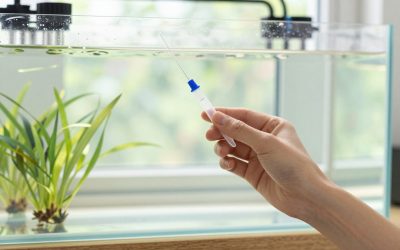
Never introduce an axolotl to an uncycled tank. The nitrogen cycle — establishment of ammonia-oxidizing (Nitrosomonas) and nitrite-oxidizing (Nitrospira) bacterial colonies in your filter media — takes 4–8 weeks from scratch, or 1–2 weeks using bottled bacteria (Seachem Stability, Fritz TurboStart) with a daily ammonia dose to feed the developing colonies. The axolotl’s cold-water environment slightly slows bacterial colonization compared to tropical setups, so test daily and do not rush.
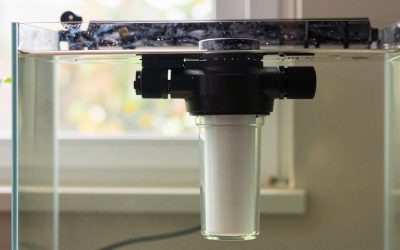
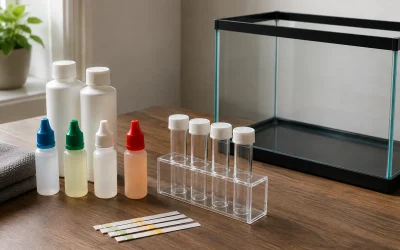
Once cycled, your maintenance routine is straightforward: 20–30% water changes weekly (using dechlorinated water matched to tank temperature — cold water changes on a warm-acclimated axolotl cause dangerous shock), gravel vacuum or spot-clean the bare bottom after feedings, and monthly canister filter media rinse in old tank water. For filtration setup, baffle the canister return by directing flow along the tank wall or into a spray bar pointed at the glass — this breaks up jet flow into a gentle, distributed current. Check our nitrogen cycle beginner guide for the full cycling protocol, and our water test kit guide for monitoring during cycling and ongoing maintenance.
Frequently Asked Questions
What do axolotls eat and how often should I feed them?
Juvenile axolotls (under 4 inches): feed daily with live or frozen bloodworms, baby brine shrimp, or micro-worms. Adult axolotls (over 4 inches): feed every 2–3 days with earthworms (the single best staple food — high protein, appropriate size, readily accepted), nightcrawlers cut to size, axolotl pellets (Rangen or Hikari Sinking Carnivore pellets), or frozen bloodworm cubes. Never feed feeder fish from pet stores — they introduce parasites and disease. Remove uneaten food within 30 minutes to prevent ammonia spikes.
Can axolotls live with other fish or animals?
No — axolotls should be kept alone or with other axolotls of similar size. They will eat any fish small enough to fit in their mouth (which is larger than it looks), and fin-nipping fish will devastate their feathery external gills. Even snails and shrimp, commonly kept as tank cleaners, are eaten. Axolotls kept with other axolotls may bite limbs and gills — particularly juveniles. Regeneration ability means minor bites usually heal, but persistent aggression from size-mismatched animals causes serious injury.
Do I need a chiller for an axolotl tank?
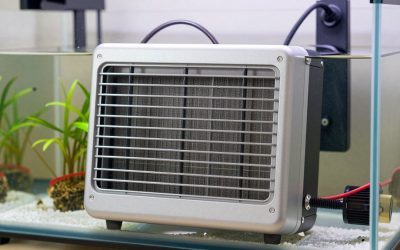
If your home stays below 68°F year-round: no. If your home rises above 70°F during summer: yes, a chiller is essential. Ambient room temperature is the primary driver of tank temperature — you cannot reliably maintain 60–68°F in a warm room with ice bottles or fans alone for more than a few hours. A 1/10 HP aquarium chiller sized for your tank volume is the reliable long-term solution. Running costs are approximately $10–20/month in electricity. It is a significant upfront investment but the difference between a thriving axolotl and one in chronic heat stress.
Why are my axolotl’s gills curled forward?
Forward-curling gills are the primary stress indicator in axolotls — equivalent to a fish clamping its fins. Common causes: water temperature above 68°F, elevated ammonia or nitrite (test immediately), excessive current from filtration, or acute stress from handling or sudden environmental change. Fluffy, upright, fully extended gills indicate a healthy, well-oxygenated axolotl in comfortable conditions. Gill filament density and spread are the most reliable at-a-glance health metric — monitor them daily during the first weeks after setup.
What substrate is safe for axolotls?
Three safe options: (1) Bare bottom — easiest to clean, zero impaction risk, slight aesthetic compromise. (2) Fine sand under 1mm grain size — passes through the digestive system safely if ingested; use pool filter sand or play sand rinsed thoroughly. (3) Large slate tiles or flat rocks — too large to ingest, provide texture for grip (axolotls have poor traction on bare glass), and easy to lift and clean underneath. Never use aquarium gravel, pebbles, colored substrate, or any particle between 1mm and head width — this is the impaction danger zone that fills emergency vet visits in the axolotl community. See our substrate guide for grain size comparisons across substrate types.
Ready to decide? Our #1 pick for 2026 is the Temperature.
Live price & availability on Amazon.
Related Reviews & Guides


Quick Picks: Best Cichlid Caves & Decorations at a…

Quick Picks: Best Equipment for a Freshwater Shrimp Tank