

Last Updated: May 26, 2026
TL;DR — Quick Answer
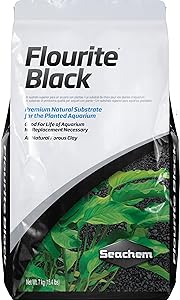
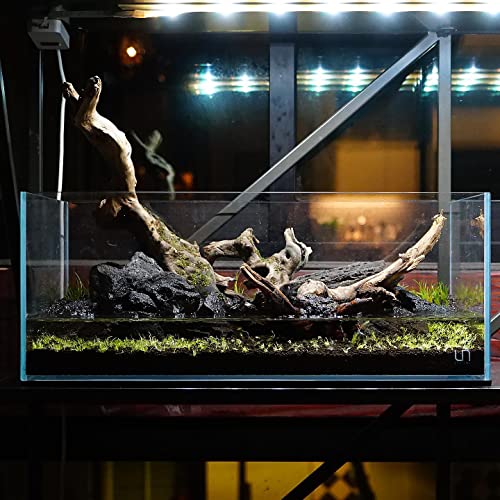
For planted tanks, aqua soil is the correct substrate — it buffers pH, provides CEC (cation exchange capacity) for root feeding, and releases ammonia for 4–6 weeks (cycle before adding fish). Sand looks great but feeds nothing. Gravel is decorative only. Cap aqua soil with sand or fine gravel to reduce cloud and slow nutrient leach. Budget pick: UNS Controsoil at $31.49.
Aquarium Substrate for Planted Tanks 2026: Aqua Soil vs. Sand vs. Gravel — Complete Beginner Guide
Substrate is the most misunderstood element of planted tank setup. Beginners see gravel at the fish store, buy a bag because it’s $8, then wonder why their stem plants melt. The answer is almost always substrate — or rather, the absence of anything their roots can actually use. This guide breaks down substrate types with real chemistry, setup procedure, and the one product that delivers aqua soil performance without the premium price tag.

As an Amazon Associate we earn from qualifying purchases. Product prices and availability are accurate as of the date/time indicated.
Top picks at a glance
BEST OVERALL
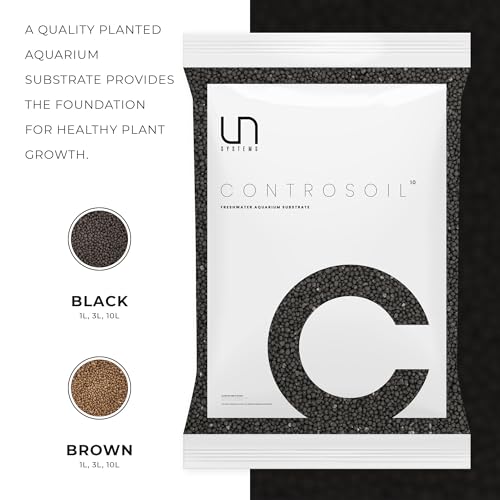
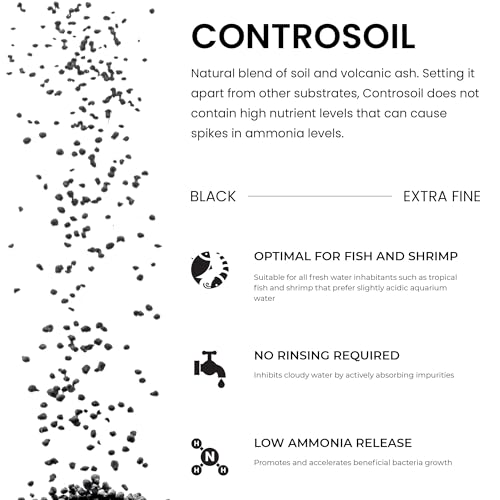
UNS Controsoil Freshwater Aqua Soil Substrate
High CEC, pH buffering to 6.5–7.0, feeds roots for 12–18 months.
As an Amazon Associate we earn from qualifying purchases. Product prices and availability are accurate as of the date/time indicated.
RUNNER-UP (MONITORING)
ZACRO LCD Digital Thermometer
Monitor temp stability during the aqua soil ammonia cycle — spikes stress fish if added too soon.
BEST COMPLETE SETUP
HITOP Titanium Heater
Stable warmth during cycling lets beneficial bacteria colonize substrate faster — 78 °F is ideal.
The 3 Substrate Types — What They Actually Do
1. Gravel (Inert)
Standard aquarium gravel — crushed quartz, river rock, colored pebbles — is chemically inert. It holds plants’ roots mechanically but provides zero nutrition. In a low-tech tank with fast-growing stem plants (hornwort, guppy grass), this is fine because those species feed from the water column. For root-feeding plants (swords, crypts, lotus, most carpeting plants), inert gravel means slow starvation unless you add root tabs every 4–6 weeks.
Best for: Cichlid tanks (don’t want soil pH buffering), large fish tanks where plants are secondary, Walstad-style setups with capped nutrient soil underneath.
2. Sand (Inert)
Pool filter sand, play sand, blasting sand — all inert. Looks natural, ideal for bottom-dwelling fish (corydoras, kuhli loaches, plecos) because it won’t abrade barbels. Problem: sand compacts and creates anaerobic pockets that produce hydrogen sulfide (H₂S) — toxic gas that releases when disturbed. Fix: plant densely to keep substrate oxygenated, or add Malaysian trumpet snails to burrow and aerate.
Best for: Betta tanks (clean aesthetic), cory-heavy community tanks, aquascapes where you want pale-colored substrate against dark driftwood. Not for serious planted tanks without root tabs.
3. Aqua Soil (Active)
Fired volcanic soil or clay — the actual growing medium of high-tech planted tanks. Key properties:
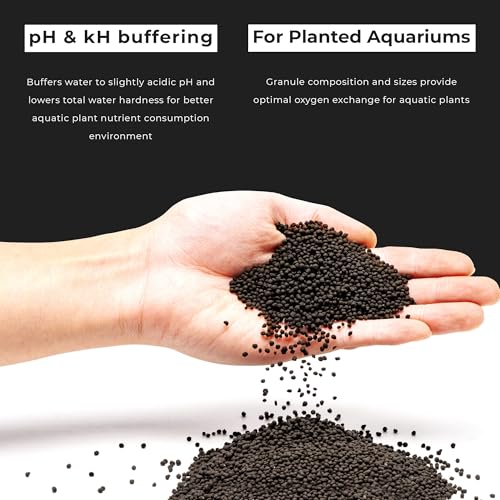
- High CEC (Cation Exchange Capacity): Chemically holds and releases nutrients (NH₄⁺, K⁺, Ca²⁺, Mg²⁺) to roots on demand. Think of CEC as the substrate’s “nutrient battery.”
- pH buffering: Most aqua soils buffer pH to 6.5–7.0 via KH reduction — ideal for soft-water plants and shrimp. If your tap water is KH 8+, expect significant KH softening for the first 6–8 weeks.
- Initial ammonia release: New aqua soil dumps NH₄⁺ into the water column for 4–6 weeks — great for cycling, toxic for fish. Never add livestock to a fresh aqua soil setup without cycling first.
- Lifespan: Nutrients deplete over 12–24 months. After that, it still works as a bio substrate — just add root tabs for nutrition. Most serious aquarists replace after 18 months for high-demand carpets.
UNS Controsoil — Why It Stands Out
UNS (Ultum Nature Systems) Controsoil is a Japanese-style fired volcanic soil. It competes directly with ADA Amazonia and Tropica Soil but ships domestically (no import premium). CEC testing by third-party aquarists (NilocG Aquatics, 2024) put Controsoil at comparable CEC to ADA Amazonia II — the industry reference standard.
| Spec | UNS Controsoil | ADA Amazonia II | Tropica Soil |
|---|---|---|---|
| pH buffering | 6.5–7.0 | 6.5–6.8 | 6.5–7.0 |
| Initial NH₄⁺ release | Moderate (4 wks) | High (6–8 wks) | Low (2 wks) |
| Particle size (regular) | 2–4mm | 2–4mm | 1–3mm |
| Price per liter (approx) | ~$3.15 | ~$5.50 | ~$4.80 |
| US availability | Domestic stock | Import, slow | Domestic |
| Amazon ASIN | B07C2KMW1H ($31.49) | N/A on Amazon | B00VE7TCWA |
How Much Substrate Do You Need? Depth Calculator
Planted tanks need 3 inches (7–8 cm) minimum depth for root-feeding plants. Carpeting plants (HC Cuba, Monte Carlo, dwarf hairgrass) need the full 3″. Stem plants can work with 2″ if you add root tabs. Calculate volume:
| Tank Size | Base Footprint (approx) | 3″ Depth Volume | UNS Bags Needed |
|---|---|---|---|
| 10 gal | 20″ × 10″ | ~4 liters | 1 bag (9L bag) |
| 20 gal long | 30″ × 12″ | ~7 liters | 1 bag (9L) |
| 29 gal | 30″ × 12″ | ~7 liters | 1 bag (9L) |
| 40 gal breeder | 36″ × 18″ | ~13 liters | 2 bags (9L each) |
| 75 gal | 48″ × 18″ | ~18 liters | 2–3 bags |
The Capping Method — Best of Both Worlds
Aqua soil clouds water badly when disturbed — fine particles billow into the water column during planting, water changes, and fish activity. The solution: cap with 1/2–3/4 inch of coarse sand or fine gravel on top of the soil layer. This stabilizes the surface while still allowing roots to penetrate into the nutrient-rich soil below.
Setup procedure:
- Add 2.5–3″ of aqua soil to empty dry tank. Level with a straight edge — slope up toward back for depth perspective (front 2″, back 4″).
- Add 1/2″ of capping sand or fine gravel over the entire surface.
- Place a piece of plastic wrap or deli wrap flat on the substrate.
- Pour water slowly onto the plastic to fill without disturbing layers.
- Remove plastic once tank is 1/2 full — cloudiness should be minimal.
- Run filter 24 hours. Water clears to crystal within 48–72 hours.
- Plant directly through cap into soil below using tweezers.
- Cycle for 4–6 weeks with no fish — test ammonia/nitrite/nitrate until both read 0 ppm before adding livestock.
KH/GH Impact of Aqua Soil — What to Expect
If your tap water KH is above 4 dKH, active aqua soil will consume carbonates — this is called the “KH crash.” Your pH will drop significantly, sometimes to 6.0 or below, during the first weeks. This is chemically normal but lethal to hard-water fish. Test KH and pH daily for the first 2 weeks. If KH hits 0 and pH drops below 6.0, do 25% water changes with RO water (not tap) to stabilize. After 6–8 weeks, the soil’s buffering capacity stabilizes and KH stabilizes at a new equilibrium.
For more on CO2 and carbonate chemistry interaction, see our our co2 aquarium system beginner setup write-up. To pair your substrate with the right filtration, our fluval 207 canister filter review covers CO2-compatible filter setup. And for lighting that works with your plant species, check the the head-to-head breakdown.
Pros and Cons of Aqua Soil vs. Inert Options
Aqua Soil Pros
- High CEC feeds roots without root tabs for 12–18 months
- Buffers pH for soft-water plants and shrimp (caridina neocaridina)
- Accelerates plant establishment — less melt, faster growth
- Looks natural — dark color highlights fish and plants
Aqua Soil Cons
- Requires 4–6 week fishless cycle — can’t rush it
- KH crash can be dangerous if not monitored
- Clouds water initially — capping mandatory for fish tanks
- Breaks down over 18–24 months — periodic replacement adds cost
- Not for hard-water cichlids or African rift lake setups
Frequently Asked Questions
Can I use potting soil as aquarium substrate?
Technically yes (Walstad method) — organic potting soil without fertilizers or perlite, capped with gravel. But it’s messy, pH is unpredictable, and anaerobic decomposition can release dangerous gasses. UNS Controsoil at $31.49 removes all that risk. Unless you’re specifically building a low-tech Walstad tank, stick with purpose-built aqua soil.
How do I add root tabs to inert substrate?
Push root tabs 1–2″ into substrate near the root zone of heavy feeders (swords, crypts, lotus). Place every 4–6 inches in a grid pattern. Replace every 90 days. For gravel or sand tanks, this is the only way to feed root-dependent plants. API Root Tabs and Seachem Flourish Tabs are the most used brands — both work well.
How long does aqua soil last before it needs replacing?
Nutrient depletion: 12–18 months for high-demand carpets, 18–24 months for low-tech setups. Signs of depletion: yellowing leaves despite fertilizer dosing, slow growth in previously vigorous plants. After depletion, the substrate still supports biology — add root tabs to extend life. Full replacement every 2–3 years for serious aquascapers.
Will aqua soil hurt my betta fish?
Not if you cycle properly first. The ammonia spike from fresh aqua soil is dangerous — test until 0 ppm NH₃ and 0 ppm NO₂ before adding any fish. pH drop to 6.5 is actually beneficial for bettas (wild pH preference 6.5–7.0). The dark color of aqua soil also reduces stress — bettas in bright tanks on pale gravel show more stress coloration and fin clamping.
Can I mix aqua soil with regular gravel?
You can, but it reduces the benefits. If aqua soil is less than 50% of substrate volume, CEC drops significantly and pH buffering becomes inconsistent. Better approach: use aqua soil as the full base layer (2.5–3″) and cap with a thin layer (0.5″) of inert sand or fine gravel for aesthetics. This gives full soil benefits with a clean surface appearance.


