Last Updated: October 4, 2026
- Quick Picks: Best Equipment for an African Cichlid Tank at a Glance
- Why Trust Our Picks?
- 1. Fluval FX6 High Performance Canister Filter — Full Review
- 2. Carib Sea African Cichlid Mix Aragonite — Full Review
- 3. Hikari Cichlid Excel Staple Pellet — Full Review
- Buying Guide
- Frequently Asked Questions
- Final Verdict
- Related Articles
- Related Guides
- Top Pick: AFRICAN CICHLIDS CARE GUIDE: The Complete Handbook for Beginners to Experts on African Cichlid Care, Tank Setup, Breeding, Feeding, Nutrition, … and Creating a Vibrant Freshwater Aquarium
- Best Value: AFRICAN CICHLIDS HANDBOOK: A Complete Guide to Choosing, Breeding, Feeding, Tank Setup, Water Mastery, Behavior Control, Health Care, and Long-Term Success for Beginners and Advanced Aquarists
- Premium Choice: THE COMPLETE CICHLID FISH MANUAL: The Ultimate Beginner’s Guide To Raising Healthy And Vibrant Cichlid Fish With Expert Advice On Tank Setup, Feeding, … Behavior, And Long-Term Aquarium Success
As an Amazon Associate we earn from qualifying purchases at no extra cost to you.



🛒 Best Price Today on Amazon
Prime members get fast, free shipping on everything above, plus member-only deals. New members get a 30-day free trial — cancel anytime.
Start 30-Day Prime Free Trial →See Today’s Amazon DealsQuick Picks: Best Equipment for an African Cichlid Tank at a Glance
BEST OVERALL FILTER

Fluval FX6 High Performance Canister Filter
The industry benchmark for high-output canister filtration — handles the enormous bioload of packed African cichlid tanks with exceptional efficiency.
RUNNER-UP

Carib Sea African Cichlid Mix Aragonite
Crushed coral and aragonite substrate that passively buffers water to the alkaline pH African cichlids require — no chemicals needed.
![Quick & Clean [6-Pack] Keurig Cleaning Pods - K Cup Cleaner Pod For Keurig - 2.0 Coffee Machine Compatible, Removes Stains, Non-Toxic and Eco-Friendly](https://m.media-amazon.com/images/I/51lXaI5rgKL._SL400_.jpg)


As an Amazon Associate we earn from qualifying purchases. Product prices and availability are accurate as of the date/time indicated.
BEST BUDGET

Hikari Cichlid Excel Staple Pellet
A spirulina-based daily diet pellet that meets the herbivorous and omnivorous needs of most mbuna while enhancing their brilliant natural coloration.


As an Amazon Associate we earn from qualifying purchases. Product prices and availability are accurate as of the date/time indicated.
Why Trust Our Picks?
African cichlids from Lakes Malawi, Tanganyika, and Victoria are among the most demanding — and most rewarding — fish in the freshwater hobby. Their specific water chemistry requirements, territorial behavior, and high bioload eliminate many commonly recommended products. Our picks are based on the specific needs of these fish, not generic aquarium advice, drawing on community experience and technical specification reviews.
1. Fluval FX6 High Performance Canister Filter — Full Review
African cichlid tanks are notoriously overstocked by design — crowding reduces aggression by distributing territorial stress across many fish simultaneously. This biological reality means the filtration demands are extreme, and the Fluval FX6 was practically engineered for this exact scenario. With a 563 GPH flow rate, a self-cleaning Smart Pump with auto-start, and enough media capacity to house a massive beneficial bacteria colony, it keeps water crystal clear even in tanks housing 20 or more large cichlids. The built-in purge valve makes water changes faster, and the maintenance cycle indicator reminds you when cleaning is due. For tanks 75 gallons and above, this filter is the gold standard.
2. Carib Sea African Cichlid Mix Aragonite — Full Review
Maintaining pH between 7.8 and 8.5 and hardness (GH/KH) at appropriate levels for Lake Malawi or Tanganyika species is the most technically demanding aspect of African cichlid keeping. Carib Sea’s African Cichlid Mix solves this passively — the aragonite and crushed coral substrate slowly dissolves over time, releasing calcium carbonate that buffers the water without any chemical additives. The natural sandy texture also allows mouth-brooding species to exhibit natural digging behaviors. It comes in natural tan and ivory color options, both of which complement the brilliant blues, yellows, and oranges that make African cichlids so visually striking.
3. Hikari Cichlid Excel Staple Pellet — Full Review
Feeding African cichlids — especially mbuna from Lake Malawi — incorrectly is one of the leading causes of bloat, a frequently fatal disease. Most mbuna are primarily herbivorous, and protein-rich foods like bloodworms trigger digestive disorders. Hikari Cichlid Excel uses spirulina algae as its primary protein source, closely matching the natural aufwuchs (algae and microorganisms scraped from rocks) these fish eat in the wild. The pellet size is appropriate for medium-sized cichlids, color-enhancing carotenoids intensify natural pigmentation, and the formula is stabilized vitamin C to support immune function. For mbuna and many haplochromis species, this is the safest, most appropriate daily staple available.
Buying Guide
African cichlid success depends on three factors above all else: correct water chemistry (pH 7.8–8.5, hard water), aggressive filtration (four to six tank volume turnovers per hour minimum), and strategic overstocking to distribute aggression. A minimum tank size of 55 gallons is recommended for a starter mbuna setup, with 75–125 gallons preferred. Rocks, caves, and line-of-sight breaks are essential decor — cichlids establish territories and need visual barriers to coexist. Avoid plants (most will be destroyed), and choose substrate that buffers pH naturally. Research species compatibility carefully before purchase, as aggression levels vary enormously between cichlid groups.
Frequently Asked Questions
What is the minimum tank size for African cichlids?
55 gallons is the practical minimum for a starter mbuna colony of 10–12 fish. A 75-gallon tank provides a much better aggression management buffer and is strongly preferred by experienced keepers. Some Tanganyika species like shell-dwellers (Lamprologus) can be kept in smaller tanks, but Lake Malawi species generally need substantial volume.
Why do African cichlid tanks need higher pH than other freshwater fish?
African rift lake cichlids evolved in highly alkaline, mineral-rich water — Lake Malawi maintains a pH of 7.7–8.5 naturally. Keeping these fish at neutral or acidic pH weakens their immune systems, impairs osmoregulation, and shortens their lifespan significantly. Maintaining correct chemistry is non-negotiable for long-term success with these species.
Can I keep African cichlids from different lakes together?
Generally not recommended. Malawi, Tanganyika, and Victoria cichlids have different water chemistry requirements and behavioral patterns. Mixing lakes also creates hybridization risk, which is frowned upon in the hobby. Stick to one lake per tank for best results, and research compatible species within that lake before purchasing.
How do I manage aggression in an African cichlid tank?
The counterintuitive approach of deliberate overstocking (above normal fish-per-gallon guidelines) is the standard technique — aggression gets spread across so many fish that no single individual is targeted to death. Rock structures that break sightlines, multiple caves per fish, and keeping multiple males of different species rather than multiple males of the same species all help significantly.
What causes bloat in African cichlids, and how do I prevent it?
Bloat (Malawi Bloat) is most commonly caused by feeding high-protein foods — particularly mammal proteins like beef heart or worm-based foods — to herbivorous species whose digestive systems cannot process them. Preventing bloat requires feeding species-appropriate diets (spirulina-based for mbuna), maintaining excellent water quality, and avoiding overfeeding. Early symptoms include loss of appetite and abdominal swelling; treatment with Metronidazole is often effective if caught early.
Final Verdict
The Fluval FX6 canister filter is the definitive filtration solution for serious African cichlid setups — no other product handles the bioload with the same combination of power and reliability. Carib Sea’s Cichlid Mix aragonite substrate solves the pH challenge passively and elegantly. Pair both with Hikari Cichlid Excel as your daily staple food, and the foundation of a thriving, vibrant African cichlid tank is in place.
Related Reviews & Guides


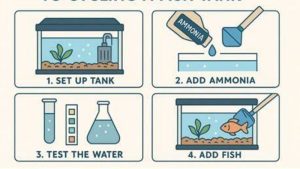
How to Cycle a New Fish Tank (Fast and Safe)

Quick Picks: Best Equipment for a Goldfish Tank at a Glance