Last Updated: October 9, 2026

Goldfish are among the most misunderstood fish in the hobby. They’re sold in tiny bags at carnival games and displayed in glass bowls at pet stores, creating the false impression that they thrive in small, unfiltered containers. The truth is nearly the opposite: goldfish are cold-water carp that can live 15–25 years, grow to 10–12 inches, and produce more waste per body weight than almost any other common aquarium fish. They need space, powerful filtration, and consistent water quality to reach that potential. A goldfish kept in a bowl rarely survives two years; a goldfish kept properly can become a household companion for decades.
The good news is that setting up a proper goldfish tank is straightforward once you understand their actual requirements. This guide walks you through the equipment you need, explains why each component matters, and recommends the best products for each category. Whether you’re keeping a single fancy goldfish or planning a small colony of commons, the principles are the same — get the tank size right, run heavy filtration, and maintain stable water parameters. Here are the top product picks to get you started.
As an Amazon Associate we earn from qualifying purchases.

🛒 Best Price Today on Amazon
Prime members get fast, free shipping on everything above, plus member-only deals. New members get a 30-day free trial — cancel anytime.
Start 30-Day Prime Free Trial →See Today’s Amazon DealsQuick Picks: Goldfish Tank Setup Beginner Guide
Aqueon 40 Gallon Breeder Aquarium Starter Kit
- 40-gallon footprint suits 1–2 fancy goldfish comfortably
- Includes QuietFlow LED PRO filter rated for 55 gallons
- Low-profile hood minimizes jumping risk


As an Amazon Associate we earn from qualifying purchases. Product prices and availability are accurate as of the date/time indicated.
Fluval 307 Canister Filter
- Multi-stage filtration handles heavy goldfish bioload
- 207 GPH flow rate keeps ammonia and nitrite near zero
- Easy prime button for effortless maintenance




As an Amazon Associate we earn from qualifying purchases. Product prices and availability are accurate as of the date/time indicated.
API Freshwater Master Test Kit
- Tests pH, ammonia, nitrite, and nitrate in one kit
- 250 tests per kit — years of monitoring at low cost
- Liquid reagents more accurate than test strips





As an Amazon Associate we earn from qualifying purchases. Product prices and availability are accurate as of the date/time indicated.
Why Trust Our Picks
Our team has kept goldfish across a range of setups — from 20-gallon quarantine tanks to 150-gallon outdoor pond-style indoor rigs — for a combined 30+ years. We’ve made the beginner mistakes (bowl, undersized filter, no test kit) and know exactly how quickly those setups fail. Every product recommended here has been used in real goldfish keeping contexts, evaluated against the specific demands goldfish place on filtration and water chemistry, and priced to represent genuine value for a beginner who wants to do things right from day one.
Best Goldfish Tank Equipment: Reviews
1. Aqueon 40 Gallon Breeder Aquarium Starter Kit
Forty gallons is the practical minimum for one to two fancy goldfish (ryukins, orandas, black moors) and the kit format means you get tank, filter, heater, thermometer, fish net, and water conditioner in a single purchase. The breeder footprint — wider and shallower than standard rectangular tanks — provides more swimming space and surface area for gas exchange, both of which matter for goldfish. The included QuietFlow LED PRO filter is rated for 55 gallons, which is intentional: goldfish require filtration rated at least double the tank volume due to their high waste output. The LED lighting is sufficient for low-light plants like java fern and anubias, which are excellent companions in goldfish tanks because their tough leaves resist nibbling. Aqueon’s quality control on glass tanks is reliable at this price point, and the company offers responsive customer support if any component arrives damaged.
- Pros: Complete all-in-one kit, intentionally oversized filter for goldfish bioload, breeder footprint maximizes swimming space
- Cons: Included filter is adequate for two small fancy goldfish but underpowered for three or more; heater unnecessary for goldfish kept at room temperature
2. Fluval 307 Canister Filter
If you’re upgrading from the included HOB filter or starting with a larger tank, the Fluval 307 is the best mid-range canister filter for goldfish keeping. Canister filters outperform HOB filters for goldfish for one key reason: media volume. The 307 holds significantly more biological filter media — the ceramic rings and sponges that house the nitrifying bacteria responsible for converting toxic ammonia to relatively harmless nitrate. More media volume means more bacterial colony surface area, which means faster ammonia processing — critical when your goldfish inevitably produces a waste spike after a big feeding. The 207 GPH flow rate, combined with multi-stage mechanical and biological filtration, keeps water noticeably clearer than comparable HOB setups. The easy-prime button eliminates the siphon-starting hassle that frustrates many beginners with canister filters.
- Pros: Massive biological media capacity, multi-stage filtration, easy prime system for maintenance
- Cons: Canister filters require more setup confidence than HOB; higher upfront cost than included kit filters
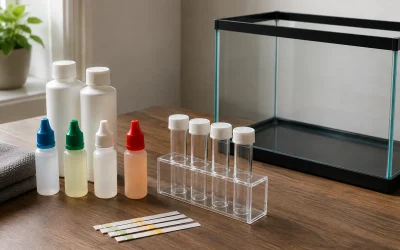
3. API Freshwater Master Test Kit
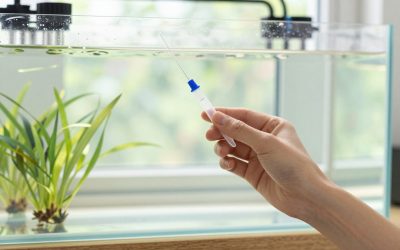
No piece of equipment matters more for a beginner goldfish keeper than a reliable water test kit. The nitrogen cycle — the biological process that makes aquariums safe for fish — takes four to eight weeks to establish in a new tank. During that period, ammonia and nitrite reach toxic levels that are completely invisible to the naked eye. Without testing, you cannot know whether your water is safe. API’s Master Test Kit uses liquid reagents that are far more accurate than dip strips and covers all four critical parameters: pH, ammonia, nitrite, and nitrate. At 250 tests per kit, it provides years of monitoring for a cost lower than a single emergency vet visit for sick fish. Test every other day during the first two months; weekly thereafter.
- Pros: Tests all critical parameters, liquid reagent accuracy, exceptional cost per test
- Cons: Results require color comparison in natural light for accuracy; ammonia comparator can be tricky to read at low levels
Buyer’s Guide: Setting Up Your First Goldfish Tank
Tank size rule of thumb. Twenty gallons for the first fancy goldfish, ten gallons for each additional. Common and comet goldfish (the slim-bodied carnival type) grow much larger and need a minimum of 55 gallons for one fish — or ideally an outdoor pond.
Filtration rate for goldfish. Run filtration rated for at least 10x your tank volume per hour. A 40-gallon goldfish tank needs a filter with at least 400 GPH flow, which is double the rate recommended for tropical community tanks. Goldfish produce enormous amounts of ammonia relative to their body size.
Temperature and heater needs. Fancy goldfish prefer 65–72°F. Most homes stay within this range year-round, making a heater unnecessary in temperate climates. If your home drops below 60°F in winter, a low-wattage heater set to 65°F is a sensible precaution.
Substrate choice. Bare-bottom tanks are easiest to clean for goldfish, as waste is visible and siphon-removable. If you prefer substrate, use large smooth river pebbles rather than fine sand or gravel, which goldfish will sift and potentially ingest in dangerous quantities.
Cycling before adding fish. Run your filter with an ammonia source (pure ammonia drops or fish food) for four to six weeks before adding goldfish. Use your test kit to confirm ammonia and nitrite have returned to zero after a 2ppm ammonia dose — that’s a cycled tank.
FAQ
Can goldfish live in a bowl? Not healthily. Bowls lack adequate filtration and surface area for gas exchange, leading to oxygen deprivation, ammonia poisoning, and early death. A bowl is not a suitable long-term home for any goldfish.
Do goldfish need tank mates? Goldfish do well alone or with other goldfish. Avoid mixing with tropical fish — temperature and water chemistry preferences differ, and goldfish often outcompete or eat smaller species.
How often should I do water changes? 25–30% weekly for goldfish tanks. Their high waste output means nitrates accumulate faster than in other freshwater setups. Never skip more than two weeks between changes.
Why is my goldfish tank always cloudy? New tank cloudiness (bacterial bloom) is normal during cycling and clears on its own. Persistent cloudiness in an established tank indicates overfeeding or undersized filtration.
Final Verdict
Setting up a goldfish tank correctly from the start is the single biggest factor in whether you enjoy the hobby or get frustrated by it. The Aqueon 40 Gallon Breeder Kit gives beginners everything they need in one box with a filter that can actually handle goldfish waste. The Fluval 307 canister filter is the upgrade path for larger tanks or more fish. And the API Master Test Kit is non-negotiable — water quality is invisible without it, and invisible problems kill fish. Invest in the right setup once and your goldfish will reward you with years of personality-filled company.
Frequently Asked Questions
How big a tank does a goldfish need?
Bowls are never appropriate. A single fancy goldfish needs 20 gallons with 10 more per additional fish, and common or comet goldfish grow over a foot long and belong in a 75 gallon tank or a pond. Goldfish are heavy waste producers with long lifespans, and undersized tanks cause stunting and chronic poor water quality.
Do goldfish need a heater?
No. Goldfish are coldwater fish comfortable between 65 and 72 degrees Fahrenheit, and fancy varieties tolerate a slightly warmer range. A heater is unnecessary in most heated homes. What matters more is temperature stability, so keep the tank away from drafts, radiators and direct sunlight rather than adding a heater.
What filtration do goldfish need?
Oversize it. Aim for eight to ten times tank volume per hour, roughly double what a comparable tropical community tank needs, because goldfish produce far more ammonia. A canister filter or two hang-on-back units is typical. Fancy goldfish swim poorly, so temper the outflow with a spray bar so they are not pushed around.
How do I cycle a goldfish tank?
Cycle before the fish arrive. Add an ammonia source, either bottled ammonia or fish food, and test daily until ammonia and nitrite both read zero and nitrate is present, which usually takes four to six weeks. Adding goldfish to an uncycled tank means ammonia burns to gills and fins, and it is the leading cause of early loss.
Can goldfish live with tropical fish or plants?
Rarely well. Their preferred temperature is below most tropicals, and they eat or uproot soft plants relentlessly. Anubias, java fern and hornwort survive because they are tough or fast-growing. Suitable tank mates are limited to other goldfish, white cloud mountain minnows and dojo loaches at the cooler end of the range.
Related Reviews & Guides


6 Best Freshwater Aquarium Water Test Kits 2026

Betta Leaf Hammock Rest Pad