Last Updated: October 4, 2026
- Top Pick: UCEC 15PCS Luminous Live Shrimp Hooks Alloy Steel Fishing Hooks Saltwater Corrosion Resistant Barbed Strong Hooks Freshwater Shrimp Walker for Catfish Bass Pike,Size:17# with 30PCS Split Rings
- Best Value: 30Pcs Soft Fishing Lures Shrimp Baits Set, Pre-Rigged Lifelike Shrimp Lures for Freshwater and Saltwater
- Premium Choice: UCEC 20PCS Live Shrimp Hooks, Barbed Live Shrimp Hooks, Size: 2/0

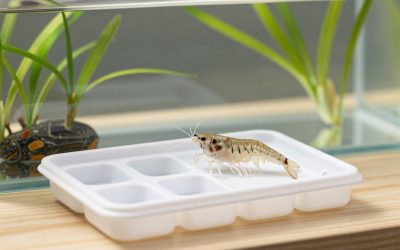
Freshwater dwarf shrimp have become one of the most popular segments of the aquarium hobby — and for good reason. Species like neocaridina (cherry shrimp) and caridina (crystal red, blue bolt) are endlessly fascinating, come in spectacular color morphs, and thrive in small tanks. But shrimp are more sensitive to water chemistry than most fish, and a proper tank setup from the start is the difference between a thriving colony and a tank full of losses. This guide covers everything you need to set up a successful freshwater shrimp tank, including the best equipment available on Amazon.
🛒 Best Price Today on Amazon
Prime members get fast, free shipping on everything above, plus member-only deals. New members get a 30-day free trial — cancel anytime.
As an Amazon Associate we earn from qualifying purchases at no extra cost to you.


Quick Picks: Best Equipment for a Freshwater Shrimp Tank
Why Trust Our Shrimp Tank Setup Recommendations
Our shrimp tank guidance draws from the collective knowledge of the freshwater invertebrate community, peer-reviewed aquaculture research on neocaridina and caridina water chemistry requirements, and practical experience setting up and maintaining shrimp colonies across species and difficulty levels. We specifically evaluated equipment combinations for parameter stability, shrimp safety (filtration without causing suction loss), and aesthetic quality — because a shrimp tank is typically a display centerpiece.
We focused recommendations on complete setups that give beginners a high success rate from day one, while also covering the nuances that advanced keepers need to know about substrate, remineralization, and species-specific parameters. All tank recommendations are suitable for both neocaridina (easiest, most forgiving) and caridina (more demanding, requiring specific pH and GH/KH) species.
In-Depth Reviews
1. Landen 30P Rimless Low Iron Glass Tank — Best Overall
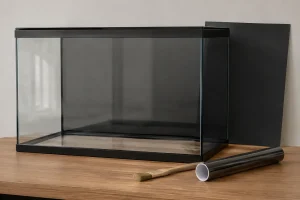
The Landen 30P has earned near-universal praise in the planted and shrimp tank community for a simple reason: the glass quality is exceptional. Low-iron glass contains less ferrous content than standard aquarium glass, which eliminates the green tint that makes plants and shrimp look washed-out in regular glass tanks. The crystal clarity reveals the true colors of red cherry shrimp, blue velvet shrimp, or crystal red shrimp in a way that standard glass simply cannot match.
The 30cm cube (approximately 8 gallons) is an ideal volume for a shrimp colony — large enough to maintain stable parameters, small enough to keep focused and aesthetically cohesive. The rimless design provides unobstructed sightlines from all angles. Note that the Landen tank is a bare tank requiring you to source filtration, lighting, and substrate separately — but this lets you optimize every component for shrimp keeping specifically.
- Pros: Superior low-iron glass clarity, rimless design, ideal volume, excellent build quality
- Cons: Tank only — requires separate filter, light, and substrate purchases; higher upfront cost than kit tanks
2. Aquatop Recife ECO 16 All-In-One Aquarium — Runner-Up
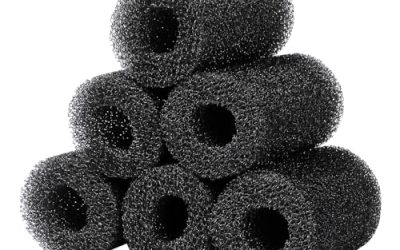
The Aquatop Recife ECO series offers a cleaner all-in-one solution for hobbyists who prefer a complete, cohesive setup without sourcing components individually. The filtration chamber is built into the rear of the tank, completely hidden from view, and uses a sump-style design where water flows back from the display area — meaning there’s no exposed intake that could trap shrimp. A coarse sponge pre-filter on the intake protects even juvenile shrimp from being drawn into the filter.
The 16-gallon volume supports a substantial shrimp colony and provides more parameter buffering than smaller nano tanks, making it an excellent choice for beginners who want stability. The included LED lighting covers planted tank requirements for low-to-medium light plants — java moss, java fern, anubias, and bucephalandra all thrive under it, creating ideal shrimp habitat. The clean aesthetic suits modern home environments.
- Pros: Complete all-in-one system, hidden shrimp-safe filtration, adequate LED for planted setups, stable larger volume
- Cons: Glass is standard (not low-iron); lighting may need upgrading for demanding plant species
3. Marineland Contour Glass Aquarium Kit 5 Gallon — Best Budget
For new hobbyists wanting to try shrimp keeping with minimal investment, the Marineland Contour 5-gallon kit provides a complete, functional starting point. The curved front glass panel is attractive and provides a wide-angle view of the interior. The kit includes a hidden back filtration system with adjustable flow and a 3-stage filter cartridge, plus a daylight/moonlight LED lighting system on a two-mode switch.
The 5-gallon volume is best suited for neocaridina shrimp (cherry shrimp and color variants) which are more tolerant of minor parameter fluctuations than caridina species. A colony of 20–30 cherry shrimp does well in this size. The filter intake should be covered with a pre-filter sponge (sold separately and inexpensively) to protect shrimp and fry. As a budget entry point into the hobby, this kit delivers good value and is widely available.
- Pros: Complete kit, attractive curved glass, good value, suitable for neocaridina starter colony
- Cons: Small volume requires more careful water management; filter intake needs pre-filter sponge addition; not suitable for demanding caridina species
Complete Freshwater Shrimp Tank Setup Guide
Step 1 — Choose your shrimp species: Neocaridina shrimp (red cherry, blue velvet, yellow neocaridina) are the best choice for beginners. They tolerate pH 6.5–8.0, GH 6–8, KH 2–5, and temperature 65–78°F. Caridina shrimp (crystal red, blue bolt, Taiwan bee) require soft, acidic water (pH 5.8–6.8, GH 4–6, KH 0–1) and active substrate — significantly more demanding.
Step 2 — Select substrate: For neocaridina, inert substrates (plain sand, fine gravel, or substrate like CaribSea Eco-Complete) work well. For caridina, an active buffering substrate (Fluval Stratum, ADA Amazonia) is essential — it lowers and stabilizes pH and softens water naturally. Active substrates exhaust after 12–18 months and must be replaced.
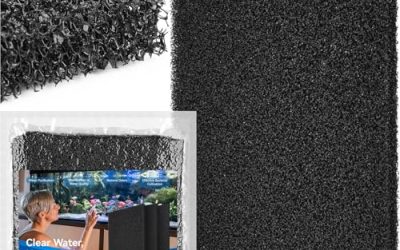
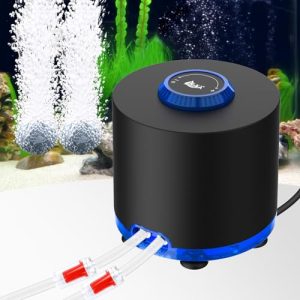
Step 3 — Filtration: Sponge filters are the gold standard for shrimp tanks. They provide gentle biological filtration with zero intake suction risk, host beneficial bacteria on the foam surface, and give shrimp a grazing surface for biofilm — a natural food source. Connect to a small air pump. For larger tanks, a hang-on-back filter with a pre-filter sponge covering the intake is the next best option.
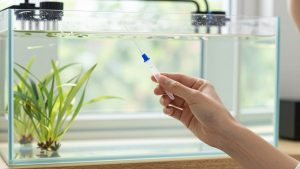
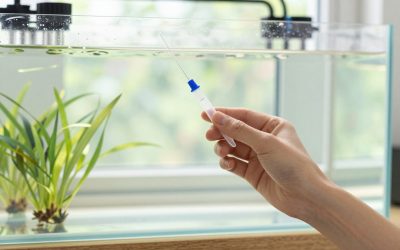
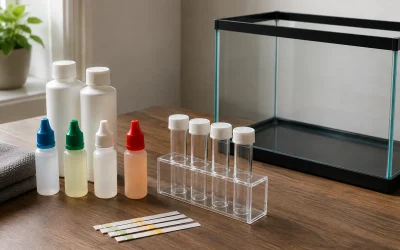
Step 4 — Cycle the tank: Never add shrimp to an uncycled tank. Run the filter for 4–6 weeks with an ammonia source (pure ammonia or fish food) until ammonia and nitrite consistently read zero. Shrimp are extremely sensitive to ammonia — even trace amounts cause rapid losses. Test with a liquid test kit (API Master Test Kit) rather than strip tests for accuracy.
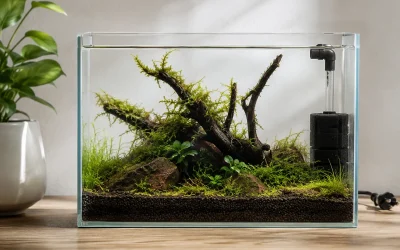
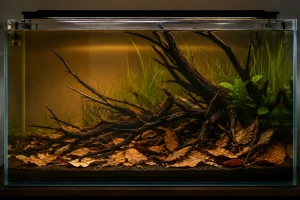
Step 5 — Plants and hardscape: Live plants are highly beneficial — they consume nitrates, provide surface area for biofilm, and create shelter. Java moss, java fern, anubias, and bucephalandra are shrimp-safe and thrive under low light without CO2 injection. Avoid copper-containing plant fertilizers — copper is lethal to shrimp at very low concentrations. Driftwood lowers pH naturally and provides biofilm grazing surfaces.
Frequently Asked Questions
How many shrimp can I keep per gallon? A general guideline is 5–10 neocaridina shrimp per gallon in a planted, well-filtered tank. A 5-gallon planted tank can comfortably support 30–50 cherry shrimp at full colony size. Caridina shrimp do better at lower densities — 3–5 per gallon.
Why are my shrimp dying after a water change? The most common cause is temperature or parameter shock. Match new water temperature precisely to tank water before adding. Shrimp are sensitive to sudden pH, GH, and KH shifts. Drip acclimation (letting water drip into the tank slowly over 30–60 minutes) is recommended for new shrimp and water changes larger than 20%.
Can I keep shrimp with fish? Neocaridina can coexist with small, peaceful fish (ember tetras, otocinclus, chili rasboras). Avoid any fish large enough to eat adult shrimp (most tetras over 1 inch), and understand that fry will be predated in a community setup. A species-only shrimp tank is recommended for breeding colonies.
What do freshwater shrimp eat? Shrimp are omnivorous scavengers and will graze on biofilm, algae, and decaying plant matter continuously. Supplement with high-quality shrimp-specific foods (Hikari Shrimp Cuisine, Glasgarten Bacter AE) 2–3 times per week. Blanched vegetables (zucchini, spinach) are also excellent supplements.
Final Verdict
For a premium shrimp display tank with maximum visual impact, the Landen 30P rimless low-iron glass tank is unmatched — pair it with a sponge filter, quality LED, and buffering substrate for a showpiece setup. The Aquatop Recife ECO 16 is the best all-in-one option for hobbyists wanting a complete, shrimp-safe system without component sourcing. And for beginners testing the waters with neocaridina, the Marineland Contour 5-gallon kit offers a low-risk, accessible entry point. Whichever you choose, cycle the tank fully before adding shrimp and monitor water parameters weekly — shrimp keeping rewards patience and attention to detail with a thriving, breeding colony that becomes one of the most visually captivating tanks in the hobby.
Related Reviews & Guides

Quick Picks: Best Substrate for a Shrimp Tank at a Glance
6 Best Freshwater Aquarium Water Test Kits 2026