Last Updated: October 9, 2026
- Recommended Stainless Steel Aquarium Tweezers
- Straight vs. Curved: Choosing the Right Tip Profile
- Key Specifications to Evaluate
- Planting Technique: Stems, Carpets, and Moss
- Cleaning and Corrosion Prevention
- Using Tweezers for Fish Feeding
- Frequently Asked Questions
- Building Your Complete Aquascaping Tool Kit
- Related Articles
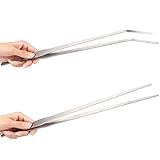
- Top Pick: Fri4Free 2PCS 10.6" Stainless Steel Aquarium & Reptile Feeding Tweezers
- Best Value: 18.9'' Extra Long Thickened Aquarium Tweezers, 304 Stainless Feeding Tongs
- Premium Choice: Aquarium Aquascape Tools Kit, Long 15 Inch Stainless Steel Aquatic Plants Tools, 4 in 1 Anti-Rust Aquascaping Tweezers Scissors Spatula Scrapers Tool Set for Fish Tank Cleaning Plant Trimming Shears

TL;DR: Stainless steel aquarium tweezers are the precision tool every aquascaper needs for planting, trimming, and repositioning without disturbing substrate or livestock. This guide covers types, techniques, and what to look for when buying.
Aquarium Tweezers Stainless Steel: Precision Planting Tools for Serious Aquascapers
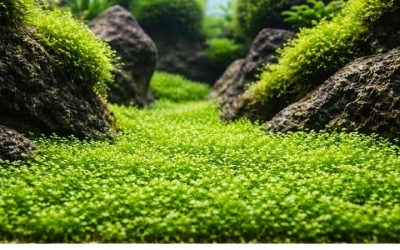
Bare hands in the aquarium are the enemy of a clean aquascape. Every time you reach into a planted tank with your fingers, you compress substrate, uproot neighboring stems, and disturb the bacterial bed on your hardscape. A good pair of aquarium tweezers stainless steel construction gives you reach, control, and finesse that fingers simply cannot match.
As an Amazon Associate we earn from qualifying purchases at no extra cost to you.



This guide covers everything from tip geometry to proper technique, so you can plant Dutch-style rows, tuck moss into crevices, and feed shy fish with equal confidence.
🛒 Best Price Today on Amazon
Prime members get fast, free shipping on everything above, plus member-only deals. New members get a 30-day free trial — cancel anytime.
Start 30-Day Prime Free Trial →See Today’s Amazon DealsRecommended Stainless Steel Aquarium Tweezers



As an Amazon Associate we earn from qualifying purchases. Product prices and availability are accurate as of the date/time indicated.




As an Amazon Associate we earn from qualifying purchases. Product prices and availability are accurate as of the date/time indicated.


As an Amazon Associate we earn from qualifying purchases. Product prices and availability are accurate as of the date/time indicated.
Straight vs. Curved: Choosing the Right Tip Profile
The tip geometry of aquarium tweezers determines what tasks they handle well. Straight tweezers offer the most natural hand-to-target alignment — they’re ideal for planting stems in open midground and background areas. Curved tweezers (angled 45–90 degrees) let you reach over hardscape and into tight foreground spaces without your hand breaking the water surface at an awkward angle.
Most experienced aquascapers own both. If you’re starting with one pair, a 27cm curved set handles the widest range of tasks in tanks up to 90cm wide. For nano tanks under 30cm, a compact 20cm straight pair is easier to maneuver.
Key Specifications to Evaluate
| Spec | What to Look For | Why It Matters |
|---|---|---|
| Length | 25–30cm for standard tanks | Reaches tank bottom without submerging your wrist |
| Steel grade | 304 or 316 stainless | Resists saltwater corrosion; 316 is superior for marine |
| Tip width | 2–4mm at the tip | Narrow tips grip fine stems; wide tips handle moss clumps |
| Spring tension | Medium — returns to open | Reduces hand fatigue during long planting sessions |
| Surface finish | Matte or brushed | Prevents light reflections that startle fish |
Planting Technique: Stems, Carpets, and Moss
Different plant types require different tweezer handling. Mastering each technique will dramatically reduce transplant shock and failed plantings.
Stem Plants
Grip the stem 1–2cm above the cut end — not at the very tip, which can crush the node. Insert the tweezers at a 45-degree angle into the substrate, push to the desired depth, then gently release and withdraw while keeping slight forward pressure on the stem. This deposits the plant without pulling it back out. In an aquascape layout, space stems 2–3cm apart to allow lateral growth without shading lower leaves.
Carpeting Plants (HC, Monte Carlo, Dwarf Baby Tears)
Divide tissue culture plugs into 5–8mm pieces. Grip each piece at the base of the stem bundle, not the leaves. Push straight down into substrate at least 1cm deep — shallow planting is the leading cause of carpet plants floating free. Curved tweezers work best here; straight tips tend to pull the plug back up on withdrawal.
Moss on Hardscape
Tweezers with fine tips allow you to tuck moss strands into crevices in rocks and driftwood. Work in small sections, pressing the moss against the surface before tying or using super glue gel. Tweezers are also essential for removing algae threads from moss without pulling the whole mat free — a task that fingers do clumsily at best. Combine this step with proper filter maintenance to keep flow distributing nutrients evenly across the moss surface.
Cleaning and Corrosion Prevention
Even food-grade stainless steel will develop surface oxidation (tea staining) if left wet. After each use, rinse tweezers in fresh water, dry immediately with a cloth, and store out of the tank. For saltwater tanks, a 30-second soak in diluted white vinegar after rinsing removes mineral deposits before they cause pitting.
Never leave stainless tweezers in the tank full-time. The constant water exposure, especially in tanks with RO/DI water at very low TDS, accelerates surface oxidation faster than intermittent use. Keep them in a dry tool roll or case between sessions.
Using Tweezers for Fish Feeding
Long tweezers excel at target feeding. Picky eaters like mandarin dragonets, pipefish, and small puffers can be individually fed live or frozen food without other tank inhabitants intercepting the meal. Grip food firmly but gently — enough to hold it against water resistance, not so tight you crush it. Approach slowly from the front of the tank; approaching from above triggers flight responses in many species.
For garlic-soaked foods used to boost fish immunity, tweezers keep the potent smell off your hands entirely — a practical benefit aquarists often overlook.
Frequently Asked Questions
Are cheap aquarium tweezers worth buying, or should I invest in quality stainless steel?
Budget tweezers made from low-grade steel corrode quickly, especially in saltwater or tanks with liquid fertilizers. The rust contaminates water and can harm sensitive shrimp. Investing in 304 or 316 stainless steel tweezers pays off within the first few months — they last years with basic care, while cheap alternatives may need replacing every season.
What length aquarium tweezers do I need for a 55-gallon tank?
A 55-gallon tank is typically 48cm wide and 51cm tall. For comfortable bottom access without submerging your entire arm, choose tweezers 28–30cm in length. This gives you full bottom-of-tank reach while keeping your hand comfortably above the waterline. For tanks 24 inches tall or deeper, 30cm tweezers are the minimum practical length.
Can I use kitchen tongs or cooking tweezers instead of aquarium tweezers?
Kitchen tweezers are typically shorter (15–20cm), made from lower-grade steel, and lack the spring tension needed for precise work. More critically, many have coating or residue from food use that can leach into your tank water. Aquarium-specific stainless steel tweezers are inexpensive enough that substituting kitchen tools is not worth the risk to your livestock.
Do aquarium tweezers scratch acrylic tanks?
Metal tweezers can scratch acrylic if the tip contacts the tank wall under pressure. Work at a shallow angle to the glass or acrylic and keep the tips directed inward toward the substrate and plants — not pressing against the tank walls. In acrylic nano tanks, consider plastic-tipped tweezers for delicate tasks near the glass.
How do I remove algae from aquarium tweezers without scratching them?
Soak tweezers in a 10:1 water-to-bleach solution for 5 minutes, then rinse thoroughly and neutralize with dechlorinator before the next use. For regular maintenance, a soft toothbrush with white vinegar removes algae and mineral scale without abrading the steel surface. Avoid steel wool — it embeds iron particles that cause rust spots.
Building Your Complete Aquascaping Tool Kit
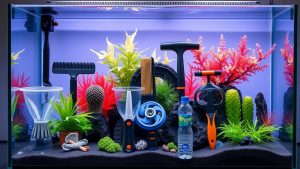
Stainless steel tweezers are just one component of a complete aquascaping toolkit. Pair them with curved scissors for trimming, a substrate spatula for reshaping, and a flat leaf net for debris collection. Keep all tools in a dedicated case or roll — mixing aquarium tools with general household tools risks contaminating your tank with cleaning product residues.
Well-maintained tools last a decade or more. The investment in quality stainless construction pays dividends across every future tank you build, making each aquascape layout cleaner, faster, and less stressful for your fish and plants.
Ready to decide? Our #1 pick for 2026 is the Length.
Live price & availability on Amazon.
Related Reviews & Guides


Aquarium Light Color Spectrum for Plants: Kelvin and PAR

Aquarium Plant Super Glue Gel