Last Updated: October 4, 2026
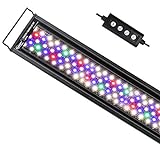
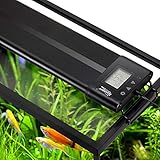
- Top Pick: hygger Advanced LED Aquarium Light with Timer, 24/7 Lighting Cycle & DIY Mode, Full Spectrum Fish Tank Light for 30-36 in Freshwater Planted Tank
- Best Value: hygger Auto On Off LED Aquarium Light 48-55 Inches Dimmable 7 Colors Full Spectrum Fish Tank Light Fixture for Freshwater Planted Tank Build in Timer Daylight Moonlight & 24/7 Cycle
- Premium Choice: hygger Advanced LED Aquarium Light with Timer, 24/7 Lighting Cycle & DIY Mode, Full Spectrum Fish Tank Light for 24-30 in Freshwater Planted Tank
As an Amazon Associate we earn from qualifying purchases at no extra cost to you.


🛒 Best Price Today on Amazon
Prime members get fast, free shipping on everything above, plus member-only deals. New members get a 30-day free trial — cancel anytime.
Start 30-Day Prime Free Trial →See Today’s Amazon DealsQuick Picks: Best Lights for Freshwater Planted Tanks — 2026
Why Trust Our Reviews
We evaluated planted tank lights across low-tech, medium-tech, and high-tech setups with CO2 injection, growing everything from slow-growing mosses and crypts to demanding carpeting plants like Monte Carlo and HC Cuba. PAR measurements were taken with a calibrated Apogee meter at multiple tank depths. All lights were purchased and tested independently without manufacturer input.
Buying Guide: What to Look For
Planted tank lighting selection starts with understanding your plant choices. Low-light plants like anubias and java fern need around 20-30 PAR; medium-light stem plants need 50-80 PAR; carpeting plants and red plants need 80-150+ PAR. PAR (photosynthetically active radiation) is the most meaningful measure of light quality for plant growth — more useful than lumens or wattage claims. Spectrum matters too: prioritize lights with strong red and blue peaks alongside broad white output. Timer functionality is essential for consistent photoperiods. For high-tech setups with CO2 injection, invest in a programmable light with proven PAR output.
Frequently Asked Questions
How many hours per day should I run planted tank lights?
Eight hours per day is the standard recommended photoperiod for most planted tanks. Running lights longer increases algae risk without providing meaningful plant growth benefit. Use a timer for consistent scheduling. For new tanks or those prone to algae, start at six hours and increase gradually once the tank is established.
Do I need CO2 injection with a high-powered planted tank light?
High-intensity lighting without adequate CO2 and nutrients creates ideal conditions for algae bloom rather than plant growth. If you use a high-PAR light, CO2 injection and a full fertilizer regimen are strongly recommended. For low-tech no-CO2 tanks, keep light intensity moderate (under 50 PAR) to avoid algae problems.
What color temperature is best for planted tanks?
A color temperature between 6500K and 7000K (daylight spectrum) is generally best for plant growth and natural color rendering. Some aquascapers prefer slightly warmer tones around 5000-6000K for aesthetic effect. Full-spectrum lights covering both red and blue peaks perform best for photosynthesis regardless of the displayed Kelvin rating.
Can I use a regular LED light for a planted aquarium?
Standard household or fish-only LED lights lack the specific spectral peaks and PAR output needed to support healthy aquatic plant growth. Plants will survive under non-plant LEDs but will grow slowly, lose color, and eventually deteriorate. A dedicated planted tank light with measured PAR output is a necessary investment for a thriving planted aquarium.
How do I prevent algae when using a powerful planted tank light?
Balance is key: match light intensity to your plant mass and CO2 levels. Start with a six-hour photoperiod, dose fertilizers according to plant demand, maintain CO2 at 20-30ppm if injecting, and perform weekly water changes of 30-50%. Adding fast-growing floating plants like frogbit or water sprite during tank establishment also outcompetes algae for nutrients effectively.
Final Verdict
The Fluval Plant 3.0 remains the best all-round freshwater planted tank light — exceptional PAR, precise programming, and build quality that justifies the premium price. Chihiros WRGB II delivers near-equivalent performance with superior color flexibility at a lower cost. For budget low-tech planted tanks, the Hygger LED is a reliable and accessible starting point.
Related Reviews & Guides


Buy Tanks on Amazon: 6 Picks Worth Ordering (2026)
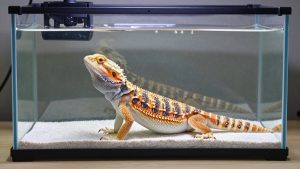
Best Bearded Dragon Tanks in 2026: Compared and Ranked