Last Updated: October 21, 2026
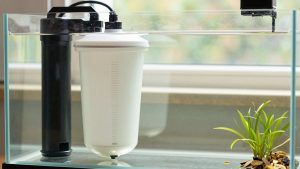
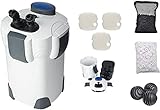
- Top Pick: AQUASMITH HOB Aquarium Filter, Quiet Fish Tank Filter with Dedicated Waste Separation Canister, Easy Change Water, One-Touch Drainage (118GPH for 10-30 Gallon)
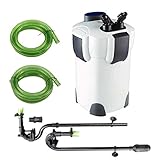
- Best Value: SunSun Hw302 265GPH Pro Canister Filter Kit
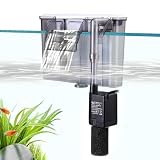
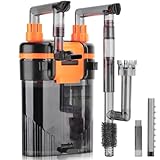
- Premium Choice: hygger External Hang-On-Back Canister Aquarium Filter,Quiet Fish Tank Filter with 3-Stage Filtration,Anti-Dry Burn Motor,Adjustable Flow,Oil Skimmer,Duckbill Nozzle,Shower Spray Bar (8W,40-60 Gal)
Canister filter vs HOB filter is mostly a question of tank size and of how much maintenance you are genuinely willing to do. A canister holds far more media and hides in the cabinet, while a hang-on-back unit is simpler, cheaper and considerably easier to restart when something eventually goes wrong.
As an Amazon Associate we earn from qualifying purchases.
As an Amazon Associate we earn from qualifying purchases at no extra cost to you.




By David Nguyen
Media Volume Against Maintenance Load
These two overlap heavily between 20 and 55 gallons (76-208 L), which is where the decision actually gets made. Canister filter vs HOB filter comes down to turnover, media volume, where the water enters and leaves, and what each costs to keep running.
The Deciding Numbers: Turnover, Loaded Flow and Media Volume
Turnover is the shared benchmark in any canister filter vs HOB filter comparison: 4-6 times real water volume per hour for community stocking, 8-10 times for goldfish and cichlids. Both types are rated in GPH, so they can be compared directly against that figure.
Printed GPH is measured with an empty housing in both cases. Real flow drops 30-50% once media is loaded, and a canister loses additional flow to hose length and head height, so size from the loaded figure rather than the box.
Media volume is where they diverge sharply. A canister typically holds several times the media of a comparable hang-on-back, which matters for heavy bioloads and for anyone who wants mechanical, biological and chemical stages running simultaneously.
The Other Criteria: Distribution, Noise and Maintenance Load
Distribution is the structural advantage in any canister filter vs HOB filter comparison. Inflow and outflow are separate pieces of hardware, so they can sit at opposite ends of a 48 in (122 cm) tank, while a hang-on-back draws and returns water within a few inches of itself.
Maintenance load runs the other way. A hang-on-back opens in seconds and needs no priming, while a canister requires disconnecting hoses, carrying a full housing to a sink, and re-priming afterwards, which is the step people quietly stop doing.
Weigh that honestly against your own habits. A canister serviced twice a year outperforms a hang-on-back, and a canister that has not been opened in eighteen months is delivering a fraction of its rated flow through hoses lined with biofilm.
Tank Size, Placement and Fit
A hang-on-back needs 4-6 in (10-15 cm) of clearance behind the glass and a rim it can seat on. A canister needs cabinet interior height for the housing plus the hose bend above it, and a door opening wide enough to remove it for servicing.
Measure before you order: rear clearance against unit depth, cabinet interior height and door width against canister dimensions, and stand capacity against roughly 10 lb/gallon (about 1 kg/L). A filled 55 gallon (208 L) tank passes 600 lb (272 kg).
Which One Suits Which Tank
Rather than ranking them, this section splits the canister filter vs HOB filter question by what you keep and where the tank sits. The canister filter vs HOB filter decision follows tank size and cabinet far more reliably than it follows specifications.
Canister: For Tanks Over 40 Gallons
Above 40 gallons (151 L) the media capacity difference stops being theoretical. A community 55 gallon (208 L) tank needs roughly 190-280 GPH (719-1060 LPH) of real flow, and a canister rated 300-400 GPH (1136-1514 LPH) delivers that with room for a full media stack.
Who it suits: anyone with a four foot tank and a closed cabinet. Who it does not: people who will not commit to periodic teardowns, since a canister left unserviced loses flow gradually as hoses accumulate biofilm and nobody notices for months.
Canister: For Planted and Aquascaped Tanks
All the hardware sits outside the tank, and inflow and outflow can be placed precisely, which is why aquascapers use them almost exclusively. Inline accessories such as a CO2 diffuser or heater can also be fitted to the hose run.
Who it suits: planted tanks where visible equipment matters, and anyone running CO2. Who it does not: nano keepers, since even a small canister is more machine than a lightly stocked 10 gallon (38 L) tank needs.
Canister: For Quiet Rooms
The motor sits in a sealed housing inside a cabinet, which makes a canister the quietest powered option at any size. There is no splash, because the return is submerged rather than falling from a lip.
Who it suits: bedrooms, studios and open-plan spaces. Who it does not: anyone with an open stand, where the housing sits visible on the floor and the acoustic advantage largely disappears.
Summer changes this calculation for some tanks. Warm water holds less dissolved oxygen, so many keepers add an air stone through the hottest months, and the pump buzz undoes much of the quiet a canister was bought for.
HOB: For Tanks Up to 40 Gallons
Below 40 gallons (151 L) a hang-on-back with a loose media basket covers turnover comfortably and costs considerably less. A 20 gallon (76 L) tank needs roughly 70-110 GPH (265-416 LPH) of real flow, which a unit rated 150-200 GPH (568-757 LPH) provides.
Who it suits: standard community tanks with rear clearance. Who it does not: bettas without a flow baffle, and anyone who lets the water level drop, since the intake ends up above the waterline and the unit runs dry silently.
HOB: For Simple Maintenance
Opening a hang-on-back takes seconds, requires no hose disconnection and needs no priming afterwards. That difference decides whether monthly media rinsing actually happens, which matters more to water quality than media volume does.
Who it suits: beginners, busy households and anyone who has abandoned a maintenance routine before. Who it does not: aquascapers, since the unit is visible along the back glass and cannot be hidden in an open layout.
Check the media basket before buying, though. Several models look like loose-media units and accept only the manufacturer’s own inserts, which puts you on a monthly purchase and discards the colonised media every time it is swapped.
HOB: For Redundancy on a Budget
Two hang-on-back units at opposite ends of a tank usually cost less than one canister, cover a long footprint better than a single unit, and mean servicing or losing one never leaves the tank unfiltered.
Who it suits: open stands, long tanks and anyone who wants insurance against a single failure. Who it does not: people counting watts closely, since two motors draw power continuously, and tanks with limited rear clearance for even one unit.
| Criterion | Canister | Hang on back |
|---|---|---|
| Media capacity | Large, full stack possible | Limited, mechanical and biological |
| Flow distribution | Inflow and outflow separated | Both within a few inches |
| Noise | Lowest, sealed and in a cabinet | Hum plus splash as level drops |
| Maintenance | Hoses, teardown, re-priming | Opens in seconds, no priming |
| Typical failure | Gasket leak onto the floor | Loses prime, can run dry |
| Best tank range | 40 gallons (151 L) and up | 10-40 gallons (38-151 L) |
Choosing Between Them and When Neither Fits
The branches above cover most tanks in the canister filter vs HOB filter decision. This settles the direct decision, names the case where neither is the answer, and gives the arrangement that costs less than the obvious choice.
Choose the Canister When
Pick the canister above 40 gallons (151 L), when the tank is a four foot footprint needing flow at both ends, when equipment must be invisible, when you run CO2 and want inline accessories, or when the tank is in a room where noise matters.
Accept the trade-offs: hoses and priming, periodic full teardowns, a higher purchase price, and a leak risk that puts water on the floor under a cabinet rather than somewhere you would notice quickly.
Choose the Hang on Back When
Pick the hang-on-back from 10-40 gallons (38-151 L), when you want maintenance you will actually do, when the stand is open, or when budget matters and the tank does not need a full media stack.
Accept the trade-offs here too: it loses prime after power cuts, needs a pre-filter sponge in any shrimp tank, usually needs baffling for a betta, and holds far less media than a canister of equivalent rating.
When Neither Is the Right Answer
Very small tanks suit neither. Below 10 gallons (38 L) a sponge filter or a small internal filter fits better, costs less and cannot run dry, and a canister at that volume is simply the wrong scale of machine.
Very heavy bioloads outgrow both individually. A heavily stocked 75 gallon (284 L) cichlid tank wanting 8-10 times turnover is better served by a sump, or by a canister paired with a second unit, than by either type working alone.
Neither substitutes for cycling either. Whichever you choose, the tank still needs three to eight weeks to build a bacterial colony before fish go in, and moving seeded media from an existing filter shortens that far more than any specification difference does.
Living With Them: Failures and Twelve-Month Costs
Both run every hour of the year, so this comparison is settled as much by how they age as by how they perform when new.
Where Each One Typically Fails
Canisters leak at perished gaskets, and because the housing sits in a closed cabinet the water often reaches the floor before anyone sees it. Hoses accumulate biofilm and reduce flow gradually, and re-priming after service is where patience runs out.
Hang-on-back units lose prime after a power interruption and can run dry with no change in sound. Intake tubes fall short as evaporation drops the level, impellers wear and rattle, and lids warp until water runs down the back glass.
What Each Costs to Keep Running
Both consume mechanical floss and the occasional impeller. Canisters add gaskets and hoses over the years, while cartridge-based hang-on-back models add a fixed monthly purchase that loose-media versions of either type avoid entirely.
Electricity belongs in the comparison and rarely appears in it. Both draw power continuously for twelve months a year, and with electricity prices having risen in many regions, the wattage on the specification sheet is worth a glance before deciding.
Warranty, Spares and Electrical Safety
Warranties on both generally exclude moving parts, treating impellers, gaskets and hoses as consumables. Check whether seals and impellers are sold individually, because a canister with available spares outlasts one where a perished gasket means replacing the whole unit.
Electrical safety applies to both equally. Anything beside water should carry a UL or ETL mark, every powered device belongs on a GFCI outlet with a drip loop, and a cabinet holding a canister deserves a leak check every time you open it.
Frequently Asked Questions
These four come up most often when someone is upgrading and the price gap between the two options is significant.
Is a canister always better filtration?
It holds more media, which helps with heavy bioloads and gives you a chemical stage. Biological capacity beyond what the waste supports does nothing, so on a lightly stocked 20 gallon (76 L) tank the practical difference is small.
Can I run both together?
Yes, and it is a sensible arrangement on larger tanks. The canister handles the main load while the hang-on-back covers the far end and provides a colonised backup, so servicing either never leaves the tank unfiltered.
Which is better for a planted tank?
The canister, in most cases, because the hardware stays out of the tank, inflow and outflow can be placed precisely, and inline CO2 or heating can be fitted to the hose run. A hang-on-back also drives off more dissolved CO2 through surface agitation.
How often does each need cleaning?
Rinse hang-on-back mechanical media monthly in tank water. Canisters need mechanical media rinsed every four to eight weeks and a fuller service including hoses roughly twice a year. Never rinse biological media under the tap in either case.
See More:
The Bottom Line
In the canister filter vs HOB filter comparison, the default above 40 gallons (151 L) is the canister, sized so real flow lands at 4-6 times water volume per hour with inflow and outflow at opposite ends of the tank. Below that, a hang-on-back with a loose media basket does the same job for less money and needs maintenance you will actually keep up with. The lower-cost arrangement on a long tank is two hang-on-back units rather than one canister, which also removes the single point of failure.
Product links and buying checks
As an Amazon Associate, we earn from qualifying purchases.
- Fluval 307 canister filter on Amazon — A canister example for the larger-tank side of this comparison, rated for 40–70 US gallons. Smaller aquariums need a separately sized filter.
Prices, availability and included accessories can change. Review the current listing and the compatibility guidance above before purchasing.
6 Best Sump Kits For Aquarium 2026
Best Filter for Shrimp Tank: Options Compared by Numbers