Last Updated: November 22, 2026
Disclosure: As an Amazon Associate, I earn from qualifying purchases.
A drop checker is the simplest long-term CO2 monitor a planted tank keeper can own. It is a small glass or acrylic chamber that hangs inside the aquarium, holding a reference solution separated from the tank water by a trapped pocket of air. Carbon dioxide moves out of the water, across that air gap, and into the solution, shifting its pH. A pH indicator dye answers with color: blue means CO2 is low, green means the tank is in the usual target zone, and yellow warns that CO2 is high enough to stress fish and shrimp.
That simplicity is also the trap. A drop checker does not measure your tank water directly, it does not react instantly, and it is only as accurate as the reference solution inside it. Used with those limits in mind, it is an excellent early-warning device while you dial in a regulator. Used as a precision instrument, it will mislead you. This guide compares five widely available kits and is plain about where every drop checker falls short.
How to Choose a CO2 Drop Checker
Start with the solution, not the glass. The color change only translates into a CO2 estimate because the solution is made with water of a known carbonate hardness, standardized at 4 dKH, plus a bromothymol blue indicator. At 4 dKH, green corresponds to roughly 30 ppm of CO2, the target most planted tanks aim for. If a kit ships with plain indicator dye and expects you to add tank water, the reading depends on your tank’s own KH and stops being a CO2 measurement at all. Every kit here includes or is designed around a pre-mixed 4 dKH reference solution. The 4 dKH solution matters more than the glass around it, so treat any checker bundled with uncalibrated dye as decoration.
Accept the lag time. CO2 has to leave the water, cross the air gap, and change the pH of a small volume of solution. Most checkers need one to two hours to reflect a change in injection rate, and a checker in a low-flow corner trails by more. Never chase the color minute by minute, and never make a second adjustment before the first has had two hours to register.
Plan on replacing the reagent. Indicator solution degrades through light exposure, contamination, and evaporation, and most manufacturers recommend replacing it every two to four weeks. A kit with a generous bottle is cheaper to live with than nicer glass with a thimble of reagent.
Match size and shape to the tank. Bulb and U-tube checkers read easily in mid-sized and large tanks but look oversized in a nano aquarium. Compact designs disappear into small scapes, though their smaller solution volume is harder to read at a distance. Readable size beats elegant size: if you cannot tell green from blue-green across the room, the checker is not doing its job.
Think about mounting and placement. Nearly all drop checkers hang from a suction cup, and suction cups are the commonest failure point, hardening and letting go after months underwater. Two cups, or a hang-on design, are more secure. Place the checker opposite the diffuser, a few inches below the surface, in moving water. A checker in the bubble stream reads the plume, not the tank, and flatters your CO2 while the far corner starves.
Keep expectations honest. A drop checker estimates CO2 at one location, hours in the past, in broad color bands. It cannot tell 25 ppm from 35 ppm, and cannot protect livestock alone. Pair it with observation: fish gasping at the surface overrule a green checker every time.
NilocG Aquatics Glass CO2 Drop Checker Kit
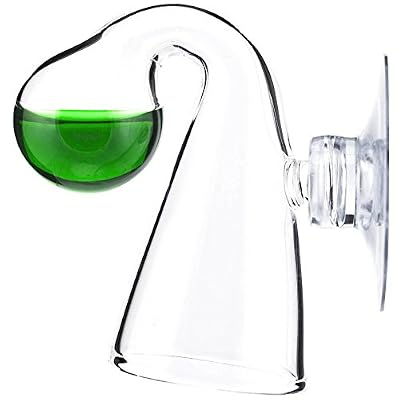
The NilocG kit is built around the thing that matters most: solution volume. It pairs a transparent glass checker with a 60 ml bottle of 4 dKH/pH reagent, several times what most kits include. That bottle keeps a checker running accurately through many refills, or supplies two tanks at once. The glass body is compact, fills without syringes, and the stated two-hour reading time matches how drop checkers actually behave.
Specs
- Material: transparent glass chamber
- Solution: 60 ml bottle of 4 dKH/pH reagent included
- Mount: single suction cup
- Fill method: direct fill, pipette included in the box
- Stated response time: about 2 hours
Pros:
– Largest solution supply here, so scheduled reagent changes are easy to keep
– Honest two-hour response guidance instead of instant-reading claims
– Compact profile suits mid-sized tanks; simple shape is easy to rinse and refill
Cons:
– Single suction cup is the long-term weak point
– Glass body will not survive a drop onto a hard floor
– Compact chamber is less readable in very large tanks
Who it suits: Keepers who want one dependable checker and enough reference solution to maintain it for months, including anyone running CO2 on two tanks.
FZONE Aquatic CO2 Glass Drop Checker

FZONE’s checker is a classic bulb-style glass design sold as a complete starter kit: checker, suction cup, and a 15 ml bottle of 4 dKH/PH solution. The fill routine is simple, half full, mount it on the glass, and the listing suggests checking back after one hour. Treat that hour as a minimum, since full equilibration commonly takes closer to two, but the kit is sensibly put together and the solution is a proper pre-mixed reference, not plain dye.
Specs
- Material: glass chamber, bulb style
- Solution: 15 ml bottle of 4 dKH/PH solution included
- Mount: single suction cup
- Fill level: half full before mounting
- Stated response time: about 1 hour
Pros:
– Complete kit with genuine 4 dKH reference solution in the box
– Simple setup that suits a first pressurized CO2 system
– Classic shape is easy to read; widely stocked, so refills are easy to source
Cons:
– The 15 ml bottle runs out far sooner than larger kits
– One-hour reading claim is optimistic; allow up to two hours before adjusting
– No color chart in the listed package contents
Who it suits: Beginners setting up their first injected tank who want a recognized kit that works out of the box and are comfortable buying a refill bottle later.
Rhinox Glass Drop Checker Kit

Rhinox differentiates its kit with guidance rather than volume. The box includes a printed color chart and a 10 ml bottle of pre-mixed 4 dKH reagent, with setup specified as a three-drop dose and a half-full ball. The chart sounds minor until you have tried to judge blue-green versus green under warm lighting from memory; a fixed reference removes much of the guesswork. The trade-off is the smallest solution supply here.
Specs
- Material: glass chamber
- Solution: 10 ml bottle of pre-mixed 4 dKH and pH reagent included
- Mount: single suction cup
- Extras: printed color chart included
- Fill dose: 3 drops, ball filled to half
Pros:
– Color chart makes consistent color calls much easier for new keepers
– Pre-mixed 4 dKH reagent gives a valid reference from the first fill
– Small, tidy glass body suits nano and mid-sized aquascapes
Cons:
– 10 ml of solution is the least here, so refills come quickly
– Inverting the checker while keeping the air pocket in place takes practice
– Suction mounting only, with no hang-on alternative
Who it suits: New CO2 users who want the reading process spelled out, and nano tank owners who value a compact checker plus a chart.
Pawfly Glass CO2 Drop Checker Kit
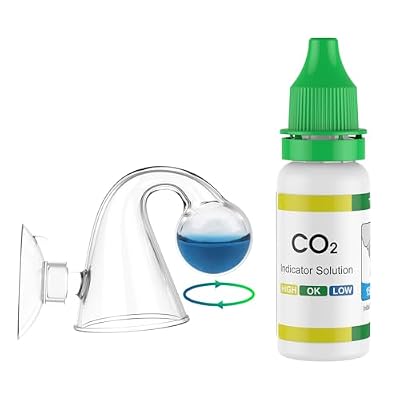
Pawfly’s kit uses a curved glass tube and addresses the most mundane failure head-on: it ships with two suction cups instead of one, so the checker stays put and a spare is on hand when the first hardens. It includes reagent solution, fills with 20 drops, mounts vertically with the opening facing down, and states accurate results in about two hours. The tube sits flatter against the glass than bulb designs.
Specs
- Material: thick glass, curved tube design
- Solution: reagent solution bottle included
- Mount: 2 suction cups included
- Fill dose: 20 drops of reagent
- Stated response time: about 2 hours
Pros:
– Two suction cups tackle the commonest mounting failure
– Realistic two-hour reading guidance sets correct expectations
– Thick, smooth glass; slim profile hugs the tank wall
Cons:
– Curved tube holds a smaller visible volume of solution than a bulb checker
– Both supplied cups will eventually age and need replacing
– Tube must be mounted opening-down; a tilted install gives false readings
Who it suits: Keepers frustrated by checkers sliding down the glass, and anyone wanting a low-profile monitor for a rimless display tank.
Yagote Glass CO2 Drop Checker

Yagote’s checker is one of the longest-running budget glass designs in the hobby: a thick-walled body, a suction cup, and instructions blunt about the wait, two hours before reading. Fill is five drops of indicator solution, and the heavy glass feels less fragile than most inexpensive checkers. Read the listing variant carefully, because it is sold both alone and bundled with solution, and the base version assumes you already have 4 dKH solution on hand.
Specs
- Material: thick glass body
- Solution: depends on listing variant; with-solution version available
- Mount: single suction cup
- Fill dose: 5 drops of indicator solution
- Stated response time: about 2 hours
Pros:
– Thick glass is sturdier than most entry-level checkers
– Long track record in the hobby with a simple, proven shape
– Honest two-hour guidance in the instructions; easy shape to clean
Cons:
– Base listing may not include solution, so check the variant before buying
– Single suction cup, with the usual hardening over time
– No color chart supplied
Who it suits: Budget-minded aquascapers who already keep 4 dKH solution, and experienced keepers wanting a spare checker for a quarantine or breeding setup.
Comparison Table
| Product | ASIN | Body material | Solution included | Mount | Stated read time |
|---|---|---|---|---|---|
| NilocG Aquatics Glass CO2 Drop Checker Kit | B01MY87WVP | Glass | 60 ml 4 dKH reagent | 1 suction cup | About 2 hours |
| FZONE Aquatic CO2 Glass Drop Checker | B07YCQ77JJ | Glass | 15 ml 4 dKH solution | 1 suction cup | About 1 hour |
| Rhinox Glass Drop Checker Kit | B0895Z9399 | Glass | 10 ml 4 dKH reagent, color chart | 1 suction cup | Not stated |
| Pawfly Glass CO2 Drop Checker Kit | B0DYDS12NP | Glass, curved tube | Reagent solution | 2 suction cups | About 2 hours |
| Yagote Glass CO2 Drop Checker | B01M6W04WO | Thick glass | Varies by listing variant | 1 suction cup | About 2 hours |
FAQ
How long does a CO2 drop checker take to show a change?
Expect one to two hours. CO2 must cross the air gap and shift the pH of the reference solution before the color moves, so the device always shows recent history rather than the present moment. Adjust the regulator in small steps and wait at least two hours before judging.
Why does the solution have to be 4 dKH water?
The color only converts into a CO2 estimate because the reference water has a known carbonate hardness. At 4 dKH, green corresponds to roughly 30 ppm of CO2, the common target. Fill a checker with tank water and the color reflects your tank’s own KH instead, making the reading meaningless.
How often should I replace the drop checker solution?
Every two to four weeks is sensible. Light, contamination, and evaporation slowly shift the reagent, and an old fill can sit at the wrong color permanently. Larger bottles, like the 60 ml NilocG supply, make the schedule easier to keep.
Where in the tank should a drop checker be placed?
Mount it a few inches below the surface, opposite the diffuser, in gentle flow. That position samples the water your plants actually live in. A checker in the diffuser’s bubble stream reads the plume and overstates CO2 for the rest of the tank.
Conclusion
Every drop checker here works on the same principle; the honest differences are solution volume, mounting security, readability, and how truthfully the maker describes the wait. The NilocG kit is the easiest to recommend because its 60 ml bottle supports the replacement schedule that keeps readings valid. FZONE offers a complete starter kit, Rhinox adds the color chart beginners benefit from, Pawfly solves the falling-cup problem, and Yagote remains a sturdy spare.
Whichever you choose, use it as the slow, steady indicator it is. Fill it with proper 4 dKH solution, place it away from the diffuser, change the reagent on schedule, and adjust the regulator one small step at a time. Read that way, a drop checker guards against the two failures that hurt planted tanks most: too little CO2 for the plants, and too much for the fish.
Best Aquarium Overflow Box for a Planted Tank: Top Picks
Planted Aquarium for Beginners: Easy Plants and Setup Guide