Last Updated: October 4, 2026
Quick answer: Our top pick in 2026 is the Natural pea gravel — our #1 rated choice. See the full ranked comparison, alternatives and buying advice below.
The Short Answer
It depends: aquarium sand is an excellent substrate if you are willing to clean it gently and choose a depth that matches your tank’s livestock and planting goals. For most freshwater community tanks, a 1 to 2 inch layer of inert sand looks natural, feels safe for bottom-dwelling fish, and is easy to maintain with the right siphoning technique. It is not the best default choice for heavily planted tanks that depend on root-feeding plants, or for anyone who wants a completely hands-off cleaning routine.
Sand is especially appealing for corydoras, loaches, many cichlids, shrimp, and fish that sift or rest on the bottom. It can also make a small aquarium look brighter and more spacious. But its fine particles compact more easily than gravel, trap visible debris on the surface, and may cloud the water if added or disturbed carelessly.
As an Amazon Associate we earn from qualifying purchases at no extra cost to you.


What You Actually Get
Aquarium sand is a fine-grain substrate placed on the bottom of a fish tank. Unlike standard gravel, which typically has particles around 2 to 5 millimeters wide, sand grains are usually under 2 millimeters. The exact texture varies widely: “sugar” sand is very fine and soft, while coarser aquarium sand has a slightly grittier feel and tends to stay put better in tanks with strong flow.
Most bagged aquarium sands are inert, meaning they do not significantly change pH, hardness, or alkalinity. That makes them a flexible option for many freshwater tanks, although you should always check the package if you keep fish with specific water chemistry needs. Some sands are sold as bio-active substrates seeded with beneficial bacteria. Those products can help introduce bacteria during setup, but they do not eliminate the need to cycle a new aquarium before adding a full fish population.
For coverage, a useful rule is that 1 pound of sand covers roughly 1 square foot of aquarium bottom at about 1/4 inch deep. A standard 20-gallon long tank measures about 30 by 12 inches, or 2.5 square feet. It needs roughly 10 pounds for a shallow 1-inch bed and around 20 pounds for a 2-inch bed. A 10-pound bag of sugar-white aquarium sand, such as Aqua Natural Substrate, is therefore enough for a light layer in many 10- to 20-gallon tanks, but not a deep planted bed.
Prices vary by color, grain size, and whether the product contains added bacteria. Basic aquarium sand commonly costs about $1 to $2.50 per pound in smaller bags. A 10-pound decorative bag around $15 is typical, while a 5-pound bio-active sand bag at approximately $15 carries a higher per-pound cost for the added bacteria and convenience.
Pros
- Gentler for bottom-dwelling fish: Smooth sand is a strong choice for corydoras, kuhli loaches, geophagus cichlids, stingrays, and other fish that forage with their mouths or barbels. Sharp gravel can wear down sensitive barbels over time; soft sand lets these fish exhibit more natural digging and sifting behavior.
- Debris stays visible: Fish waste, uneaten food, and shed plant leaves tend to rest on top of sand rather than falling deep between large gravel pieces. That makes it easier to spot a dirty area before it becomes a water-quality problem.
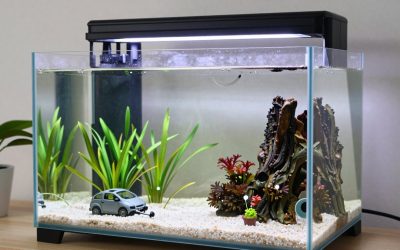
- Creates a clean, natural look: White, tan, black, and river-toned sands can suit everything from minimalist aquascapes to riverbank-style community tanks. Light-colored sand can brighten a dark aquarium, while black sand can make colorful fish and green plants stand out.
- Works well for rooted plants with supplementation: Many plants can grow in sand when given root tabs and appropriate fertilization. Cryptocorynes, vallisneria, dwarf sag, sword plants, and many stem plants can all grow in sand, although heavier root feeders need more nutrition than they would get from a nutrient-rich soil substrate.
- Easy to reshape: Sand is simple to slope toward the back of the aquarium, level around stones, or build a beach-like foreground. This is useful in aquascapes where the substrate itself is part of the design.
- Compatible with undergravel aesthetics: Sand gives an uncluttered bottom surface without the chunky appearance of gravel. In 2026, it remains one of the most common choices for modern freshwater display tanks because the look works with both natural wood and contemporary decor.
- Usually affordable for small tanks: A 5- to 10-gallon aquarium can often be furnished with one 5- or 10-pound bag, keeping the substrate cost in the $10 to $20 range before plants and hardscape.
Cons
- It can compact: Very fine sand settles into a dense layer over time. In a shallow bed this is usually manageable, but deep, undisturbed beds can develop low-oxygen pockets. Avoid making a fine-sand layer more than about 2 inches deep unless you understand deep substrate methods and have a plan for plant roots, burrowing animals, or regular maintenance.
- Cleaning requires a different technique: A gravel vacuum can remove sand along with debris if you push the tube too deeply into the substrate. Instead, hover the siphon 1/2 to 1 inch above the surface and let the waste lift into the tube. This takes a little practice, particularly with lightweight sugar sand.
- Fine grains can cloud the tank: New sand often creates temporary haze, especially if it is not rinsed thoroughly or if water is poured directly onto it. Use a bowl, plastic bag, or plate when filling the aquarium, and expect a filter with fine floss or polishing media to clear residual dust.
- Strong current can move it around: Power filters, circulation pumps, and air stones can create bare patches or dunes. This is most noticeable in tanks using powerful wavemakers or high-flow canister filter returns. Direct the outlet toward the glass or use a spray bar to soften the flow.
- Not naturally nutrient-rich: Inert sand does not provide the mineral and nutrient reserve that aquatic soil does. Root-feeding plants often need root tabs every 1 to 3 months, depending on the brand, plant density, and water column fertilization routine.
- Light colors show dirt quickly: Sugar-white sand can look striking on day one, but brown mulm, algae, snail waste, and tannin-stained debris are more noticeable than they are on medium-brown or black gravel. A clean-up crew can help, but it does not replace water changes.
- Some fish will constantly rearrange it: Goldfish, larger cichlids, and enthusiastic diggers may pile sand against plants, expose roots, or bury low decor. That behavior is natural, but it can be frustrating if you want a carefully maintained aquascape.
Who Should Buy It
Choose aquarium sand if you keep bottom-oriented fish, want a soft natural-looking substrate, or prefer being able to see debris before it disappears into gravel. It is particularly well suited to 10- to 40-gallon freshwater community tanks stocked with corydoras, tetras, rasboras, bettas, shrimp, small loaches, or peaceful dwarf cichlids.
It also makes sense for moderately planted tanks when you are comfortable using root tabs. A 1 to 1.5 inch layer is a practical starting point for a display tank with a few rooted plants. Use closer to 2 inches if you want more planting depth, but avoid going substantially deeper with ultra-fine sand unless your setup is designed for it.
Buy a coarser aquarium-specific sand if your filter creates noticeable current. Choose a lighter sugar sand if appearance and soft texture are your top priorities, and choose darker sand if you want a lower-maintenance appearance between cleanings.
Who Should Skip It
Skip sand if you want the easiest possible substrate to vacuum aggressively. Medium gravel is more forgiving for beginners who are still learning water-change routines because a siphon can be pushed into it without removing much substrate.
You may also prefer aquasoil or a layered planting substrate if your primary goal is a densely planted aquarium with demanding root feeders. Sand can support plants, but it usually requires more deliberate fertilizing and may not anchor newly planted stems as firmly as soil-based products.
Finally, avoid very fine sand in a high-flow tank unless you are prepared to adjust the filter output. Reef-style circulation, oversized powerheads, and strong internal filters can turn lightweight sand into a recurring cleanup project.
Cheaper Alternatives
| Option | Cost | Trade-off |
|---|---|---|
| Natural pea gravel | $0.30 to $0.80 per pound | Usually cheaper and easier to vacuum, but can be too rough for delicate barbels and lets debris fall between pieces. |
| Pool filter sand | $10 to $20 for a 40- to 50-pound bag | Very economical for larger tanks, but grain size and color choices are limited; rinse thoroughly and confirm it is plain silica sand without additives. |
| Black blasting sand labeled aquarium-safe | $15 to $30 for 25 to 50 pounds | Dark, attractive, and often heavier than sugar sand, but quality varies and it must be specifically sold as safe for aquarium use. |
| Basic aquarium gravel | $10 to $18 for 20 pounds | A dependable beginner option, though it lacks sand’s smooth, natural appearance and is less suitable for sand-sifting fish. |
FAQ
How much aquarium sand do I need?
For a shallow decorative layer, plan on about 1 inch of sand. For most planted freshwater tanks, 1.5 to 2 inches is more useful. Measure the tank’s length and width, then buy enough to allow for slopes and hardscape. A 20-gallon long tank often needs 15 to 20 pounds for a practical planted layer, while a standard 29-gallon tank commonly needs 20 to 30 pounds.
Do I need to rinse aquarium sand?
Usually, yes. Even pre-washed sand can contain fine dust from shipping. Rinse small portions in a bucket until the overflow is mostly clear. Bio-active sand should be handled according to its package directions, since aggressive rinsing may remove the bacteria it is intended to introduce.
Can live plants grow in aquarium sand?
Yes. Plants that feed heavily through their roots benefit from root tabs placed beneath the sand. Add tabs near swords, crypts, vallisneria, and similar plants, then replenish them as directed by the fertilizer manufacturer. Epiphytes such as anubias and Java fern do not need to be planted in the sand at all; attach them to rock or wood.
Can sand cause dangerous gas pockets?
A shallow, routinely maintained sand bed is generally safe. Problems are more likely with deep, tightly compacted layers that remain undisturbed for long periods. Keep fine sand around 1 to 2 inches for a typical freshwater tank, avoid suddenly stirring a very deep neglected bed, and let plant roots, snails, or gentle maintenance keep the surface from becoming overly compacted.
Ready to decide? Our #1 pick for 2026 is the Natural pea gravel.
Live price & availability on Amazon.
Related Reviews & Guides
Are Aquarium Filter Prefilters Worth It? An Honest Answer (2026)
Aquarium Filter Flow Rate: Size Without Chasing Turnover