Last Updated: October 4, 2026
- Top Pick: Aqua Natural Substrate, Sugar White Sand, 10lb
- Best Value: Zoo Med ReptiSand®, 10 Pounds, Desert White
- Premium Choice: Aqua Natural Aquarium Substrate, Gold Pearl Gravel, 10lb
Choosing between sand and gravel is less about which substrate is “better” and more about how you want an aquarium to live in your home. The real decision is whether you prefer a soft, seamless display that highlights fish and feels beach-like, or a textured, practical base that is easier to vacuum and supports a wider range of beginner setups.
In a sand substrate vs gravel substrate aquarium comparison, consider the fish you plan to keep, how often you realistically want to clean the tank, the tank’s footprint, and whether the aquarium is a short-term apartment feature or a long-term focal point in your home. Both can look polished when installed well. Their maintenance habits, however, are quite different.
As an Amazon Associate we earn from qualifying purchases at no extra cost to you.


Quick Verdict
Choose sand if you want a clean, natural-looking aquascape; keep bottom-dwelling fish such as corydoras or loaches; or want a bright, modern aquarium display. Fine sand is gentle on delicate barbels and can make a small aquarium look more expansive. It does require a lighter touch during cleaning, because debris stays on top and deep stirring can cloud the water.
Choose gravel if you want a dependable, beginner-friendly substrate that is easy to siphon, works well with many rooted plants, and tolerates regular household maintenance. Gravel is particularly practical for community tanks, active families, and owners who prefer a straightforward weekly cleaning routine.
For most first-time freshwater aquarium owners, fine gravel is the easier choice. For a carefully styled tank with bottom-oriented fish, sand is often the more attractive and comfortable option.
Side by Side
| Buying factor | Sand substrate | Gravel substrate |
|---|---|---|
| Comfort for fish | Very gentle for corydoras, loaches, and fish that sift or rest on the bottom. | Comfortable for most community fish; avoid sharp or oversized pieces with sensitive bottom dwellers. |
| Durability | Does not break down, though fine grains can shift and compact over time. | Long-lasting and stable; individual pieces hold their shape for years. |
| Typical price range | About $1.20–$3.50 per pound for aquarium-safe sand. | About $1.20–$4.00 per pound, depending on size, color, and coating. |
| Maintenance | Debris remains visible on the surface; vacuum gently just above the sand. | Waste can settle between stones; use a gravel vacuum to lift it out. |
| Space needed | A 1–1.5 inch bed suits most displays; 2 inches is useful for some planted layouts. | A 1.5–2 inch bed is common; 2–3 inches may suit rooted plants. |
| Look | Smooth, bright, coastal, minimalist, or riverbed-inspired. | Textured, dimensional, traditional, and available in many colors. |
| Resale appeal | Popular in contemporary aquascapes, but a used setup may need complete cleaning before sale. | Broadly familiar to buyers and easy to refresh, though bold colors can narrow appeal. |
| Plant compatibility | Works with root tabs and properly anchored plants; very fine sand can compact around roots. | Generally easier for anchoring rooted plants and circulating water around their bases. |
| Best for | Bottom-dwelling fish, sleek display tanks, and aquariums with a natural beach or lagoon look. | Beginner community tanks, planted tanks, and homes that need simpler routine upkeep. |
Where Sand Substrate Wins
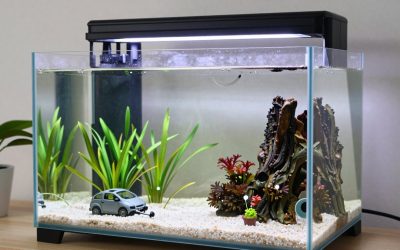
Sand is the visual winner when the aquarium is meant to function like living décor. A pale bed reflects light upward, making a 10-, 20-, or 29-gallon tank appear brighter and more open. White and cream tones pair especially well with black-framed aquariums, light wood consoles, and modern living rooms. For example, Aqua Natural Substrate, Sugar White Sand, is sold in a 10-pound bag for under $20, a useful reference point when planning a small display.
It is also a strong practical choice for fish that interact with the bottom. Corydoras naturally forage by pushing their faces into the substrate, while many loaches and cichlids dig or rearrange their surroundings. Rounded, fine aquarium sand gives these fish a surface that is less abrasive than coarse gravel. Fish waste and uneaten food usually remain on top of sand rather than dropping out of sight, so you can spot buildup before it becomes a problem.
Sand can create a more convincing natural scene with driftwood, smooth stones, and low-profile plants. It is ideal for open foregrounds, especially in tanks 30 inches or wider, where a clear stretch of substrate gives the layout breathing room. A 20-long aquarium, for example, measures roughly 30 by 12 inches and needs about 15 to 20 pounds of sand for a bed near 1 to 1.5 inches deep.
The tradeoff is cleaning technique. Do not plunge a siphon deeply into fine sand as you would with gravel. Instead, hold the intake about 1/2 inch above the surface and let it collect loose waste. During water changes, direct the return flow toward a glass pane, rock, or bowl so it does not excavate a crater. Fine sand may also compact in thick beds; gently rake a small section during maintenance if the layout and livestock allow it.
Only buy material labeled safe for the intended aquarium use. Zoo Med ReptiSand®, 10 Pounds, Desert White, for under $20 is designed and marketed for reptile habitats rather than as aquarium substrate, so it should not be treated as a direct freshwater aquarium substitute without verifying suitability with the manufacturer.
Where Gravel Substrate Aquarium Wins
A gravel substrate aquarium is often the more forgiving everyday setup. The spaces between stones allow a siphon tube to pull out settled debris during a weekly water change. For a household that wants a predictable routine—wipe the glass, change 20 to 30 percent of the water, vacuum one section of the base—this is a meaningful advantage.
Gravel also gives plants a more secure grip. Stem plants, swords, cryptocorynes, and many beginner selections can be anchored more easily in a 2-inch bed of fine, rounded gravel. Nutrient-rich root tabs can be pushed beneath the surface without immediately floating back up. This does not mean gravel alone feeds plants; lighting, fertilizer, fish stocking, and water conditions still matter. But it is an accommodating physical foundation.
For most community aquariums, select fine gravel around 2 to 5 millimeters across rather than large decorative stones. Small, rounded pieces look more refined, trap less visible debris than chunky rock, and are easier for plants to root through. Dark gravel provides contrast for silver, orange, yellow, and light-colored fish, while gold and natural blends add warmth beside wood furniture. Aqua Natural Aquarium Substrate, Gold Pearl Gravel, and Aqua Natural Aquarium Substrate, Diamond Black Fine Gravel are each available in 10-pound bags for under $20, illustrating the similar entry price of decorative aquarium gravel.
Gravel’s drawback is that waste can disappear between the stones. A tank can look clean from across the room while accumulating debris below the surface. That makes a gravel vacuum essential rather than optional. Clean one-third to one-half of the substrate at each weekly water change instead of aggressively stripping the entire bed at once. In a 29-gallon aquarium, a 50-watt adjustable heater and a filter rated for roughly 30 to 40 gallons are typical starting hardware; neither sand nor gravel eliminates the need for appropriate filtration and water testing.
Cost Over 5 Years
Substrate is usually a modest part of the five-year aquarium budget because it is not a frequent replacement purchase. The bigger financial differences come from the amount needed, how often a move requires replacement, and whether you buy decorative material in stages.
For a standard 20-gallon aquarium with a 24 by 12 inch footprint, plan on approximately 15 to 20 pounds of sand for a 1 to 1.5 inch layer. At roughly $1.20 to $3.50 per pound, the initial cost is about $18 to $70. A comparable 1.5 to 2 inch gravel layer often takes 20 to 25 pounds, or about $24 to $100 at $1.20 to $4.00 per pound.
Over five years, add an estimated $10 to $30 for a small amount of replacement substrate after a move, a deep reset, or accidental removal during maintenance. That puts a typical 20-gallon sand setup at about $28 to $100 over five years, versus $34 to $130 for gravel. Either can cost less if purchased in economical larger bags.
For a 55-gallon tank measuring about 48 by 13 inches, expect approximately 45 to 55 pounds of sand for a shallow display bed or 55 to 70 pounds of gravel for a deeper planted bed. Budget roughly $55 to $190 for sand or $65 to $280 for gravel upfront. Gravel is not inherently expensive, but its recommended depth can raise the total.
Which One for Your Home
Small apartment
Choose sand if the aquarium is primarily a compact design feature. A light sand bed makes a 10- or 20-gallon tank feel less visually crowded and pairs well with a simple wood stand. Keep the bed around 1 inch deep to reduce weight and simplify cleaning. Choose fine gravel instead if you want several easy plants and prefer a more traditional maintenance routine.
Family with kids or pets
Fine gravel is usually the practical choice. It handles enthusiastic feeding schedules and makes debris removal more intuitive during weekly care. Avoid dyed gravel that clashes with the room or may look dated as décor changes. Keep the aquarium on a stable stand, use a fitted lid, and route cords with drip loops; substrate choice does not replace basic safety measures.
Rental
Choose a modest layer of either substrate, but avoid building a complicated deep-bed aquascape that is difficult to dismantle. Fine gravel is easier to bag and move without turning the water cloudy. Sand can still work well in a rental if you use 1 to 1.5 inches and accept that replacing it after a move may be simpler than trying to preserve every grain.
Long-term home
Let the fish and design direction decide. Sand is excellent for a calm, natural centerpiece with bottom dwellers and open negative space. Gravel is the stronger all-purpose choice for a planted community aquarium expected to evolve over several years. In 2026, both approaches remain timeless when the substrate color complements the room rather than competing with it.
FAQ
Is sand or gravel easier to clean in an aquarium?
Gravel is generally easier for beginners because a siphon can be inserted into the substrate to remove trapped debris. Sand requires gentler hovering above the surface, but waste is easier to see because it does not fall between stones.
Can I put gravel over sand in an aquarium?
You can, but it is usually not the best long-term solution. Gravel tends to settle downward through sand over time, mixing the layers. If you want two textures, use rocks, wood, or contained planting areas to create visual separation instead.
How much substrate do I need for a 20-gallon aquarium?
For a standard 20-gallon tank with a 24 by 12 inch base, use about 15 to 20 pounds of sand for a 1 to 1.5 inch layer. Use about 20 to 25 pounds of fine gravel for a 1.5 to 2 inch layer. Increase the amount if you want a pronounced slope or heavily planted background.
Do live plants grow better in sand or gravel?
Many live plants grow well in either. Gravel is easier for anchoring roots and is often more forgiving for beginners. Sand can support plants when it is not packed too deeply and when root-feeding plants receive root tabs as needed. Epiphyte plants such as anubias and Java fern should be attached to wood or rock rather than buried in either substrate.
Ready to decide? Our #1 pick for 2026 is the Comfort for fish.
Live price & availability on Amazon.
Related Reviews & Guides
12 Best Aquarium Substrates: Top Picks Reviewed and Compared (2026)
5 Best Aquarium Lights for Beginners (2026)