Last Updated: October 21, 2026
The best rodi system for a planted tank is only half the job; the other half is putting minerals back. RO/DI gives you a blank slate of near-zero TDS, and a remineralizer like Seachem Equilibrium rebuilds general hardness, roughly 3 dGH per 16 grams in 20 gallons, to a target your plants and livestock actually want.
As an Amazon Associate we earn from qualifying purchases.
By David Nguyen
How to Choose an RODI System for a Planted Tank
A planted tank benefits from RO/DI when your tap is inconsistent, but pure water alone is not the goal; controlled remineralization is. Choose a unit that reliably delivers near-zero TDS at your pressure, match pretreatment to your tap, then plan a repeatable GH and KH rebuild rather than dosing by guesswork.
Treat RO/DI as a Blank Slate
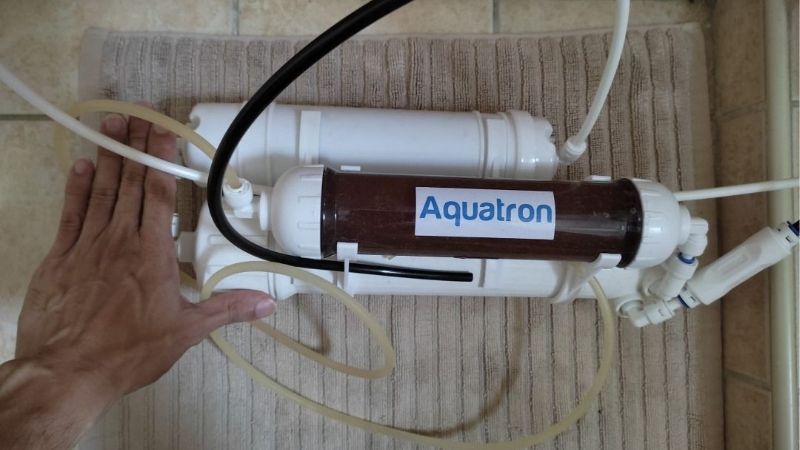
The point of RO/DI on a planted tank is not zero TDS for its own sake; it is a repeatable starting point you then rebuild. Near-zero water lets you add exactly the general hardness your plants and livestock need, which is impossible when your tap swings seasonally in hardness and dissolved solids.
Because the water starts blank, the remineralizer, not the membrane, sets your final chemistry, so the unit’s job is simply consistency. A stable zero-TDS output means every batch begins identically, and that repeatability is what makes dosing predictable rather than a moving target each water change.
Plan General Hardness With Equilibrium
Remineralization is a dosing calculation, not a vibe. By its label, Seachem Equilibrium raises general hardness about 3 dGH per 16 grams in 20 gallons, and roughly 6 dGH per 32 grams by linear dosing, so you can hit a chosen target on purpose instead of chasing numbers after the fill.
A common planted reference is around 3 to 6 dGH, but that is a general guide, not a universal requirement, since the right number depends on your plants and livestock. Treat the range as a planning starting point and adjust to what your tank actually shows, since KH management is a separate decision from GH.
Match Pretreatment to Your Tap
Stage count should follow your disinfectant, not the planted label. Chloramine needs dual-carbon pretreatment, while low-chlorine water runs on lighter stages; the wrong carbon lets chloramine strip DI resin quickly and quietly raises the recurring media cost that defines RO/DI ownership over time.
That recurring spend, meaning sediment, carbon, DI resin and a TDS meter to time swaps, usually outweighs the purchase price across a couple of years. Testing your water for chloramine first, since it is common and tasteless, is the cheapest way to keep DI replacements on a predictable, affordable schedule.
Output and Pressure for Your Routine
Planted tanks often run steady, modest changes, so size output to your batch, not the display volume. A 75 or 100 GPD class handles most aquascapes comfortably, and pressure decides whether either reaches its rating; below the rated minimum, output sags and reject water rises noticeably.
Because remineralization takes a few extra minutes per batch, a membrane fed at proper pressure keeps the whole routine short and repeatable. Reusing the reject water on houseplants or a garden also recovers part of the waste, which suits the same mindset that makes a planted keeper measure GH in the first place.
Top Picks
For a planted tank the right unit depends on your tap and routine rather than one winner, so the order below is conditional and pairs each membrane with the remineralizer that finishes the job. Match a row to your own water and hardness target instead of reading it as a fixed overall ranking.
| Product | Best For | Key Spec | Watch Out For |
|---|---|---|---|
| BRS 4 Stage Value Plus 75 | Low-chlorine water, monitored | 75 GPD, TDS+PSI+flush, 50 PSI | No chloramine carbon; ~under $250 |
| BRS 5 Stage Premium Plus 75 | Chloramine water, protected DI | 75 GPD, dual carbon, 50 PSI | 3:1 waste; ~under $250 |
| AquaticLife Twist-In 100 | Faster batches, compact | 100 GPD, 12x4x13 in | Suggests 65 PSI; ~under $150 |
| Seachem Equilibrium | Rebuilding GH after RO/DI | ~3 dGH per 16 g in 20 gal | GH only; KH is separate |
BRS 4 Stage Value Plus 75
On low-chlorine water, the BRS 4 Stage Value Plus 75 gives a planted keeper a monitored blank slate for around $225 as of 09/28/2026, running from 50 PSI with a TDS meter, pressure gauge and flush valve. Those gauges make repeatable water genuinely repeatable, showing when media fades before TDS creeps up.
Its four stages target low-chlorine supplies, so chloraminated tap wants the dual-carbon Premium Plus instead. At 75 GPD it keeps pace with steady aquascape changes, but you must still pair it with a remineralizer, since the unit only delivers the near-zero starting water, not the general hardness plants need.
BRS 5 Stage Premium Plus 75
Where the tap is chloraminated, the BRS 5 Stage Premium Plus 75 adds dual-carbon pretreatment for around $250 as of 09/28/2026, protecting the membrane and DI resin on demanding municipal water. For a planted tank that means consistent zero-TDS batches even when your supply carries chloramine year round.
Its drawback is a 3:1 reject ratio, the most wasteful of these BRS builds, sending about thirty gallons to drain per ten produced. That is manageable on a planted tank’s modest changes, and capturing the reject for houseplants recovers part of it, but on chloramine-free water the leaner four-stage unit is thriftier.
AquaticLife Twist-In 100
When you want quicker batches in a small space, the AquaticLife Twist-In 100 packs into a 12 by 4 by 13 inch body and uses tool-less twist cartridges, around $150 in a recent snapshot. Its 100 GPD output shortens each fill, which helps when you are remineralizing several batches for a larger aquascape.
It suggests 65 PSI for full output, so soft plumbing may leave it short of its rating and push you toward a booster. Its cartridge format ties you to its own replacements, so choose it for the compact size and speed, and pair it, like any RO/DI here, with a measured Equilibrium dose to set final hardness.
Seachem Equilibrium
Equilibrium is the piece that turns pure water into planted water, raising general hardness about 3 dGH per 16 grams in 20 gallons and roughly 6 dGH per 32 grams by linear label dosing. That lets you hit a chosen GH target on purpose, batch after batch, which is the real point of starting from RO/DI at all.
Its limit is scope: it rebuilds general hardness only, and so carbonate hardness stays a separate decision you manage on its own. Dose it to your tank’s actual needs rather than to a fixed number, since the common 3 to 6 dGH range is a planning guide that shifts with your specific plants and livestock.
Frequently Asked Questions
Planted keepers usually ask whether they even need RO/DI, how much remineralizer to add, and how GH and KH differ. The answers below attach dosing numbers and thresholds to each, so you can build a repeatable water routine instead of guessing at hardness after each and every change.
Does a Planted Tank Need RO/DI Water?
Only when your tap is inconsistent or unsuitable. If your tap water is stable and moderately soft, many planted tanks thrive on it with a conditioner; RO/DI earns its place when your supply swings seasonally, runs very hard, or carries contaminants you want to strip before rebuilding to a target.
The trade-off is the extra step of remineralization, since pure water cannot go straight into a planted tank. If you switch to RO/DI, plan a measured GH rebuild from day one, because near-zero water without added minerals starves plants and stresses livestock rather than helping them.
How Much Equilibrium Raises 20 Gallons?
By its label, about 16 grams of Seachem Equilibrium raises general hardness roughly 3 dGH in 20 gallons, and about 32 grams roughly 6 dGH by linear dosing. That lets you dial a target instead of guessing, so weigh the dose rather than eyeballing scoops for consistent results across batches.
Because dosing is linear, you can scale it to any batch size and any hardness target within reason. Adjust to what your tank actually shows over a few changes, since the ideal GH depends on your plants and livestock, and remember this sets general hardness only, not carbonate hardness.
Is 3 to 6 dGH Right for Every Planted Tank?
Not universally; it is a common planning range, not a rule. Many community aquascapes do well around 3 to 6 dGH, but soft-water species and certain shrimp prefer lower, while some plants and livestock want more, so treat the figure as a starting point you refine to your specific tank.
Set your target from your plants and animals first, then dose to reach it repeatably. Because the range is a guide rather than a requirement, chasing an exact published number matters less than keeping your own chosen hardness stable from one water change to the next over the long run.
Do I Still Need to Manage KH?
Yes; carbonate hardness is a separate decision from general hardness. Equilibrium raises GH but does not set KH, so if your tank needs buffering stability, especially with pressurized CO2, you manage carbonate hardness on its own with a suitable product rather than assuming the GH dose covered it.
How much KH you want depends on your setup, since heavily planted CO2 tanks and low-tech tanks have different buffering needs. Measure both parameters after a change for the first few batches, then settle on a repeatable routine that holds each one where your plants and livestock are happiest.
Final Thoughts
A planted tank rodi system is really two decisions: a membrane that makes near-zero water at your pressure, and a measured rebuild with something like Equilibrium, about 3 dGH per 16 grams in 20 gallons. Match pretreatment to your tap, set a GH target from your plants not a fixed number, and manage KH separately.

Quick Picks: Aquarium CO2 Cylinder and Regulator
Aquarium Substrate for African Cichlids: Best Options on Amazon