Last Updated: October 4, 2026
The Short Answer
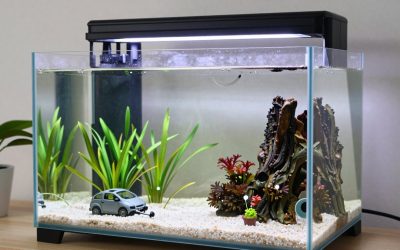
For a standard 20-gallon aquarium with a 24-by-12-inch footprint, plan on 20 to 30 pounds of substrate for a typical 1.5- to 2-inch layer. That usually means two 10-pound bags, or one 10-pound bag plus two smaller bags, depending on the material.
If you want a deeper planted-tank bed, use about 30 to 40 pounds for a 2.5- to 3-inch layer. A 20-gallon long tank has a larger 30-by-12-inch footprint, so it needs more substrate: approximately 25 to 40 pounds for 2 inches, and up to 50 pounds for a deep planted layout.
As an Amazon Associate we earn from qualifying purchases at no extra cost to you.


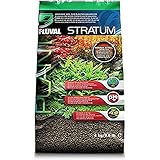
Substrate weight is not perfectly standardized. Sand, fine gravel, aquasoil, and porous planted-tank products have different densities, so use the package’s coverage guidance when available. As a general buying range for 2026, expect aquarium substrate to cost about $13 to $30 per bag, with 5- to 10-pound bags being common.
Standard Sizes
The table below uses nominal aquarium dimensions and calculates the approximate substrate volume needed at several depths. Actual tank dimensions can vary slightly by brand, trim, glass thickness, and stand design. The weight estimates are practical shopping ranges rather than laboratory measurements.
| Tank type | Approx. tank dimensions | 1-inch layer | 2-inch layer | 3-inch layer | Typical amount to buy |
|---|---|---|---|---|---|
| 20-gallon standard | 24 × 12 × 16 in (61 × 30.5 × 40.6 cm) |
1.25 gal (4.7 L) |
2.5 gal (9.2 L) |
3.7 gal (14.1 L) |
20–30 lb for 2 in |
| 20-gallon long | 30 × 12 × 12 in (76.2 × 30.5 × 30.5 cm) |
1.56 gal (5.3 L) |
3.12 gal (11.8 L) |
4.68 gal (17.7 L) |
25–40 lb for 2 in |
| 10-gallon reference | 20 × 10 × 12 in (50.8 × 25.4 × 30.5 cm) |
0.87 gal (3.3 L) |
1.73 gal (6.6 L) |
2.60 gal (9.8 L) |
10–20 lb for 2 in |
| 29-gallon reference | 30 × 12 × 18 in (76.2 × 30.5 × 45.7 cm) |
1.56 gal (5.9 L) |
3.12 gal (11.8 L) |
4.68 gal (17.7 L) |
25–40 lb for 2 in |
For a standard 20-gallon tank, a 2-inch bed is the most versatile choice. It is deep enough to anchor many plants and create a finished appearance without taking too much swimming space. A 1- to 1.5-inch layer works well for fish-only aquariums, easy-care plants, and aquascapes with open areas. Use 3 inches or more when you need room for rooted plants, a sloped layout, or a layered substrate system.
Bag counts depend on the product. A 10-pound gravel bag may cover a standard 20-gallon tank at a shallow depth, but two bags are safer for a full 2-inch bed. Five-pound sand bags are useful for mixing colors or creating a thin foreground, although several may be required for complete coverage. An 8.8-pound planted-tank soil bag may cover only part of a deep or sloped layout.
How to Measure Your Space
- Measure the inside length and width. Use the tank’s usable floor area, not the outside dimensions of the stand. Measure in inches for the simplest calculation.
- Choose the planned depth. Use 1 to 1.5 inches for a shallow decorative layer, 2 inches for general use, or 2.5 to 4 inches for many planted layouts.
- Calculate cubic inches. Multiply length by width by substrate depth. For a standard 20-gallon tank at 2 inches, the calculation is 24 × 12 × 2 = 576 cubic inches.
- Convert to gallons or liters if needed. Divide cubic inches by 231 to get U.S. gallons, or multiply cubic inches by 16.387 to get cubic centimeters. The 576-cubic-inch example equals about 2.5 gallons, or 9.4 liters, of substrate volume.
- Check the product coverage chart. Density changes the weight required. If the package says one bag covers a specific footprint at a particular depth, follow that information over a generic pounds-per-gallon estimate.
- Add extra for slopes and settling. Buy about 10% more for a level bed. Add 15% to 25% if you plan to slope the substrate from front to back, use natural stone, or expect fine material to settle into gaps.
For a quick estimate without doing the full conversion, multiply the tank’s floor area in square inches by the depth. On a 24-by-12-inch footprint, every additional inch requires 288 cubic inches of material. That is why increasing a bed from 2 inches to 3 inches requires roughly 50% more substrate.
By Room or Use Case
Community freshwater aquarium
Choose 1.5 to 2 inches of smooth gravel or sand for a mixed community tank. For a standard 20-gallon aquarium, budget 20 to 30 pounds. Smooth, rounded grains are easier on bottom-dwelling fish than sharp crushed rock. A dark substrate can make light-colored fish and green plants stand out, while a natural tan or brown creates a softer appearance.
Planted aquarium
Plan for 2.5 to 3 inches if you are growing rooted plants such as crypts, swords, or vallisneria. A sloped bed can start at 2 inches in front and reach 4 inches in back. Depending on density, this may require 30 to 45 pounds in a standard 20-gallon tank. Plant substrates such as Fluval Plant and Shrimp Stratum are commonly sold in bags around 8.8 pounds and may cost roughly $25 to $30 per bag, so calculate coverage before purchasing.
You can also use a nutrient-rich base layer topped with gravel or sand. Keep the cap thick enough to prevent the lower material from mixing into the water, but avoid filling the tank so high that there is little room for swimming.
Sand-focused aquarium
Fine sand typically needs about 1 to 2 inches for a clean appearance. For a standard 20-gallon footprint, start with 20 to 30 pounds, then adjust according to the brand’s stated density. A 5-pound bag, such as a wet-packed aquarium sand product, may be convenient for small accent zones but is unlikely to cover the entire tank at 2 inches. A 10-pound bag may cost about $14 to $18, while a complete sand bed may require two or three bags.
Shrimp or nano-style aquascape inside a 20-gallon tank
Shrimp tanks often use a planted substrate at 2 to 3 inches, sometimes with a raised back section. Buy 25 to 40 pounds for a standard footprint if the entire floor will be covered. If hardscape occupies a large portion of the bottom, you may need less. Leave enough open, level area for feeding and maintenance, and avoid an overly deep layer that traps debris in unused corners.
Fish-only or easy-maintenance setup
A 1-inch layer is usually sufficient when plants are limited to decorations, floating varieties, or epiphytes attached to wood and rocks. Expect roughly 15 to 20 pounds for a standard 20-gallon tank. This shallower amount is easier to vacuum and leaves more interior height for fish. Fine gravel products, including black aquarium gravel, commonly fall in the $14 to $18 range for a 10-pound bag.
Common Sizing Mistakes
- Using the tank’s gallon rating as the substrate volume. A 20-gallon aquarium does not require 20 gallons of substrate. The water capacity and floor-area calculation are different measurements.
- Ignoring the footprint. A 20-gallon long tank is wider in total floor area than some standard 20-gallon tanks, so it needs more material at the same depth.
- Buying by bag count alone. Two 10-pound bags can provide different coverage when one product is dense gravel and the other is lightweight aquasoil.
- Forgetting hardscape displacement. Rocks, driftwood, and decorations take up floor space. Measure the open areas, but still keep some extra material for gaps and leveling.
- Making the bed too deep without a plan. Deep substrate can collect waste and become difficult to clean. Use extra depth for a specific purpose, such as rooted plants or a deliberate slope.
- Failing to rinse compatible materials. Gravel usually benefits from rinsing before use. Some active soils and specialty substrates should not be aggressively washed, so follow the package directions.
FAQ
Is 10 pounds of substrate enough for a 20-gallon tank?
Usually, 10 pounds is enough only for a very thin layer or a partial accent area. For full coverage at about 2 inches, plan on 20 to 30 pounds for a standard 20-gallon tank. A 20-gallon long may need 25 to 40 pounds.
How deep should aquarium substrate be in a 20-gallon tank?
Use 1 to 2 inches for most community aquariums. Choose 2.5 to 3 inches for many planted tanks, and create a deeper rear slope only where plants or the design require it. Keep the front lower for easier viewing and cleaning.
Can I mix sand and gravel in a 20-gallon aquarium?
Yes, but the materials may eventually migrate and mix, especially when disturbed by fish or maintenance. Use a visual boundary, rocks, or separate sections if you want a sharp transition. Calculate each section’s length and width separately, then add the required amounts.
How much does substrate for a 20-gallon aquarium cost?
A basic setup generally costs about $25 to $50 in substrate. Premium planted soils or a layered aquascape may cost $50 to $100 or more because they often require multiple bags. Common 10-pound gravel or sand bags are around $14 to $18, while specialty 8.8-pound planted substrates are often about $25 to $30.
Ready to decide? Our #1 pick for 2026 is the 20-gallon standard.
Live price & availability on Amazon.
Related Reviews & Guides
Full Spectrum Led vs Rgb Aquarium Light: Which Is Right for Your Home (2026)
Best Led Light for 10 Gallon Planted Aquarium in 2026: Compared and Ranked