Last Updated: September 25, 2026
Cryptocoryne care guide advice has to open with melt, because almost every new crypt loses its leaves within a fortnight of planting and almost every beginner throws it away at that point. The roots survive, and the plant regrows from them if you simply leave it alone. Patience is the entire technique.
As an Amazon Associate we earn from qualifying purchases.
As an Amazon Associate we earn from qualifying purchases at no extra cost to you. Prices and availability are accurate as of the date shown and are subject to change.

Ultimate Cryptocoryne Collection 6-Pack Aquarium Plants
Selected for "Cryptocoryne Care Guide: Melt, Light and Root Feeding Rules": this listing is aquarium equipment (Ultimate Cryptocoryne Collection 6-Pack Aquarium Plants), matching the equipment this article covers.
View on Amazon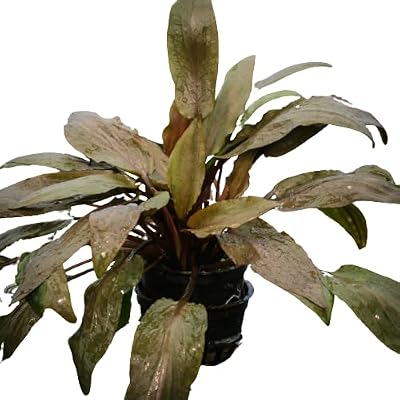
Cryptocoryne Undulata Aquatic Plant, 1 Pack
Selected for "Cryptocoryne Care Guide: Melt, Light and Root Feeding Rules": this listing is aquarium equipment (Cryptocoryne Undulata Aquatic Plant, 1 Pack), matching the equipment this article covers.
View on Amazon
Cryptocoryne Undulata Live Aquarium Plant – Low to Medium Light, Easy Care
Selected for "Cryptocoryne Care Guide: Melt, Light and Root Feeding Rules": this listing is lighting (Cryptocoryne Undulata Live Aquarium Plant – Low to Medium Light, Easy ), matching the equipment this article covers.
View on AmazonCryptocoryne Undulata Aquatic Plant, 5 Pack
Selected for "Cryptocoryne Care Guide: Melt, Light and Root Feeding Rules": this listing is aquarium equipment (Cryptocoryne Undulata Aquatic Plant, 5 Pack), matching the equipment this article covers.
View on AmazonBy David Nguyen
Quick answer: Our top pick in 2026 is the Cryptocoryne parva — our #1 rated choice. See the full ranked comparison, alternatives and buying advice below.
Slow Roots, Melt and the Numbers Behind Both
This cryptocoryne care guide treats the plant as what it is: a slow-growing root feeder that invests heavily below the substrate before it does anything visible above it. Understanding that order explains melt, explains the slow start, and explains why root tabs matter so much here.
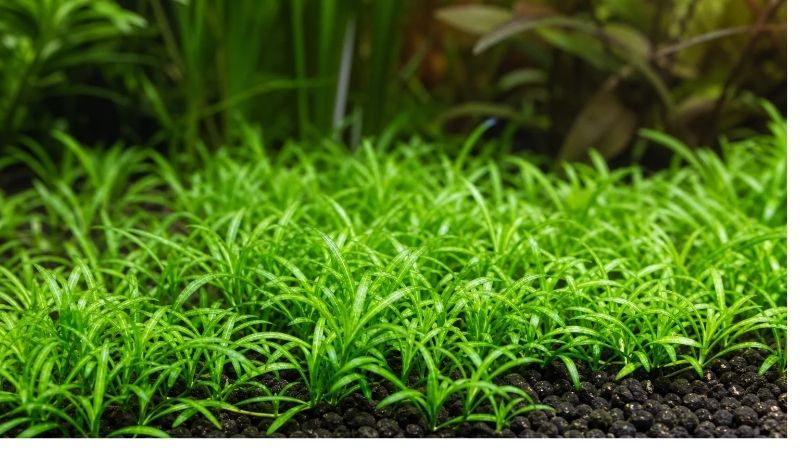
The Deciding Numbers: Species, Height, Light and Hardness
Crypts tolerate 72-82 F (22-28 C), pH 6.0-7.5 and GH 3-15 dGH (54-268 ppm), which covers most tap water without adjustment. They need no CO2 and grow well at 15-30 micromoles of PAR, making this one of the few genuinely low-light plants that also stays compact. No specialist equipment is required.
Growth is slow by design. A settled plant produces roughly one to three new leaves a month, and a newly planted crypt may show nothing above the substrate for three to six weeks while it builds roots. That pace is normal and is not a sign of any problem. Slowness is part of the design.
Substrate depth is the number people underestimate. Crypts want at least 2-3 in (5-7.6 cm) of bed with nutrients available at the roots, whether from aquasoil or from root tabs pushed 2 in (5 cm) down and directly under the crown of each individual plant. Feed the bed, not the water.
Crypt Melt: What It Is and What to Do
Melt is the plant discarding leaves that were grown under different conditions, most often emersed in a nursery, and rebuilding them for its new environment. Leaves go translucent, then dissolve, usually within a week or two of planting or after any significant change in water chemistry.
The correct response is to trim the dead tissue and leave everything else undisturbed. New leaves typically appear within three to six weeks, drawing on the root mass. Pulling the plant up to inspect it breaks new roots and restarts the process from the beginning again. Leave the roots undisturbed.
Species, Sizes and Where Each One Belongs
Crypts vary enormously in mature size, and buying the wrong species for the tank causes more disappointment than any care error. The table below sets out the common ones so you can match the plant to its position before it spends six weeks establishing itself there. Height varies enormously here.
| Species | Mature height | Tank minimum | Light demand | Best position |
|---|---|---|---|---|
| Cryptocoryne parva | 2-4 in (5-10 cm) | 5 gal (19 L) | Low to medium | Foreground, slow carpet |
| Cryptocoryne wendtii | 4-8 in (10-20 cm) | 10 gal (38 L) | Low | Mid-ground, most tanks |
| Cryptocoryne lutea | 4-6 in (10-15 cm) | 10 gal (38 L) | Low | Mid-ground, harder water |
| Cryptocoryne undulata | 6-12 in (15-30 cm) | 15 gal (57 L) | Low to medium | Mid to background |
| Cryptocoryne balansae | 16-20 in (40-50 cm) | 29 gal (110 L) | Medium | Background, taller tanks |
Cryptocoryne in Real Tanks
The practical half of a cryptocoryne care guide is patience and placement. These plants reward being left alone for months and punish being moved, so the position you choose at planting is effectively the position they will occupy for the life of the layout. Choose that position once.
Tank Size, Placement and Fit
Plant crypts with the crown level with the substrate surface, roots below and growing point exposed, spacing wendtii at roughly 4-6 in (10-15 cm) apart. Burying the crown stops leaf production and eventually rots the plant, which is the second most common failure after unnecessary replanting.
Match species height to tank height rather than assuming all crypts are small. Measure the real numbers before you order: substrate depth against the 2-3 in (5-7.6 cm) crypts need, and mature leaf height against the internal height of the tank you are planting into. Both checks take a minute.
What Changes Between 10, 20 and 55 Gallon Tanks
In a 10-gallon (38 L) tank parva and wendtii both work well, and a group of five or six wendtii fills the mid-ground within a year. Growth is slow enough that the layout stays stable, which makes crypts a good choice for anyone who dislikes constant trimming. Stability is the main appeal.
In a 55-gallon (208 L) tank balansae comes into its own as a tall background plant, its narrow ribbed leaves reaching 16-20 in (40-50 cm). Allow 8-10 in (20-25 cm) between plants, because crowded crypts shade each other and the lower leaves yellow and drop. Give them room from the start.
Spreading, Bioload and Tankmates
Crypts spread by runners beneath the substrate, sending up daughter plants a few inches from the parent. That spread is slow, typically filling a mid-ground over 12-18 months, so this is a plant you buy several of rather than waiting for one specimen to cover the space. Buy in groups of five or six.
The tough leaves survive tanks that destroy softer plants, and most community fish leave them alone. In shrimp tanks the broad wendtii leaves collect biofilm for grazing, though as always the caution is copper in fertilisers and treatments rather than anything about the plant itself.
Myths and Mistakes Worth Clearing Up
Three ideas cause most of the failures this cryptocoryne care guide has to address. All three come from treating a slow root feeder like a fast stem plant, which leads people to intervene at exactly the moments when doing nothing would have worked better. Each has a measurable correction.
Myth: A Melting Crypt Is a Dead Crypt
The leaves are expendable; the root mass is the plant. A crypt that loses every leaf usually pushes new growth within three to six weeks, and the new leaves are adapted to your water rather than to a nursery’s. Discarding it at week two throws away the recovery. Wait six weeks before judging.
Trim the dissolved leaves so they do not foul the water, and resist testing the roots. If nothing appears after two months and the crown feels soft rather than firm, the plant has failed, but that outcome is far less common than the panic in week two suggests. A firm crown means a living plant.
Myth: Crypts Need Bright Light
Crypts are genuinely low-light plants, growing well at 15-30 micromoles of PAR, and higher intensity mostly produces algae on their long-lived leaves. Because each leaf persists for months, algae that establishes on it stays visible far longer than on a fast-growing stem plant. Shade suits crypts better.
Bright light does change leaf colour and form in some species, with wendtii varieties turning more bronze and compact, and that effect is often what people are chasing. It is a perfectly reasonable goal, but expect to manage algae carefully as the trade for it. Colour costs maintenance.
Myth: Liquid Fertiliser Alone Is Enough
Crypts take most of their nutrients through roots, so liquid dosing alone in inert gravel produces small, pale leaves regardless of how carefully you follow the bottle. The plant is not failing to absorb anything at all; the route it prefers simply has nothing available in it. Give the roots something to find.
Use root tabs every three to four months in inert substrate, pushed under each crown rather than scattered. In fresh aquasoil, skip tabs for the first 18-24 months because the bed already carries a nutrient charge, then add them once growth begins to slow noticeably. Year two is the usual point.
Long-Term Care, Propagation and Twelve-Month Costs
Over years, this cryptocoryne care guide comes down to leaving plants in place and feeding the substrate. Crypts improve steadily for the first two years, then respond to whatever the bed still holds, which is when most keepers discover their aquasoil is exhausted. Tabs solve that cheaply.
Trimming, Dividing and Propagation
Remove damaged or algae-covered leaves at the base with clean scissors, taking no more than a third of the foliage at once so the plant retains enough leaf area to fund regrowth. Older leaves are shed naturally as newer ones take over, which is normal turnover. Never strip a plant bare.
Propagate by separating daughter plants once they carry four or five leaves of their own, cutting the runner rather than pulling. Expect the parent to sulk briefly afterwards, since any disturbance to the root mass can trigger a smaller round of melt in an established plant. Cut runners, do not pull.
What Degrades: Substrate, Light and Equipment
Aquasoil loses most of its useful nutrient loading around 18-24 months, and that is exactly when crypts planted at setup are largest and hungriest. The symptom is a plant that stalls and yellows on older leaves despite unchanged lighting, dosing and maintenance routines. Add root tabs then.
Equipment drifts alongside it. LED fixtures lose measurable output across several years, and ageing heaters commonly wander 2-4 F (1-2 C), which matters more for the fish than for the crypts. Both changes are gradual enough to be blamed on the plants instead. Recheck light and heater yearly.
Twelve-Month Cost and Seasonal Demand
Budget for 12-24 root tabs a year depending on how many crypts you keep, plus a comprehensive liquid for the other plants in the tank. Prices move constantly, so check them at the moment of purchase rather than relying on figures quoted in an older article. This cryptocoryne care guide avoids fixed prices.
Seasonal change is milder here than with fast growers, but it still registers. Warmer rooms and longer daylight from March onward speed growth and consumption a little, while a cold winter room slows an already slow plant enough that dosing can outpace what it uses. Adjust doses with the season.
Frequently Asked Questions
These come up almost entirely during the first two months, when a new crypt has melted and shown no visible growth. Most cryptocoryne care guide questions reduce to melt, crown depth and whether the substrate is feeding the roots properly. Almost all resolve themselves if the plant is left alone.
How long does crypt melt last?
Leaves usually dissolve over one to two weeks, and new growth appears three to six weeks after planting. The root mass carries the plant through that gap, so trim the dead leaves, leave the roots undisturbed, and avoid moving the plant during the recovery period. Trim, then simply wait it out.
Can I plant cryptocoryne in sand?
Yes, provided the bed is at least 2-3 in (5-7.6 cm) deep and you use root tabs, since sand holds no nutrients. Keep sand at 0.45-0.55 mm, stir it gently during water changes, and push tabs 2 in (5 cm) down directly beneath each crown. Sand suits crypts well as long as tabs go underneath.
Why are my crypt leaves yellowing on the older growth?
Old leaves yellowing while new growth continues usually points to nitrogen or to an exhausted substrate. Test nitrate first: under 5 ppm indicates a shortage. If nitrate sits in the 10-25 ppm range, the bed is the more likely culprit, so add root tabs. Old leaves never regain colour.
How far apart should I plant crypts?
Space wendtii and lutea at 4-6 in (10-15 cm), parva closer at 2-3 in (5-7.6 cm) for a carpet, and balansae at 8-10 in (20-25 cm). Crowded plants shade each other, and the lower leaves yellow and drop within a few months. Spacing looks sparse at first, but crypts fill the gaps within a year.
Do crypts need CO2 injection?
No. They grow well without it at 15-30 micromoles of PAR, and injection mainly speeds things up rather than making the difference between success and failure. Stable conditions and root nutrition matter far more to this genus than carbon supplementation ever does. Stability beats intensity here.
See More:
Conclusion
The whole cryptocoryne care guide reduces to four rules: crown level with the substrate, a bed of 2-3 in (5-7.6 cm) with nutrients at the roots, 15-30 micromoles of PAR, and absolute patience through the melt that follows planting or any change in water. Melt is the price of a fresh start.
Choose the species by mature height, plant several rather than waiting for one to spread, and feed the substrate rather than the water column. Left undisturbed for a year, crypts become the most reliable mid-ground plants available for a low-tech freshwater tank. Everything in this cryptocoryne care guide rewards patience.
Ready to decide? Our #1 pick for 2026 is the Cryptocoryne parva.
Live price & availability on Amazon.
Related Reviews & Guides

Low Tech Planted Tank Setup Guide: No CO2, No Drama
How to Get Rid of Algae in Fish Tank Water, Step by Step