Last Updated: October 21, 2026
For a first tank, the safest stand is the one that leaves the least room for a sizing mistake. The best aquarium rack for beginners is the one that matches the exact tank footprint, states a clear load rating and levels easily, because an error-proof single-tank stand asks far fewer judgment calls than a multi-tier rack.
As an Amazon Associate we earn from qualifying purchases.
By David Nguyen
How to Choose an Aquarium Rack for Beginners
A beginner’s stand should remove guesswork, not add more of it. The four criteria below do exactly that: start from the exact tank footprint, compare the loaded weight with the stand’s rating, look for built-in leveling or simple assembly, and avoid features you cannot actually verify from the listing before buying.

Start With the Exact Tank Footprint
The first move is careful measuring on the tank itself, not simply counting its gallons. Aqueon lists the 10-gallon at about 20 by 10 inches, the 20 High at 24 by 12 and the 29 at 30 by 12, so the base you need to match is set by the specific tank you own rather than by its rounded volume label alone.
Matching that base first prevents the most common beginner error. A stand top built for one form leaves another overhanging or unsupported, so confirm your tank’s real length and width and shortlist only stands made for it, which turns a confusing choice into a simple compatibility check.
Compare the Loaded Weight With the Stand Rating
Next, weigh the filled tank against the stand rating. Aqueon’s filled references are about 111 pounds for a 10-gallon, 225 for a 20 High and 330 for a 29, and the stand’s stated limit needs to clear whichever of those matches your tank with at least a bit of sensible margin left to spare.
That comparison is the whole safety check in one step. The Brooklyn 20 at 300 pounds sits about a third above a 225-pound 20 High, for example, but read every rating as a manufacturer figure matched to a specific tank rather than a blanket promise that just any stand suits any given load.
Look for Built-In Leveling or Simple Assembly
Setup should be forgiving for a first-timer. The Brooklyn stands use adjustable feet to square themselves to an uneven floor, while the TitanEze advertises tool-free knock-down assembly, both of which lower the chance of a wobbly or awkward first installation in a real, imperfect home.
These features ease setup but do not replace a good surface. Adjustable feet help level a stand on a real floor, yet a beginner should still start from a stable, level base, since feet fine-tune a setup rather than compensate for flooring that is soft, sloped or unsound underneath the stand.
Avoid Features You Cannot Verify
A beginner is best served by real numbers they can actually check for themselves. The TitanEze’s two-tier support is documented, but its numeric per-tier capacity was not found in the sources here, so that particular rating is something you simply cannot confirm from the listing before buying it.
The safe habit is to lean on verified specs. Choose stands whose load and fit are stated plainly, and treat an unverified figure as a reason to ask the maker rather than to assume, because a first setup goes more smoothly when every important number is one you could point to on the listing.
Top Picks
Each pick below is judged on how hard it is to get wrong, because a first stand should make the safe choice the obvious one. The table pairs product, best use, key spec and the caveat to keep, and every capacity figure here is manufacturer-stated rather than independently researched.
| Product | Best For | Key Spec | Watch Out For |
|---|---|---|---|
| Imagitarium Brooklyn 20 | Best overall beginner stand | 300 lb; adjustable feet; ~under $90 | Fits a 20 High, not a generic 20 |
| Imagitarium Brooklyn 10 | Best first small tank | 210 lb; ~under $70 | Limited room to upgrade tank size |
| Imagitarium Winston 29 | Best beginner cabinet | 435 lb; storage; ~under $150 | Larger and heavier than an open stand |
| Caitec TitanEze 20L/29 | Best tool-free two-tier option | No-tool assembly; 32.5 by 13 in | Per-tier load is unverified |
Imagitarium Brooklyn 20: Best Overall Beginner Stand
The Brooklyn 20 is the easiest safe choice: a 300-pound stated limit over a 225-pound filled 20 High, adjustable leveling feet and a clear footprint at 24.5 by 12.75 inches, priced around $85 as of 09/2026, so the key numbers here are all plainly stated and genuinely simple to match up before you buy.
Its one caveat is form, not quality: it fits a 20 High rather than a generic 20, and a 20 Long runs longer. Confirm which you own before buying, and read the 300-pound rating as a manufacturer figure comfortably above a 20 High’s filled weight rather than a tested structural limit.
Imagitarium Brooklyn 10: First Small Tank
For a first small setup, the Brooklyn 10 pairs a 210-pound stated limit with adjustable feet at 20.5 by 10.5 inches, priced around $70 as of 09/2026, giving a straightforward, low-cost start that comfortably clears a 111-pound filled 10-gallon tank with genuine, easy margin to spare.
The trade-off is headroom to grow into. Its small top suits a 10-gallon footprint and little more, so a beginner planning to upgrade soon may outgrow it, which makes it the right pick when the first tank is deliberately small rather than a stepping stone to something much larger later.
Imagitarium Winston 29: Beginner Cabinet
A beginner who wants storage and a finished look can start with the Winston 29, a 435-pound stated cabinet with an adjustable interior shelf at 30 by 12.5 inches, priced around $150 as of 09/2026, sitting comfortably above the roughly 330-pound weight of a filled 29-gallon tank.
It asks for more room and more outlay than an open stand, which is the trade for the cabinet. The larger, heavier build suits a beginner sure of their spot and tank size, with the 435-pound figure read as a manufacturer rating matched to the 29-gallon class rather than a tested ceiling.
Caitec TitanEze 20L/29: Tool-Free Two-Tier Option
The TitanEze 20L/29 is the tool-free two-tier pick, a powder-coated steel stand at 32.5 by 13 by 32 inches that assembles without any tools at all, priced around $120 at Petco and $133 direct as of 09/2026 for buyers who are drawn to a two-tank stacked layout from the very start of planning.
For a beginner it comes with a clear caution attached: its numeric per-tier capacity is not published in the sources here, so the load side cannot be verified before buying. Treat the two-tier layout as a documented concept and ask the maker for per-tier numbers rather than inventing a rating to fill the gap.
Frequently Asked Questions
These answers aim to prevent the sizing mistakes a first-time buyer is most likely to make, since a clear fit and a stated load matter more than any extra feature. Each opens with the direct answer and the condition behind it, so the safe choice stays the simple and obvious one throughout.
What Size Stand Should a Beginner Buy?
One matched to the tank’s exact base dimensions, not just its gallon count on the box. Measure the tank’s real length and width and choose a stand built specifically for that footprint, since the same gallon label can quietly cover more than one distinct physical form of tank on the shelf.
That single habit heads off the most common error. Because a 20 High and a 20 Long differ in length despite sharing a volume, buying by base measurements rather than by gallons ensures the stand top actually supports the tank across its whole footprint rather than only part of it.
How Much Weight Should the Stand Hold?
At minimum it must comfortably meet the maker’s own full setup weight and stand requirements for your tank. Aqueon lists about 225 pounds for a filled 20 High and 330 pounds for a 29-gallon, so the stand’s rating should clear whichever of those figures matches your own particular tank.
Aim for margin above that number rather than just meeting it. A rating comfortably over the filled weight leaves room for substrate, decor and equipment, but read the figure as a manufacturer statement matched to a specific tank rather than a guarantee that covers any setup you might build.
Are Adjustable Feet Helpful for Beginners?
Yes, where the stand is designed to use them, because they make leveling on an imperfect floor much easier. They are a genuine aid for a first installation rather than a gimmick, especially on the metal stands here that build them in from the factory rather than leaving them as an add-on.
They do not, however, fix an unsound floor. Start from a stable, level surface and use the feet to fine-tune, since adjustable feet square a stand to the floor it sits on rather than compensating for a base that is soft, sloped or otherwise unable to properly carry the tank’s full load.
Is a Two-Tier Rack Better for a First Aquarium?
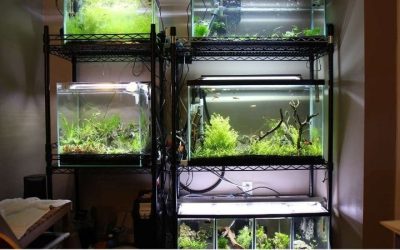
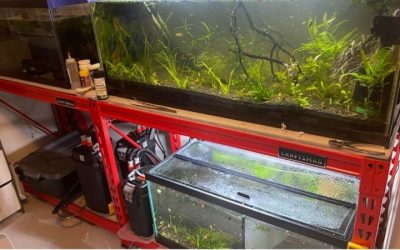
Not automatically, and rarely the wisest call for a first aquarium. A two-tier rack adds compatibility and load questions and makes routine access more complex, which is the very opposite of what an error-proof first setup really wants, however space-efficient the stacked idea might look at first glance.
So most beginners are better served by a single-tank stand with stated numbers. A tier system can work later once you are comfortable verifying per-level load and reaching a raised tank, but a first aquarium usually goes more smoothly on a simple stand whose fit and rating are easy to confirm.
Final Thoughts
The best aquarium rack for beginners is the one that makes a sizing mistake hard to make: match the exact tank footprint, clear the filled weight with margin, and lean on leveling feet and simple assembly. Buy by base measurements rather than gallons, and stick to stands whose load and fit you can actually verify.
Review: Fluval Flex Aquarium 15 Gallon – Is It Worth It?

Best Rimless Aquarium for a First Tank: Top Expert Picks