Last Updated: October 17, 2026
- Rainbowfish Quick Facts
- Which Rainbowfish Species Suit Home Aquariums
- Tank Size, Footprint and Stocking
- Water Parameters and Filtration
- Aquascape and Lid
- Feeding
- Tank Mates
- Behaviour and Breeding
- Common Health Problems and Troubleshooting
- Weekly Maintenance Schedule
- Common Mistakes
- Who Rainbowfish Suit
- Frequently Asked Questions
The best rainbowfish for most home aquariums are the dwarf neon (Melanotaenia praecox) in tanks of roughly 55 to 100 litres, and the Boeseman’s (Melanotaenia boesemani) or turquoise rainbowfish (Melanotaenia lacustris) in tanks at least 120 cm (4 ft) long. All of them are active, schooling fish that need groups of six or more, open swimming space, clean well-oxygenated water and a tight-fitting lid. Tank length matters more than volume, because these fish patrol back and forth along the front glass all day.
Quick answer: For most people in 2026, the best rainbowfish care is the Dwarf neon (M. praecox) — our #1 rated choice. See the full ranked comparison, alternatives and buying advice below.
Rainbowfish Quick Facts
| Species | Adult size | Minimum tank length | Temperature | pH | Care level |
|---|---|---|---|---|---|
| Dwarf neon (M. praecox) | About 6 to 8 cm (males larger) | 60 cm (about 54 L per Seriously Fish); 75 to 100 L gives more room | 23 to 28 C | About 6.8 to 7.5 (some sources go lower) | Beginner to intermediate |
| Boeseman’s (M. boesemani) | About 10 to 11 cm (4 in) | 120 cm (about 108 L per Seriously Fish; some keepers advise 150 L or more) | Sources vary: about 24 to 30 C (Seriously Fish lists 27 to 30) | 7.0 to 8.0 | Intermediate |
| Turquoise (M. lacustris) | Up to about 12 cm (5 in) per Seriously Fish | 120 cm (about 108 L per Seriously Fish) | About 20 to 25 C per Seriously Fish; keepers often run it a little warmer | About 7.0 to 9.0, hardness 10 to 20 dGH | Intermediate |
Other general traits: lifespan is commonly quoted at 5 to 8 years for Boesemani (some keepers report longer, and figures for the other two are less well documented), diet is omnivorous, and temperament is peaceful but boisterous. Figures for the turquoise rainbowfish vary more between sources than for the other two, and its cooler temperature range differs from the other species, so treat the ranges above as a guide and match the tank to the largest size listed for the fish actually sold to you.
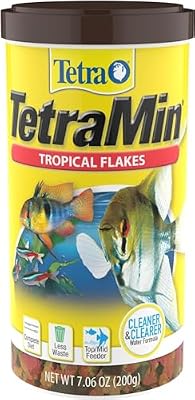
TetraMin Tropical Flakes Fish Food, 7.06 oz | Complete Daily Diet For Top-And-Mid Feeding Tropical Fish, Protein For Growth & Prebiotics for Digestion, Clear Water Formula
Included for 'Rainbowfish Care Guide: Best Species, Tank Size and Tank Mates' because the listing specifies 7.06 oz and Complete Daily Diet For Top-And-Mid Feeding Tropical Fish, details this guide uses to compare options.
View on Amazon
TetraColor Tropical Flakes Color Boosting Fish Food, 7.06 oz | For Mid & Bottom-Feeding Tropical Fish, Supports Immune System & Reduces Stress, Clean & Clear Water Formula, Feed Daily
Included for 'Rainbowfish Care Guide: Best Species, Tank Size and Tank Mates' because the listing specifies 7.06 oz and For Mid & Bottom-Feeding Tropical Fish, details this guide uses to compare options.
View on Amazon
API TROPICAL FLAKES Fish Food 5.7-Ounce Container
Included for 'Rainbowfish Care Guide: Best Species, Tank Size and Tank Mates' as a relevant option in this category; details come from the product listing.
View on Amazon
API TROPICAL FLAKES Fish Food 1.1-Ounce Container
Included for 'Rainbowfish Care Guide: Best Species, Tank Size and Tank Mates' as a relevant option in this category; details come from the product listing.
View on AmazonWhich Rainbowfish Species Suit Home Aquariums
“Rainbowfish” covers well over a hundred species across Australia, New Guinea and nearby islands. Only a handful are regularly kept, and they differ a lot in size, so the first decision is which species fits the space you have.
Dwarf neon rainbowfish (Melanotaenia praecox)
This is the most practical rainbowfish for a standard 90 cm tank. Males reach about 8 cm (3 in) at most and show an electric blue body with red-orange fin edges. Females are smaller and plainer. Tank-bred stock is widely available, and the species is generally described as tolerant of ordinary tap water in the neutral range. Sources disagree on the ideal pH, with Seriously Fish listing 6.8 to 7.5 and others quoting slightly acidic water near 6.5, so a stable neutral value is the safer target than chasing one end of the range.
Boeseman’s rainbowfish (Melanotaenia boesemani)
Boesemani is the classic show fish: males shift from blue-grey up front to orange-yellow toward the tail, and the colour deepens with age and good conditions. Seriously Fish lists a temperature of 27 to 30 C (other care guides give about 23 to 28 C), pH 7.0 to 8.0, hardness of 10 to 20 dGH and a minimum tank of 120 x 30 x 30 cm. It does poorly in soft, acidic water. Adult males can be deep bodied and fast, so they can intimidate small, slow or shy tank mates even though they are not aggressive.
Turquoise rainbowfish (Melanotaenia lacustris)
The turquoise rainbowfish comes from Lake Kutubu in Papua New Guinea. Adults are blue, males are larger, deeper bodied and brighter, and juveniles are much drabber and can take a year or more to colour up. It is a little larger than the dwarf neon. Seriously Fish lists 20 to 25 C, pH 7.0 to 9.0, hardness 10 to 20 dGH and a 120 cm tank, so it suits a long tank, hard alkaline water, a slightly cooler temperature than the Boesemani and a group of at least six. Because it is less commonly bred than the other two, buyers should confirm the species name, as several look-alikes are sold under loose trade names.
Species to think twice about
Larger species such as the red rainbowfish (Glossolepis incisus, up to about 15 cm per Seriously Fish) need at least a 120 cm tank and more for a full group. Several other larger species are also sold, so check each one’s adult size. They are rewarding but need more space than a typical small aquarium. Any rainbowfish sold as a small juvenile in a shop tank is likely to look dull. Colour develops with age and with good diet, so buying a mix of juveniles is normal.
Tank Size, Footprint and Stocking
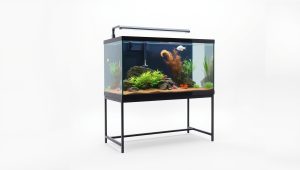
Rainbowfish are open-water swimmers. A 20-litre-per-fish rule of thumb does not describe their needs; footprint and length do. A 120 cm tank that is 30 cm deep gives a Boesemani group a real run; a tall, short 100-litre cube does not, even though the volume is similar.
A simple stocking calculation
Use length first, then check volume:
- Pick the species and take its adult size from the table above.
- As a rough rule, aim for a tank length of about 10 to 12 times the adult body length. Boesemani at 11 cm gives roughly 110 to 130 cm, matching the 120 cm figure. Dwarf neon at 7 to 8 cm gives roughly 70 to 90 cm, so a 60 cm tank is the listed minimum and a 90 cm tank is better.
- Plan for a school of at least six. Seriously Fish and other sources stress that these fish need groups, and a lone or paired rainbowfish tends to hide or become pushy.
- Allow extra length for each additional species rather than assuming the school can share space with several others.
Worked example: a 120 x 45 x 45 cm tank holds about 240 litres. A school of eight Boesemani plus a group of bottom-dwelling catfish is comfortable. The same school in a 60 cm tank of similar volume would be a poor fit because they could not stretch out.
Group size and sex ratio
Aim for at least six, ideally eight or more. Keep roughly two or three females per male if you can, because males spar and display to each other and to females. Sparring is mostly posturing, but more females and a larger group spread the attention. Single-sex male groups often show the best colour, as males compete for status.
Water Parameters and Filtration
Rainbowfish prefer clean, neutral to slightly alkaline water with moderate flow. Soft, acidic blackwater conditions suited to tetras are a poor match, especially for the Boesemani.
- Temperature: about 23 to 28 C for most species; Seriously Fish lists 27 to 30 C for Boesemani and a cooler 20 to 25 C for the turquoise rainbowfish. Sources vary, and some report that constant high temperatures shorten life.
- pH: roughly 6.8 to 9.0 depending on species; stability matters more than the exact number.
- Hardness: moderate to hard water, around 5 to 20 dGH depending on species, is typical.
- Nitrate: keep it low, ideally under 20 mg/L, through regular water changes.
- Flow and oxygen: a filter turning the tank volume over several times an hour and a visible surface ripple suit them.
Rainbowfish are sensitive to old, nitrate-heavy water and to sudden changes. Many keepers report that colour fades and fish become lethargic when water changes are skipped. Fish bought from soft-water shops can take time to settle in hard tap water, so acclimatise gradually over an hour or more.
Aquascape and Lid
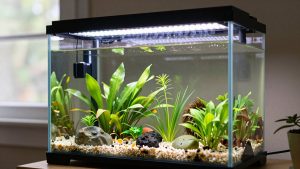
Provide a long clear swimming lane in the middle and front. Planting dense vegetation or rocks along the sides and back helps females and subordinate males retreat. Fine to medium gravel or sand is fine. Floating plants dim the light and reduce skittishness.
Use a lid or a tight cover. Rainbowfish jump when startled, when chased during spawning, or when water quality drops. Leave only small gaps for cables and tubing.
Feeding
Rainbowfish are omnivores that take insects from the water surface in the wild. A varied diet brings out colour:
- A quality floating or slow-sinking flake or micro pellet as the staple.
- Frozen or live foods several times a week: brine shrimp, daphnia, bloodworm, mosquito larvae.
- Some vegetable matter, such as spirulina flake or blanched spinach.
- Small portions twice a day, only what they finish in two to three minutes.
Overfeeding on rich food contributes to poor water and bloating, so rotate feeds and include a lighter day each week.
Tank Mates
Rainbowfish do well with other peaceful, active mid-sized fish that tolerate hard, neutral water and brisk flow. Because they are fast and eat quickly, slow or delicate fish may lose out at feeding time.
| Group | Examples | Notes |
|---|---|---|
| Good | Larger danios, barbs such as rosy barbs, congo tetras, Corydoras and other armoured catfish, loaches such as yoyo loaches, other rainbowfish genera of similar size, bristlenose plecos | Similar pace and water preferences; bottom dwellers avoid competition |
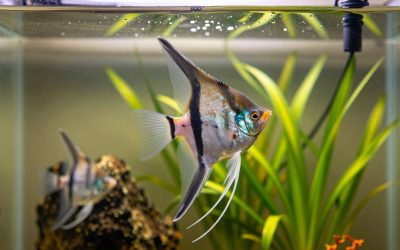
| Risky | Angelfish, gouramis with long fins, small tetras like neons, shrimp | Fast rainbowfish may stress slow or delicate fish; very small fish and shrimp can be eaten when they fit in the mouth |
| Avoid | Large aggressive cichlids, goldfish, fin nippers in small tanks, bettas | Mismatch in temperature, temperament or size; fin damage and stress |
Keep species from different genera and different regions in mind: mixing a Boesemani group with soft-water fish that prefer acidic pH forces a compromise that neither group enjoys.
Behaviour and Breeding
Rainbowfish are lively, with males displaying by flaring fins and pairing off for brief chases. Peaceful sparring is normal. Persistent chasing that leaves a fish hiding in a corner points to too few females, too few fish or too little space.
They are continuous spawners, scattering small sticky eggs among fine-leaved plants or spawning mops over many days. Eggs and fry are eaten by adults unless removed, so keepers who want fry often move spawning mops to a separate tank. Fry need very small foods such as infusoria or powdered food before moving to newly hatched brine shrimp.
Common Health Problems and Troubleshooting
| Symptom | Likely cause | Fix |
|---|---|---|
| Dull colour, hiding | Poor water, too few fish, bullying, wrong pH | Test water; enlarge the group; add cover; increase live and frozen foods |
| White spots on body and fins | Ich (Ichthyophthirius), often after stress or temperature swings | Raise temperature gradually, treat with an ich-labelled medication, keep the tank stable |
| Frayed fins | Fin nipping or bacterial infection from dirty water | Remove the nipper, improve water changes, treat if infection persists |
| Gasping at the surface | Low oxygen, high temperature, ammonia | Increase surface agitation, test water, do a water change |
| Fish found on the floor | Jumping through gaps | Fit a tight lid and cover gaps |
| Thin body, sunken belly | Poor diet, internal parasites | Offer varied food; consult an aquatic vet or use a targeted dewormer |
Weekly Maintenance Schedule
- Daily: feed small portions twice, check that every fish is out and swimming, make sure the lid is secure.
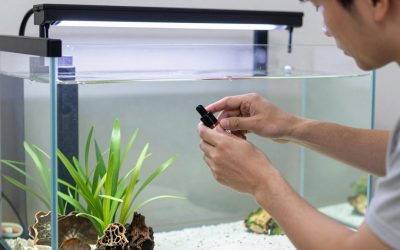
- Weekly: change 25 to 40 percent of the water with temperature-matched, dechlorinated water; vacuum the substrate; wipe the glass.
- Every two weeks: test pH, hardness and nitrate; trim plants; rinse the filter sponge in tank water, never tap water.
- Monthly: check heater and thermostat; clean the filter impeller and intake.
Common Mistakes
- Keeping too few fish. Pairs and trios often hide and look washed out.
- Choosing a tall, short tank. Length is what rainbowfish need.
- Soft, acidic water for species that want neutral to hard water.
- Judging colour in the shop. Juveniles are usually pale and develop colour over many months.
- Skipping a lid.
- Mixing them with very slow or fin-trailing fish that cannot compete.
Who Rainbowfish Suit
| Pick this species if… | Choose |
|---|---|
| You have a 60 to 90 cm tank | Dwarf neon rainbowfish |
| You have a 120 cm tank and hard, neutral water | Boeseman’s or turquoise rainbowfish |
| You have soft acidic tap water and do not want to adjust it | Consider other fish; rainbowfish are not the easy fit |
| You want a community with armoured catfish and loaches | Any of the above, in a group of six or more |
Frequently Asked Questions
What is the best rainbowfish for a beginner?
The dwarf neon rainbowfish is usually the easiest choice. It stays smaller, fits a 90 cm tank and is widely available as tank-bred stock. Boeseman’s rainbowfish are also hardy once settled, but they need a longer tank and harder water.
How many rainbowfish should be kept together?
Keep at least six, and eight or more where space allows. Larger groups share aggression and show better colour and more natural schooling behaviour.
How big a tank does a Boesemani rainbowfish need?
Seriously Fish gives a minimum of 120 x 30 x 30 cm, about 108 litres. Some keepers advise 150 litres or more for a full group with tank mates, so a longer tank gives a safer margin.
Why are my rainbowfish pale?
Young fish are naturally dull, and colour can take 12 months or more to develop. In adults, pale colour often points to stress, poor water quality, bullying or a monotonous diet. Test the water, increase group size and offer live or frozen food.
Can rainbowfish live with shrimp or small tetras?
It is risky. Adult rainbowfish may eat baby shrimp and can outcompete or stress very small, timid tetras. Larger tetras and sturdy bottom-dwellers are safer partners.
Do rainbowfish need a heater?
In most homes, yes. Most species are kept at about 23 to 28 C, though Seriously Fish lists the turquoise rainbowfish at a cooler 20 to 25 C and Boesemani at 27 to 30 C. A stable temperature helps prevent disease.
Do rainbowfish jump?
Yes. They are fast and easily startled, and unlidded tanks are a common cause of losses. Keep the cover on and close gaps around cables.
Ready to decide? Our #1 pick for 2026 is the Dwarf neon (M. praecox).
Live price & availability on Amazon.
Related Reviews & Guides

Hatchetfish Care Guide: Tank Setup, Feeding, and Tank Mates
Best Furnace Filters Merv in 2026: Top Picks Compared