Last Updated: October 21, 2026
If your fish are gasping, hiding, or dying and the water looks clear, you don’t have a fish problem. You have a water chemistry problem you can’t see. An aquarium water test kit is the only way to check what’s actually going on before you do a water change, add chemicals, or buy another filter.
I’ve kept freshwater tanks for years and I’ve killed fish by guessing. Test kits don’t prevent every problem, but they stop the most common one: chasing symptoms while ammonia or nitrite is spiking in the background. Here’s how to pick one you’ll actually use.
What you actually need to test
For most freshwater tanks, four parameters matter 90% of the time: ammonia, nitrite, nitrate, and pH. Ammonia and nitrite should be zero in a cycled tank. Any readable amount means your biofilter is overwhelmed, not cycled yet, or something died. Nitrate tells you if your water change schedule is keeping up. It should usually stay under 40 ppm for community fish, lower for shrimp and sensitive species.
pH is useful for context, not as a number to chase. Most captive-bred tetras, guppies, platies, and bettas do fine from 6.8 to 7.8 if it’s stable. Sudden pH swings kill faster than a slightly imperfect pH. If you keep African cichlids, discus, crystal shrimp, or you’re injecting CO2 for plants, then you also need KH and GH to understand buffering and hardness. For a basic starter tank, don’t pay extra for them yet.
Saltwater is different. Skip freshwater-only kits entirely. You need ammonia, nitrite, nitrate, pH, plus alkalinity, calcium, and magnesium at minimum, and phosphate if you have algae issues.
Strips vs. liquid vs. digital: real trade-offs
Paper test strips are fast. Dip for 2 seconds, wait 60 seconds, compare colors. The failure mode is accuracy and reading error. They routinely read 0.25 ppm ammonia as zero, and nitrate colors bleed together above 20 ppm. Humidity ruins them too — leave the cap off in a fish room for a month and they drift. That said, strips are fine for a quick weekly sanity check on an established tank where fish look normal.
Liquid reagent kits are the standard for a reason. You fill a vial, add drops, shake, wait 5 minutes, compare to a color card. They are slower and messier, but they reliably show 0.25 ppm ammonia when strips say zero. That half-step is often the difference between catching a mini-cycle early and waking up to dead fish. The main failure modes are user error: not shaking the nitrate bottles hard enough, not waiting the full time, or reading colors under yellow kitchen lights. The reagents also expire in 2-3 years, especially if stored warm.
For most beginners, a liquid test kit that covers ammonia, nitrite, nitrate, and pH is the best buy. You will use it daily while cycling, then weekly for a month, then monthly after that. One box usually lasts a year or more for one tank.
Digital meters and probes are a third option, mostly for pH and TDS. A cheap pen-style pH meter is faster than liquid for CO2 tanks where you check pH daily. The trade-off is calibration. A $15 meter that hasn’t been calibrated in three months is worse than drops. If you won’t calibrate monthly with buffer solution and store it wet, don’t buy one.
Quick comparison
Buy for how often you test, not for lab-grade precision. A kit that lives in a drawer doesn’t help.
| Type | Best for | Accuracy | Cost per test | Downside |
|---|---|---|---|---|
| Liquid drop kit (ammonia/nitrite/nitrate/pH) | New tanks, cycling, sick fish, beginners | Good, reads 0.25 ppm ammonia | Low | 5-10 minutes, shake and timing matters |
| Test strips (5-in-1 or 6-in-1) | Established tanks, quick weekly check | Rough, misses low ammonia | Medium | Humidity damage, hard to read nitrate |
| Separate ammonia-only liquid + strips | Budget backup for cycled tanks | Good for ammonia, rough for rest | Low | Two systems to store |
| Digital pH pen + liquid ammonia/nitrite | Planted CO2 tanks, shrimp keepers | Very good if calibrated | Higher upfront | Needs calibration fluid, probe storage |
Who should buy what
If you’re cycling your first tank: get liquid. You need to see ammonia rise, then nitrite rise, then both fall to zero. Strips smooth over those small changes and make you think you’re cycled a week early. Test daily and write the numbers down. The kit pays for itself the first time you don’t do a panicked 80% water change you didn’t need.
If your tank is a year old and stable: the cheaper option is honestly fine. Keep aquarium test strips under the stand for quick checks and a separate liquid ammonia test for when something looks off. That combo covers emergencies without the full vial routine every Sunday.
If you keep shrimp, discus, or CO2-injected plants: get liquid for nitrogen plus liquid KH/GH, and consider a pH pen. Shrimp deaths from GH creep and pH crashes from exhausted KH are common and strips won’t catch them early enough. Calibrate the pen every 30 days and replace the probe yearly if readings get slow.
If you run saltwater: don’t try to save money with freshwater strips. Get a saltwater-specific liquid kit. Phosphate and alkalinity test errors cause more bad dosing decisions than anything else in reef keeping. Follow the kit’s saltwater color cards exactly — freshwater cards are different.
How to get a result you can trust
Most bad readings are technique, not bad kits. Rinse vials in tank water, not tap water. Chlorine from the tap can skew ammonia. Fill to the white line exactly, hold dropper bottles vertical so drops are full size, and shake nitrate reagents like you mean it — 30 seconds hard shake for the second bottle, then 60 seconds after mixing. That step is non-negotiable. Unshaken nitrate tests read falsely low, which is how people end up with 80 ppm nitrate while the test says 10 ppm.
Wait the full 5 minutes and read in daylight or under a white 5000-6500K bulb. Warm kitchen LEDs make 0 and 0.25 ppm ammonia look identical. Don’t hold the vial against the card; hold it next to the white background with light behind you. If you’re colorblind, take a phone photo in daylight and compare, or ask someone else to read it — red-green confusion hits nitrite and nitrate cards hard.
Test before water changes, not after. Post-change water always looks good and hides the trend. If ammonia is 0.5 ppm or higher, do a 30-50% dechlorinated water change and retest in 24 hours. Don’t add pH Up/Down to fix a number unless you know why it moved. Low pH with zero KH means no buffering; chemicals will just bounce it.
When to replace and what to skip
Write the open date on the box. Liquid reagents last about 3 years unopened, about 2 years once opened if kept cool and dark. If nitrate reagent No. 2 gets chunky or won’t mix, replace it. If strips smell vinegary or colors look washed out, toss them. Extra-wide 9-in-1 strips and ammonia alert badges stuck inside the glass are useful as early warnings, but I wouldn’t rely on them alone.
Skip electronic ammonia testers for home use and skip any kit that doesn’t include ammonia. Ammonia is the killer in 8 out of 10 new-tank crashes, and many cheap strip packs leave it out. If you already own a digital pH meter for aquarium use, keep the liquid pH test anyway as a cross-check when the meter drifts.
FAQ
How often should I test my aquarium water?
Daily for ammonia and nitrite while cycling a new tank. Weekly for the first month after it’s cycled. Monthly for nitrate and pH once stable, plus any time fish act sick, you add new stock, clean the filter media, or smell something earthy from the tank.
Are test strips accurate enough?
Good enough for a quick check on a healthy, established tank, but not for cycling or diagnosing deaths. They often miss 0.25 ppm ammonia and blur nitrate readings. If strips show anything other than zero ammonia/nitrite, confirm with liquid before treating.
What should ammonia and nitrite be?
Zero in a cycled tank. A reading of 0.25 ppm means watch and retest tomorrow; 0.5 ppm or higher means do a partial water change with dechlorinator, cut feeding, and check the filter for clogs or a dead fish.
Do I need to test GH and KH?
Not for most community freshwater tanks. You need them if you keep shrimp, breed soft-water fish, run CO2, or your pH keeps crashing. KH under 3 degrees means your pH can swing fast — test it before adding pH chemicals.
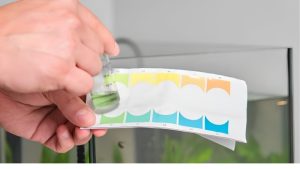
Best pH Pen for Aquarium Water: The Careful Expert Guide
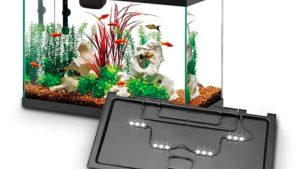
Best All In One Aquarium Kit With Built In Filter: Compared