Last Updated: October 17, 2026
- Best Ways to Maintain a Fish Tank: The Weekly Routine
- Fish Tank Maintenance Schedule
- Target Water Parameters and How to Read Them
- How to Clean a Fish Tank Without Crashing the Cycle
- Water Change Math: A Worked Example
- Aquarium Maintenance by Tank Type
- Common Maintenance Mistakes
- Gear That Helps
- Frequently Asked Questions
The best ways to maintain a fish tank come down to a short weekly routine: change 15 to 25 percent of the water while vacuuming the gravel, check ammonia, nitrite, and nitrate, wipe algae off the glass, and rinse filter media in old tank water about once a month instead of replacing it. Add daily checks on fish behavior, temperature, and feeding, and most freshwater tanks stay clear and stable with about 30 to 45 minutes of work per week. Below is the full routine, a schedule you can print, the water-change math, and the mistakes that cause most cloudy water and fish losses.
Key takeaways
- Weekly partial water changes of 15 to 25 percent beat occasional big ones; they keep nitrate low without shocking fish.
- Never clean the filter with tap water or replace all the media at once; the beneficial bacteria live there.
- Target ammonia 0 ppm, nitrite 0 ppm, and nitrate under about 20 to 40 ppm for most community fish.
- Match new water temperature within about 2°F and always add dechlorinator before it goes into the tank.
- Overfeeding is the single most common cause of dirty water; feed only what fish finish in about 2 minutes.
Quick answer: For most people in 2026, the best ways to maintain a fish tank is the Daily — our #1 rated choice. See the full ranked comparison, alternatives and buying advice below.
Best Ways to Maintain a Fish Tank: The Weekly Routine
Aquarium maintenance is the regular work of removing waste, refreshing water, and keeping equipment running so fish live in stable conditions. Here is the weekly routine in the order that causes the least mess and stress. Each step includes the reason, so you can adapt it to your tank.
- Unplug the heater and filter. A heater exposed to air can crack, and a filter can run dry or suck up gravel while the water level is low.
- Check water parameters first. Use a liquid test kit or strips on tank water before you change anything. Reading before the change shows the real state of the tank, not the diluted one.
- Scrape algae from the glass. Do this before vacuuming so the loosened algae settles and gets siphoned out with the rest of the debris.
- Vacuum the gravel while draining. Push the siphon tube into the substrate, let debris lift, then move to the next spot. Cover about a third to a half of the bottom each week; rotating areas protects bacteria in the substrate.
- Remove 15 to 25 percent of the water. Stop draining when you reach your target. In a lightly stocked tank, 15 percent is plenty; heavily stocked tanks and goldfish benefit from closer to 25 to 30 percent.
- Trim plants and remove dead leaves. Rotting plant matter adds waste and feeds algae.
- Prepare new water. Match the temperature to the tank within about 2°F and add a dechlorinator dosed for the full tank volume if your product calls for it. Most city water contains chlorine or chloramine, both harmful to fish and filter bacteria.
- Refill slowly. Pour over a plate, a decoration, or your hand to avoid blasting the substrate and stirring up a cloud.
- Restart equipment. Plug in the filter first, confirm it is flowing, then plug in the heater after about 15 minutes so its thermostat settles in the water.
- Write it down. Note the date, percent changed, and readings. A log shows trends, such as nitrate creeping up, weeks before fish show stress.
Fish Tank Maintenance Schedule
A schedule turns maintenance into a habit. This one fits a typical freshwater community tank of 10 to 75 gallons.
| Frequency | Task | Time needed | Why |
|---|---|---|---|
| Daily | Feed, count fish, check temperature and filter flow | 2 to 5 min | Catches illness, heater failure, or a stuck filter early |
| Weekly | 15 to 25% water change with gravel vacuum | 20 to 40 min | Removes nitrate and waste before it builds up |
| Weekly | Check ammonia, nitrite, nitrate, pH | 5 to 10 min | Shows whether the routine is keeping up with the bioload |
| Weekly | Clean inside glass | 5 min | Keeps algae from hardening into spots |
| Every 2 to 4 weeks | Rinse mechanical filter media in removed tank water | 10 min | Restores flow without killing bacteria |
| Monthly | Trim plants, wipe lid and light, clean outside glass | 10 to 15 min | Light reaches plants; condensation stops dripping |
| Every 3 to 6 months | Clean filter impeller and tubing; check heater accuracy | 20 min | Gunk slows impellers; heaters drift over time |
| Every 6 to 12 months | Replace worn sponges or cartridges one part at a time | 10 min | Old media crumbles; staged swaps protect the cycle |
Target Water Parameters and How to Read Them
Checking parameters is how you know the routine works. These ranges suit most tropical community fish; species such as African cichlids, discus, or goldfish have their own needs, so confirm with a species guide.
| Parameter | Target | Action if out of range |
|---|---|---|
| Ammonia | 0 ppm | Do a 25 to 50% change, feed less, check filter |
| Nitrite | 0 ppm | Same as ammonia; common in new or disturbed tanks |
| Nitrate | Under 20 to 40 ppm | Increase weekly change size or frequency |
| pH | About 6.5 to 7.5, stable | Stability matters more than an exact number; avoid quick swings |
| Temperature | About 74 to 80°F for most tropicals | Check heater setting and thermometer accuracy |
| KH (carbonate hardness) | About 3 to 8 dKH | Low KH lets pH crash; ask a local store about buffering |
Liquid kits are generally more precise than strips, especially for ammonia. Strips are fine for quick weekly checks if you confirm odd results with a liquid kit.
How to Clean a Fish Tank Without Crashing the Cycle
A fish tank stays healthy because of beneficial bacteria that turn toxic ammonia into nitrite and then into less harmful nitrate. Those bacteria live mostly in the filter media and substrate. Aggressive cleaning removes them, which is how “I cleaned everything and my fish died” happens.
- Rinse media in tank water. Squeeze sponges in a bucket of water you just removed. Tap water’s chlorine and temperature shock kill the colony.
- Replace media in stages. If a cartridge or sponge is falling apart, swap only one piece, then wait two to four weeks before the next.
- Do not strip the gravel. Vacuum part of the substrate each week rather than removing it all.
- Skip soap and household cleaners. Residues can harm fish. Use plain water, an algae scraper, and a dedicated aquarium sponge.
- Clean decorations sparingly. A light scrub in tank water is enough. Bleach soaks, if ever needed, require thorough rinsing and dechlorinator.
Water Change Math: A Worked Example
Knowing your actual water volume makes dosing and change sizes accurate. Gravel, rocks, and decorations take up space, so real volume is usually 10 to 20 percent below the tank’s label.
Example: a 29-gallon tank with 2 inches of gravel and a few rocks holds roughly 24 to 26 gallons of water. A 25 percent change is therefore about 6 gallons, or just over one 5-gallon bucket. Dechlorinator is usually dosed for the volume of new water you add (6 gallons here) or the full tank, depending on the product; follow the label. If your tap runs at 70°F and the tank sits at 77°F, mix in warm tap water until the bucket reads 75 to 79°F before pouring.
| Tank label | Real water volume (est.) | 15% change | 25% change |
|---|---|---|---|
| 10 gallons | 8 to 9 gal | About 1.3 gal | About 2 gal |
| 20 gallons | 17 to 18 gal | About 2.6 gal | About 4.4 gal |
| 29 gallons | 24 to 26 gal | About 3.8 gal | About 6.3 gal |
| 40 gallons | 34 to 36 gal | About 5.3 gal | About 8.8 gal |
| 55 gallons | 47 to 50 gal | About 7.3 gal | About 12 gal |
| 75 gallons | 64 to 68 gal | About 10 gal | About 16.5 gal |
Aquarium Maintenance by Tank Type
Nano tanks (under 10 gallons)
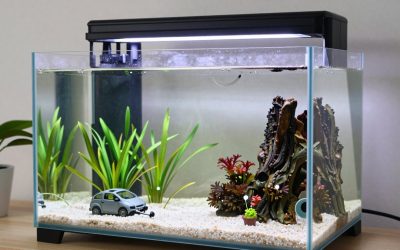
Small volumes swing faster in temperature and chemistry. Smaller but more frequent changes, such as 15 to 20 percent twice a week for a stocked 5-gallon, keep conditions steadier. Feed very sparingly.
Planted tanks
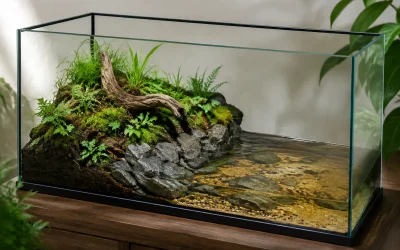
Live plants absorb nitrate, so nitrate may stay low, but leaf litter and fertilizer still need removal. Vacuum lightly around roots, trim weekly, and keep the light on a timer for about 6 to 8 hours to limit algae.
Goldfish tanks
Goldfish produce far more waste than most tropical fish of the same size. Larger weekly changes of 30 to 50 percent and strong filtration are normal for them.
Betta tanks
A heated, filtered tank of at least 5 gallons is the common recommendation. Gentle flow and 20 to 25 percent weekly changes suit them well.
Common Maintenance Mistakes
- Overfeeding. Uneaten food rots into ammonia. Feed small amounts once or twice daily that fish finish in about 2 minutes.
- Huge, rare water changes. Changing 70 percent once a month swings pH and hardness sharply. Small weekly changes are gentler.
- Replacing cartridges on the box’s schedule. Many cartridge systems suggest monthly replacement; rinsing and staged replacement protect the cycle better.
- Skipping dechlorinator “just once.” Even a small dose of chloramine can harm fish and bacteria.
- Lights on all day. Twelve or more hours of light invites algae; use a timer.
- Adding many new fish at once. The bacteria colony needs time to grow with the bioload; add a few at a time.
If fish show signs of illness such as clamped fins, white spots, or gasping at the surface, check water quality first and ask an aquatic vet or an experienced local fish store for guidance before adding medications.
Gear That Helps
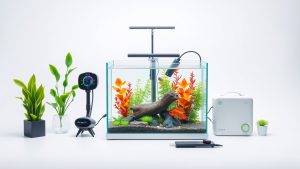
- Tetra Water Cleaner Gravel Siphon · manual siphon · for tanks up to 55 gallons · removes debris from gravel. A simple, low-cost tool that does the core weekly job.
- API Freshwater Master Test Kit · liquid reagents · pH, high-range pH, ammonia, nitrite, nitrate · about 800 tests per kit. The standard liquid kit for tracking the cycle.
- Seachem Prime · concentrated conditioner · removes chlorine and chloramine · small dose per gallon. Concentrated, so one bottle lasts a long time in small and mid-size tanks.
- Aqueon Aquarium Algae Scraper (magnetic glass cleaner) · magnetic glass cleaner · for glass or acrylic · small and medium sizes. Keeps your hands out of the water during quick weekly wipes.
Frequently Asked Questions
How often should I clean my fish tank?
Most freshwater tanks do best with a 15 to 25 percent water change and gravel vacuum every week. Filter media needs a rinse every 2 to 4 weeks, and deeper equipment cleaning every few months. Heavily stocked tanks or goldfish may need more frequent or larger changes.
Do I need to take the fish out to clean the tank?
No. Removing fish stresses them and risks injury. Routine maintenance is done with fish in place; just work slowly and avoid stirring up the substrate too much.
How do I clean a fish tank filter without killing bacteria?
Rinse the sponge or media in a bucket of water you removed from the tank during a water change. Avoid tap water and do not replace all media at the same time. If media must be replaced, change one piece and wait a few weeks before the next.
Why is my tank cloudy after cleaning?
Fine particles stirred from the gravel usually settle within a few hours. Milky cloudiness that lasts a day or more can be a bacterial bloom from a disturbed cycle or overfeeding. Check ammonia and nitrite, feed less, and avoid further deep cleaning for a week.
Can I use tap water for water changes?
Yes, as long as you add a dechlorinator that handles both chlorine and chloramine and match the temperature. Check your tap water’s pH and hardness once so you know how it compares to your tank.
How much time does aquarium maintenance take each week?
For a 20 to 55 gallon tank, plan on about 30 to 45 minutes per week, plus a few minutes daily for feeding and quick checks. A good siphon and a set routine bring that down quickly.
Ready to decide? Our #1 pick for 2026 is the Daily.
Live price & availability on Amazon.
Related Reviews & Guides



Air Pump in Aquarium: The Complete Buyer’s Guide (2026)
Aquarium Algae Types: How to Identify and Control Every Kind