Last Updated: October 9, 2026
- Top Pick: Carefree Fish Aquarium Super Powerful Magnetic Cleaner with 4 Algae Scrapers for Glass Fish Tank Magnet Brush Floating S+(Plus)
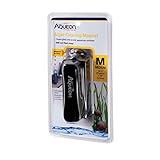
- Best Value: Aqueon Aquarium Algae Scraper, Fish Tank Magnetic Glass Cleaner for Glass/Acrylic, Medium
- Premium Choice: fishkeeper Dual-Blades Magnetic Aquarium Glass Cleaner with 4 Algae Scraper
TL;DR: Magnetic algae cleaners let you scrub glass without getting your hands wet, but magnet strength, blade quality, and corner-handling ability vary enormously between models. This guide covers gauss ratings, safe glass thickness ranges, blade vs. pad trade-offs, and how to prevent the #1 failure mode — sand entrapment that scratches glass.
Best Magnetic Algae Cleaner for Aquariums: Glass-Safe Scrubbing Without Getting Your Hands Wet
Algae on the front glass is the most visible aquarium maintenance task and, handled poorly, the most likely to cause permanent cosmetic damage. Scratches on acrylic or glass panels cannot be polished out from the inside. A quality magnetic algae cleaner eliminates the need to reach into the tank, keeps the scrubbing face in contact with the glass consistently, and — when paired with the right blade or pad — removes even stubborn coralline algae without abrasion risk.
As an Amazon Associate we earn from qualifying purchases at no extra cost to you.


🛒 Best Price Today on Amazon
Prime members get fast, free shipping on everything above, plus member-only deals. New members get a 30-day free trial — cancel anytime.
Start 30-Day Prime Free Trial →See Today’s Amazon DealsTop Magnetic Algae Cleaners


As an Amazon Associate we earn from qualifying purchases. Product prices and availability are accurate as of the date/time indicated.


As an Amazon Associate we earn from qualifying purchases. Product prices and availability are accurate as of the date/time indicated.



As an Amazon Associate we earn from qualifying purchases. Product prices and availability are accurate as of the date/time indicated.
Magnet Strength and Glass Thickness Matching
The internal magnet and external float must exert enough force to maintain firm contact through the tank wall, but not so much that they are difficult to maneuver or cause the internal piece to jump and trap substrate. Manufacturers rate magnets by the glass thickness range they support — this is the critical spec to match to your tank.
Most nano and standard tanks up to 75 gallons use 6–10 mm glass; medium-strength magnets handle this range well. Larger tanks (125+ gallons) and European-style rimless tanks often use 12–15 mm glass, requiring strong or extra-strong rated magnets. Using an undersized magnet on thick glass results in the cleaner floating away from the surface and leaving streaks. Using an oversized magnet on thin glass makes the cleaner drag and increases the chance of the internal piece spinning out of control and cracking a corner.
Magnetic Cleaner Specifications
| Spec | Light Duty | Medium Duty | Heavy Duty |
|---|---|---|---|
| Glass Thickness Range | Up to 6 mm | 6–12 mm | 12–19 mm |
| Magnet Rating | Low gauss | Medium gauss | High gauss / neodymium |
| Best For | Nano, betta tanks | Standard 20–125 gal | Large display, sump |
| Acrylic Safe? | With felt pad only | With felt pad only | With felt pad only |
| Blade Option? | Rarely | Yes (most models) | Yes (standard) |
| Float on Drop? | Inconsistent | Most models yes | Yes (external floats) |
Blade vs. Felt Pad: Choosing the Right Scrubbing Face
Felt or microfiber pads remove soft green algae, diatoms, and thin brown film efficiently without scratching glass or acrylic. They are the default choice for weekly maintenance on lightly algaed tanks. The limitation is coralline algae — the calcified pink or purple crust common in reef tanks that felt pads cannot remove without extreme pressure that risks the magnet slipping.
Stainless steel or plastic razor blades cut through coralline cleanly. Stainless blades are glass-only — they will permanently scratch acrylic. Plastic blades are acrylic-safe but dull faster and require more passes on coralline. Most quality magnetic cleaners come with both a pad and a blade insert that swaps onto the same frame, making it a versatile tool across maintenance tasks.
The Sand Entrapment Problem
The single most common cause of glass scratches from magnetic cleaners is a grain of sand or gravel becoming trapped between the cleaning face and the glass. This happens when the internal magnet sinks to the substrate and picks up a particle, then is dragged across the glass with that particle acting as an abrasive.
Prevention: always start the cleaning pass from the midpoint of the glass and work upward, never dragging the internal piece down to the gravel line. When you must clean the lower glass, manually reposition the internal piece by breaking the magnetic connection, repositioning by hand above the substrate, and re-connecting the external float. On sandy substrates especially — fine-grain substrates like Carib Sea Fiji Pink or crushed coral — inspect the pad face before each cleaning session. Our aquarium substrate guide covers which substrate types pose the highest entrapment risk.
Corner Cleaning and Tank Shape Limitations
Standard rectangular magnetic cleaners cannot reach into silicone-sealed corners. A small handheld scrubber or corner scraper is a necessary supplement for full glass coverage. Some manufacturers offer angled-frame magnetic cleaners designed to work closer to corners, but no magnetic cleaner eliminates the need for occasional spot cleaning with a hand tool in the corners and around equipment mounting points.
Bow-front and curved tanks require a magnetic cleaner with a flexible or slightly convex internal face — rigid flat cleaners lose contact along the curve, leaving unscrubbed bands. Check manufacturer specifications for “bow-front compatible” rating before purchasing for curved panel tanks. For a broader view of glass versus acrylic panel maintenance trade-offs, our glass vs. acrylic comparison guide covers scratch resistance, cleaning protocols, and repair options for both materials.
Frequently Asked Questions
Will a magnetic algae cleaner scratch my glass if I use it daily?
Not if used correctly. Daily light maintenance with a felt or microfiber pad on clean glass poses no scratch risk. The danger is always sand or grit entrapment — a single microscopic quartz grain trapped between the pad and glass can leave a visible scratch in one pass. Daily use in a sandy-substrate tank requires more diligence about pad inspection. For planted tanks on fine sand like Amazonia or ADA Power Sand, weekly cleaning with careful repositioning is safer than daily passes near the substrate line.
Can I use a magnetic cleaner on an acrylic tank?
Only with a felt or microfiber pad — never a blade. Acrylic scratches at roughly 1/10th the force required to scratch glass, and even plastic blades marketed as “acrylic safe” can leave fine marks over repeated use. The best practice for acrylic is a dedicated soft pad magnetic cleaner used with light pressure. Never use the same magnetic cleaner on both glass and acrylic tanks — glass-cleaning pads accumulate microscopic glass particles that will score acrylic on the next use. Our glass vs. acrylic guide covers the full maintenance protocol difference between the two materials.
My magnetic cleaner keeps falling off the glass. What should I do?
Falling off indicates one of three issues: the magnet is undersized for your glass thickness, there is mineral scale or algae buildup between the pad and glass reducing magnetic coupling, or the external float has water intrusion reducing its buoyancy. First, clean both the internal and external faces thoroughly. If the problem persists, measure your glass thickness and verify the cleaner’s rated range. Upgrading to the next magnet strength tier is the definitive fix for a cleaner that was undersized to begin with.
How do I clean coralline algae without a blade?
Softening coralline first makes pad removal feasible. Apply a small amount of diluted white vinegar (1:10 in saltwater) to the coralline patch using a cotton swab or spray while the glass is exposed during a water change — keep it off corals and substrate. The acid softens the calcified crust within 5–10 minutes. A stiff felt pad or the back of a credit card can then remove the loosened material. For heavy coralline coverage, a plastic scraper or dedicated coralline removal tool used manually is more effective than a magnetic cleaner, which lacks the leverage for calcified deposits.
What is the best algae cleaning schedule for a planted tank with LED lighting?
In a well-balanced planted tank with appropriate CO2 and nutrient levels, glass algae accumulates primarily as green spot algae (GSA) on slow-growing or low-flow areas, and diatom film during the tank’s first 8–12 weeks. Weekly glass cleaning prevents buildup from becoming difficult to remove. If GSA is appearing faster than weekly cleaning keeps up, the underlying cause is typically elevated phosphate relative to nitrate, or insufficient CO2 for the light level. Cleaning more frequently treats the symptom; adjusting fertilization and CO2 treats the cause. See our CO2 setup guide and LED lighting comparison for parameter balancing guidance.
For a complete planted tank maintenance workflow including substrate vacuuming, water changes, and equipment cleaning intervals, our gravel cleaner and siphon guide covers the full bottom-of-tank maintenance routine that complements glass cleaning.
Ready to decide? Our #1 pick for 2026 is the Glass Thickness Range.
Live price & availability on Amazon.
Related Reviews & Guides


How to Choose a Dosing Pump: Top Expert Step by Step Guide
11 Best Aquarium Powerheads: Top Picks for Water Circulation and Flow