Last Updated: October 4, 2026
- Top Pick: Sukh Ceramic Rings for Aquarium Filter – 15oz Bio Filter Media with 3 Bags
- Best Value: JIH Aquarium Bio Ceramic Rings Filter Media for Pond Fish Tank, 4 LBS
- Premium Choice: TOPZEA 6 Lb Aquarium Filter Media Ceramic Rings, Premier Bio Filter Medias with Zipper Mesh Bags for Koi Pond, Canister, Fish Tank Filter, Pure White
As an Amazon Associate we earn from qualifying purchases at no extra cost to you.


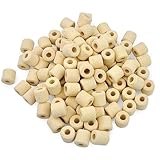
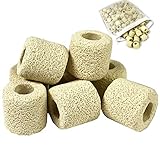


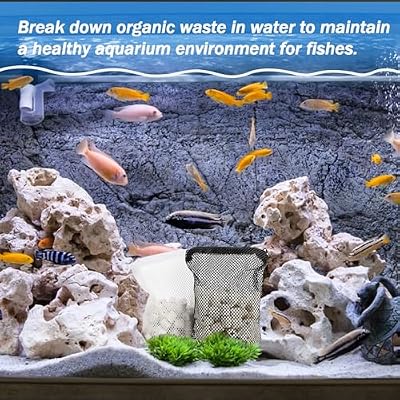
Aquarium ceramic ring filter media is the backbone of biological filtration in most freshwater and marine tanks, providing the surface area that beneficial bacteria need to colonize and process toxic ammonia and nitrite. Unlike mechanical filter pads that physically trap debris, bio rings create a stable, long-lasting habitat for nitrifying bacteria deep within their porous structure. Choosing the right ceramic rings affects how quickly your tank cycles, how well it handles bio-load spikes, and how reliably your nitrogen cycle stays stable over time. We reviewed the top bio ring products to help you find the best fit for your filter and tank size.
🛒 Best Price Today on Amazon
Prime members get fast, free shipping on everything above, plus member-only deals. New members get a 30-day free trial — cancel anytime.
Start 30-Day Prime Free Trial →See Today’s Amazon DealsQuick Picks
Fluval BioMax Bio Rings
Fluval BioMax combines an engineered multi-channel internal structure with a proven track record in both freshwater and marine setups, delivering superior surface area per gram compared to standard ceramic rings. The intricate tunnel system supports robust bacteria colonies that handle heavy bio-load without crashing.
- Multi-channel internal structure for maximum surface area
- Suitable for freshwater and marine tanks
- Long service life — does not need regular replacement




As an Amazon Associate we earn from qualifying purchases. Product prices and availability are accurate as of the date/time indicated.
Seachem Matrix Bio Media
Seachem Matrix takes a different approach with macroporous pumice stone that provides internal pore environments capable of supporting both aerobic nitrifying and anaerobic denitrifying bacteria — meaning it can reduce nitrate as well as ammonia and nitrite. This dual-action performance sets it apart from standard ceramic rings.
- Supports both nitrification and denitrification
- Macroporous pumice with massive internal surface area
- Inert and pH-neutral in all water types


As an Amazon Associate we earn from qualifying purchases. Product prices and availability are accurate as of the date/time indicated.
AZOO Aquatic Mech-Power Bio Ring
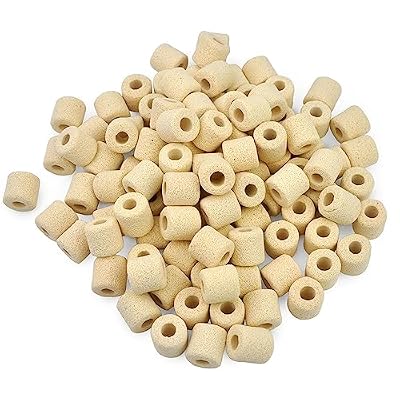
AZOO’s ceramic bio rings offer reliable biological filtration performance at a fraction of the cost of premium options, making them an excellent choice for budget-conscious aquarists running multiple tanks or large-volume sumps. The standard ring structure provides adequate surface area for typical community tank loads.
- Affordable price per liter of media
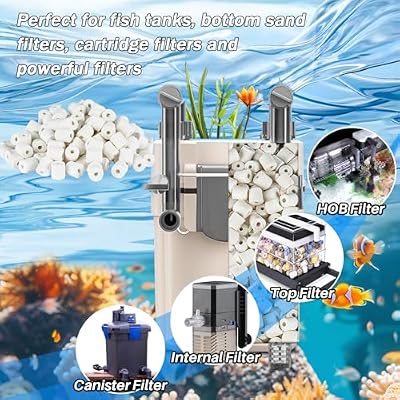
- Suitable for canister filters, sumps, and HOB filters
- Porous ceramic construction for good bacteria colonization


As an Amazon Associate we earn from qualifying purchases. Product prices and availability are accurate as of the date/time indicated.
Why Trust Our Recommendations
We evaluated ceramic ring and bio media products based on published surface area data, independent filtration testing results, long-term colony stability reports from aquarium hobbyists, and compatibility with a range of filter types including canister filters, sumps, HOB filters, and wet-dry trickle systems. Both freshwater and saltwater performance were considered.
Detailed Reviews
1. Fluval BioMax Bio Rings — Best for Reliable Biological Filtration
Fluval BioMax has been a trusted name in aquarium biological filtration for decades, and the BioMax rings remain one of the most consistently recommended bio media options across freshwater and reef communities. The rings feature an engineered multi-channel structure with internal tunnels that dramatically increase the surface area available for bacterial colonization compared to solid or simply hollow ceramic rings. In practice, this means faster cycling times in new tanks and more stable nitrogen processing in established setups under heavy feeding or bio-load stress. They are fully inert, pH-neutral, and rated for both freshwater and marine environments. A 500g bag is appropriate for tanks up to about 250 liters under moderate bio-load.
Pros: Engineered multi-channel structure maximizes surface area | Stable performance in fresh and saltwater | Long service life — rinse in tank water, never replace
Cons: Higher cost per gram than basic ceramic rings
2. Seachem Matrix Bio Media — Best for Nitrate Reduction
Seachem Matrix is technically not a ceramic ring — it’s a macroporous pumice stone — but it earns its place in this comparison because it outperforms standard ceramic rings in one critical way: the deep internal pores of Matrix create anaerobic micro-environments within each piece, which allows denitrifying bacteria to thrive alongside the aerobic nitrifying bacteria on the surface. This dual-action capability means Matrix can reduce nitrate levels passively, not just ammonia and nitrite, which is significant for heavily stocked tanks or those with frequent feeding. One liter of Matrix is reported by Seachem to provide the same capacity as 170 liters of live rock for aerobic biofilration, making it highly efficient per unit volume.
Pros: Unique denitrification capability reduces nitrate passively | Enormous internal surface area | Permanent media — never needs replacement
Cons: Denitrification benefit takes months of maturation to develop; higher price
3. AZOO Aquatic Mech-Power Bio Rings — Best Budget Ceramic Rings
AZOO’s ceramic bio rings are a popular choice among aquarists running multiple tanks or large sump systems where media volume requirements are high and cost efficiency matters. The standard hollow-ring construction provides adequate surface area for nitrifying bacteria in community and moderately stocked tanks, and the ceramic material is appropriately porous for bacterial adhesion. They fit standard canister filter baskets, media bags, and sump chambers without modification. Performance is solid for lightly to moderately loaded tanks, though heavily stocked systems would benefit from upgrading to engineered high-surface-area media.
Pros: Very affordable — great for high-volume sump applications | Standard sizing fits most filter types | Adequate performance for community tanks
Cons: Lower surface area per gram than engineered alternatives; less suitable for heavy bio-load
4. Eheim Substrat Pro Biological Filter Media — Best Premium Sintered Glass Option
Eheim Substrat Pro represents the premium tier of biological filter media, using sintered glass beads rather than ceramic to achieve an exceptionally high surface area — reportedly up to 450 m²/liter. The spherical bead shape creates optimal water flow through media chambers without clogging or dead zones, and the internal pore structure supports both aerobic and deep anaerobic bacterial populations. While the price is significantly higher than ceramic rings, a smaller volume of Substrat Pro achieves comparable or superior biological filtration to a larger volume of standard media, which can be a significant advantage in space-constrained canister filters.
Pros: Exceptionally high surface area for its volume | Spherical shape prevents channeling and dead zones | Permanent media with decades of proven performance
Cons: Highest price point in this comparison; overkill for lightly stocked tanks
Buyer’s Guide
Surface Area Per Gram: Why It Matters
The primary performance metric for biological filter media is surface area — more surface area means more physical space for nitrifying bacteria to colonize. Standard hollow ceramic rings typically offer 200–400 m²/liter; engineered bio rings like Fluval BioMax claim around 400–550 m²/liter; and premium sintered glass media can exceed 450 m²/liter. Higher surface area means you can support more bacterial biomass in a smaller media volume, which matters most in compact canister filters or heavily stocked tanks where every liter of filter chamber space counts.
Matching Media Volume to Tank Bio-Load
The volume of bio media you need scales with your tank’s bio-load — the amount of waste generated by your fish and feeding schedule. A lightly stocked 100-liter community tank requires far less media than a heavily stocked cichlid tank or a reef aquarium with large fish. As a general guideline, most canister filter manufacturers recommend filling roughly 50–70% of the filter volume with biological media for typical stocking levels. For overstocked or high-bio-load setups, upgrading to a high-surface-area media and increasing media volume will help prevent ammonia and nitrite spikes.
Maintenance: When and How to Clean Bio Media
Biological filter media should never be cleaned with tap water or replaced entirely, as this destroys the bacterial colony you’ve built up. The correct approach is to rinse bio rings gently in a bucket of used aquarium water (siphoned during a water change) every few months to remove accumulated detritus that may be clogging flow through the media. This maintains flow without killing the beneficial bacteria. Bio media does not need to be replaced unless it has physically broken down or becomes irreversibly clogged — quality ceramic and glass media lasts many years.
Frequently Asked Questions
How long does it take for ceramic rings to become colonized with beneficial bacteria?
Under normal cycling conditions, beneficial bacteria begin colonizing filter media within the first week, but a fully mature, stable colony typically takes four to eight weeks to develop. This timeline can be accelerated significantly by seeding new media with bacteria from an established filter — either by placing old media directly alongside new media, using a commercial bottled bacteria product, or transferring used filter water from a healthy tank. Warmer water temperatures (around 25–28°C) also speed up bacterial reproduction during cycling.
Should I stack bio rings directly in my filter or use a media bag?
Both approaches work, but using a fine mesh media bag has practical advantages: it keeps small rings contained during filter maintenance, prevents them from clogging impeller chambers if they break down, and makes it easy to move or transfer media between filters. The downside is that a bag slightly restricts flow around individual pieces compared to loose media. For sumps and large canister filters, loose-stacked media in a dedicated chamber is often preferred for maximum flow-through efficiency.
Can I use ceramic rings in a hang-on-back (HOB) filter?
Yes, ceramic bio rings work well in HOB filters, though space is more limited than in canister filters or sumps. Most HOB filters have a media compartment behind or beneath the cartridge slot where loose bio media can be placed in a small mesh bag. Replacing the standard carbon cartridge with a combination of mechanical filter floss and bio rings is a popular modification among hobbyists that significantly improves biological filtration capacity in HOB units.
Do ceramic rings work in saltwater and reef tanks?
Yes, ceramic and glass bio rings are effective in saltwater and reef tank filtration systems, particularly in sump refugiums and canister filters used as supplemental filtration. However, in established reef tanks with a mature live rock bed, additional bio media is often unnecessary since the live rock itself provides enormous colonized surface area. Bio rings become more valuable in fish-only marine setups or newer reef systems before live rock populations are fully established.
Final Verdict
Fluval BioMax remains the most balanced choice for most aquarium setups, offering proven performance, compatibility with all filter types, and a track record spanning decades of hobby use. Seachem Matrix is the upgrade pick for aquarists dealing with persistent nitrate issues or running heavily stocked systems where passive denitrification is valuable. Budget-minded hobbyists running multiple tanks or large sump systems will find AZOO ceramic rings entirely sufficient. Whichever aquarium ceramic ring filter media you select, biological filtration is one area where investing in quality directly translates into a healthier, more stable tank environment.
Related Reviews & Guides



ZACRO Aquarium Thermometer Review
Best Mini Heater for Betta Tank: Safe and Compact Picks