Last Updated: October 4, 2026
- Top Pick: Pawfly Aquarium Air Stone 1 Inch, Fish Tank Air Stone Aerator Bubble Diffuser for Nano Air Pumps Small Buckets and Fish Tanks, 10 Pack
- Best Value: AQUANEAT Aquarium Air Stones 1 inch 12 Pack, Bubble Stone, Aerator Bubble Diffuser, Air Pump Accessories for Aquariums, Fish Tanks, and Hydroponics
- Premium Choice: Pawfly Aquarium Air Stone Bar Bubbler 4 Inch, Fish Tank Bubbler Stone with Plastic Base Square Oxygen Diffuser for Nano Air Pump Small Bucket and Fish Tank, 4 Pack
🛒 Best Price Today on Amazon
Prime members get fast, free shipping on everything above, plus member-only deals. New members get a 30-day free trial — cancel anytime.
What Air Stones Do for Your Aquarium
Air stones are porous, mineral or ceramic diffusers connected to an air pump via airline tubing. When air is pumped through them, they break it into streams of fine bubbles that rise through the water column, increasing surface agitation and gas exchange. This raises dissolved oxygen levels and helps expel carbon dioxide — critical for fish health, especially in heavily stocked tanks or during hot weather when oxygen solubility decreases.
As an Amazon Associate we earn from qualifying purchases at no extra cost to you.
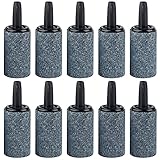

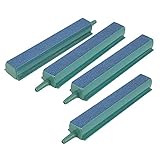


Beyond function, the visual effect of a steady stream of fine bubbles is aesthetically pleasing and creates movement in the tank. Air stones come in various shapes and sizes — disc stones produce a wide curtain of micro-bubbles, cylindrical stones produce a column of bubbles, and flexible curtain stones can line the back wall of a large aquarium for a dramatic backdrop effect.
Hygger Aquarium Air Stone Disc
The Hygger air stone disc is a thin, flat disc that produces an exceptionally fine and dense cloud of micro-bubbles. Larger discs (available in 4-inch and larger sizes) create a mushroom-cloud effect that is both functional and visually striking. The fine bubbles from a quality disc stone are more effective at oxygenation than coarse bubbles from cheap cylindrical stones. The disc sits on the substrate and requires weighting down or a suction cup anchor. Compatible with all standard air pumps.
Penn-Plax Aquarium Cylinder Air Stones
Penn-Plax cylindrical air stones are the classic, affordable workhorse of aquarium aeration. These small, cylindrical stones produce a steady column of bubbles and are compatible with all standard airline tubing. They are available in value packs of 10 or more, making them economical for multi-tank fishrooms. Replace every 2–4 months as mineral deposits gradually clog the pores and reduce bubble output. A simple, reliable, and inexpensive aeration solution.
Pawfly Flexible Bubble Curtain Air Stone Wall
A flexible curtain air stone is a flat, ribbon-like stone that can be bent to any shape and placed along the back wall or perimeter of an aquarium. When connected to a powerful air pump, it produces a breathtaking wall of rising bubbles across the entire back of the tank. This effect is particularly impressive in large tanks and provides excellent oxygenation for heavily stocked setups. Available in 4-inch to 12-inch lengths.
What to Look For in Aquarium Air Stones
- Bubble size: Finer bubbles are more efficient at oxygenation; disc stones and flexible curtains produce the finest bubbles.
- Size relative to tank: Larger tanks need larger or multiple air stones to achieve adequate surface agitation.
- Pump compatibility: Match air stone size to your pump's output — too large a stone requires too much pressure.
- Replacement frequency: Air stones clog over time; budget for replacement every 2–3 months.
- Check valve on tubing: Always install a one-way check valve on airline tubing to prevent tank water from siphoning into the pump if power fails.
- Placement: Position air stones near the bottom of the tank for maximum bubble travel and gas exchange.
How Air Stones Improve Oxygen and Circulation
Air stones work by breaking air from a pump into a stream of fine bubbles, and it is the surface agitation those bubbles create that actually drives gas exchange. As bubbles rise and disturb the water surface, they help oxygen dissolve in and carbon dioxide escape, which is especially valuable in warm water, heavily stocked tanks, and during medication treatments that can lower dissolved oxygen. The gentle current an air stone produces also prevents stagnant pockets and supports beneficial bacteria.
The size and porosity of the stone determine bubble quality. Finer pores create smaller bubbles with more surface area and better oxygen transfer, while coarser stones make larger bubbles and a more vigorous boil. Match the stone to your air pump’s output: a small pump cannot push enough air through a long bubble wall, and an oversized pump may need a control valve to avoid an overpowering current. For most community tanks, a moderate, steady stream of fine bubbles offers the best balance of oxygenation and calm water that fish like bettas appreciate.
Setup, Maintenance, and Troubleshooting
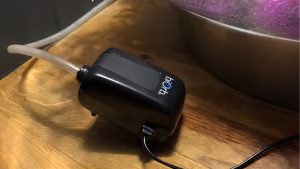
Proper installation keeps an air system safe and reliable. Position the air pump above the water line, or fit a check valve in the airline, so that if the pump stops, water cannot siphon backward and damage the pump. Weight or anchor the air stone on the substrate, since new stones often float until saturated. A control valve lets you fine-tune the bubble rate, which is handy when running multiple outlets from one pump.
Air stones clog over time as mineral deposits and biofilm fill their pores, causing weaker output and uneven bubbling. Clean them periodically by soaking in a vinegar or diluted bleach solution, rinsing thoroughly, and drying before reuse; many keepers simply replace inexpensive stones every few months. If bubbles slow down, check for a kinked airline, a tired pump diaphragm, or a clogged stone before assuming the pump has failed. Running an air stone is particularly wise in summer, when warm water holds less oxygen, and as a backup during power-sensitive filtration setups.
Frequently Asked Questions
Do air stones add oxygen to the water?
Air stones boost oxygen mainly by agitating the surface as bubbles rise, which speeds gas exchange. The bubbles themselves add little oxygen directly, but the resulting surface movement helps oxygen dissolve and carbon dioxide escape.
Do I need an air stone if I have a filter?
If your filter already creates good surface agitation, an air stone may not be essential. It becomes valuable in warm water, heavily stocked tanks, during medication, or whenever you want extra oxygen and circulation.
Why is my air stone not producing bubbles?
Weak or absent bubbles usually mean a clogged stone, a kinked airline, or a worn pump diaphragm. Clean or replace the stone, check the tubing, and confirm the pump is sized correctly for the depth.
How do I clean an aquarium air stone?
Soak the stone in a vinegar or diluted bleach solution to dissolve mineral buildup and biofilm, then rinse and dry it thoroughly before returning it to the tank. Many keepers simply replace inexpensive stones every few months.
Do I need a check valve with an air stone?
A check valve is strongly recommended if the pump sits at or below the water line. It prevents water from siphoning back into the pump during a power outage, which can flood and ruin the unit.
Final Thoughts
Air stones are simple, affordable, and highly effective tools for improving aquarium oxygenation and creating beautiful visual effects. The Hygger disc stone produces stunning fine-bubble displays, Penn-Plax cylinders offer reliable budget-friendly aeration, and flexible curtain stones transform large tanks into a waterfall of bubbles. Pair any air stone with a quality air pump and a check valve, and your fish will benefit from improved oxygen levels and a more dynamic, engaging display.
Related Reviews & Guides


Best Pond Aerator for Algae Control: Top Smart Setup Guide
Best Wooden Aquarium Stand: Top Compared Guide for Real Tanks