Last Updated: October 4, 2026
- Top Pick: AQUANEAT Aquarium Air Stones 1 inch 12 Pack, Bubble Stone, Aerator Bubble Diffuser, Air Pump Accessories for Aquariums, Fish Tanks, and Hydroponics
- Best Value: Pawfly Aquarium Air Pump 50 GPH Fish Tank Oxygen Pump for 10-60 Gallon Fish Tanks Buckets Dual Outlet Adjustable Ultra Quiet Aerator Pump with Airline Tubing Air Stones Connectors and Check Valves
- Premium Choice: Uniclife 64 GPH Aquarium Air Pump with Dual Outlets Adjustable Quiet Fish Tank Air Pump with Air Stone Airline Tubing Check Valve and Connector Accessories for 10-100 Gallon Fish Tank
🛒 Best Price Today on Amazon
Prime members get fast, free shipping on everything above, plus member-only deals. New members get a 30-day free trial — cancel anytime.
The Role of an Air Pump in Your Aquarium
An aquarium air pump drives air through airline tubing to air stones, sponge filters, or decorative bubblers, increasing oxygen levels and surface agitation in your tank. While modern hang-on-back and canister filters provide good surface movement, an air pump is invaluable for deeply planted tanks where CO2 and oxygen levels fluctuate, for hospital or quarantine tanks, for sponge filter setups, and as an emergency backup during power outages if paired with a battery-powered unit.
As an Amazon Associate we earn from qualifying purchases at no extra cost to you.


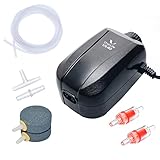
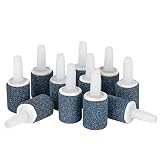



Air pumps are rated by the volume of air they move (output) and the depth at which they can push air. For tanks up to 10 gallons, a small single-outlet pump is sufficient. Larger tanks or multi-tank setups need a higher-output pump with multiple outlets. Noise level is a major consideration since air pumps run continuously; many hobbyists prefer ultra-quiet models for bedrooms and living rooms.
Tetra Whisper Air Pump
The Tetra Whisper is one of the best-selling aquarium air pumps for good reason — it is remarkably quiet for its price, reliable, and available in a range of sizes from 10 to 100+ gallons. The dome-shaped housing and internal sound-dampening chamber minimize vibration noise. It uses a proprietary "whisper" technology to reduce the humming that plagues cheaper pumps. An excellent everyday choice for most freshwater setups.
Hygger Quiet Aquarium Air Pump
The Hygger air pump takes quietness even further with a dual-magnet motor design that runs nearly silently at low settings. It has two independently adjustable outlets, a built-in flow control dial, and suction cup mounts for secure placement. At its low setting it produces almost no audible noise, while the high setting provides ample aeration for larger tanks. A great choice for bedroom tanks where silence is paramount.
Uniclife Aquarium Air Pump Battery-Powered
A battery-powered air pump is an emergency essential every aquarium keeper should own. During power outages, fish can deplete oxygen in a closed tank within hours. The Uniclife battery air pump runs on D-cell batteries, provides steady aeration for 12+ hours per set, and is completely silent. Keep it in your aquarium supply kit and deploy it immediately when the power goes out. It could save your fish's lives during an extended outage.
What to Look For in an Aquarium Air Pump
- Output rating: Match the pump to your tank size; undersized pumps won't provide adequate aeration.
- Noise level: Look for noise ratings or "whisper/quiet" labeling if the pump will be in a living area.
- Number of outlets: Single or dual outlets for one tank; gang valves allow multiple lines from one pump.
- Adjustable flow: A flow control dial prevents overaeration and allows fine-tuning.
- Battery backup: Every fish room should have a battery-powered pump for emergencies.
- Check valve: Always use a one-way check valve on airline tubing to prevent siphoning if the pump loses power.
How Air Pumps Improve Your Aquarium
An aquarium air pump sits outside the tank and pushes air through tubing to an airstone, sponge filter, or decoration submerged in the water. As the bubbles rise, they agitate the surface, and it is this surface movement, rather than the bubbles themselves, that drives gas exchange. Good surface agitation releases carbon dioxide and pulls in oxygen, keeping dissolved oxygen levels high enough for fish and beneficial bacteria. This is especially valuable in warm water, which holds less oxygen, and in heavily stocked or planted tanks at night when plants consume oxygen.
Air pumps also power useful equipment. They run sponge filters, which provide gentle biological filtration ideal for fry, shrimp, and betta tanks, and they drive air-powered decorations and under-gravel filters. Choosing the right size matters: the pump should be rated for your tank volume and the depth of water it must push air through, since deeper tanks require more pressure. A pump that is slightly stronger than needed paired with an adjustable valve gives you flexible control.
Quiet Operation and Safe Setup
The most common complaint about air pumps is noise, but a few simple steps keep them quiet. Place the pump on a soft surface or a folded towel to absorb vibration rather than letting it buzz against a hard shelf. Keeping it on a stable, level surface and away from the tank glass also helps.
- Use a check valve: Install a one-way check valve in the airline to stop water from siphoning back into the pump during a power outage, which can damage it.
- Position above the waterline: When possible, keep the pump higher than the tank, or use the check valve as a safeguard against back-siphoning.
- Replace worn airstones: Clogged airstones make the pump work harder and louder; rinse or swap them periodically.
Sizing the Right Air Pump
Choosing an appropriately sized air pump ensures reliable performance without wasted noise or energy. The pump must overcome the water depth it pushes air through, so deeper tanks need more pressure, and longer airlines or multiple outlets demand more output. A pump rated for a slightly larger tank than yours, paired with an adjustable gang valve, gives you flexibility to fine-tune the bubble rate. If you run several airstones or a sponge filter at once, account for the combined demand. Erring slightly on the stronger side and dialing back with a valve is wiser than buying an underpowered pump that strains to keep up and wears out prematurely.
Frequently Asked Questions
Do all aquariums need an air pump?
Not always. Tanks with a hang-on-back or canister filter that creates good surface movement often have enough oxygen exchange without a separate air pump. An air pump becomes valuable in heavily stocked tanks, warm water, or when running sponge filters and air-driven decorations.
How do I make my air pump quieter?
Set the pump on a soft towel or foam pad to dampen vibration, keep it on a level surface, and make sure the airstone is not clogged. Many newer pumps are designed for quiet operation, but placement makes the biggest difference.
What is a check valve and do I need one?
A check valve is a small one-way fitting in the airline that prevents tank water from siphoning back into the pump if the power goes out. It is inexpensive and strongly recommended to protect both the pump and your floor.
Can an air pump oxygenate the whole tank?
Yes, by agitating the surface an air pump increases oxygen exchange across the entire water column. The rising bubbles also create circulation that helps distribute oxygenated water throughout the tank.
Should the air pump run all the time?
In most cases, yes. Running it continuously keeps oxygen levels stable, which is particularly important at night when live plants consume oxygen instead of producing it.
Final Thoughts
An air pump is an affordable, versatile tool that improves oxygenation, powers sponge filters, and provides peace of mind during power emergencies. The Tetra Whisper handles everyday aeration quietly and reliably, the Hygger is the pick for near-silent operation, and the Uniclife battery pump is an essential safety device. Add an air pump to your tank setup and your fish will breathe easy.
Related Reviews & Guides

Best Temperature Controller for Chiller and Heater: Top Pick

Quick Picks: Best Submersible Aquarium Heaters