Last Updated: October 9, 2026
- Recommended Aquarium Activated Carbon Media
- How Activated Carbon Works in Aquariums
- What Activated Carbon Removes (and What It Doesn’t)
- Carbon in Planted Tanks: The Trade-Off
- Sizing and Placement in Your Filter
- Carbon Types: Granular, Pellet, and Extruded
- When to Replace Activated Carbon
- Frequently Asked Questions
- A Practical Carbon Schedule for Mixed Tanks
- Related Articles

TL;DR: Aquarium activated carbon removes dissolved organic compounds, medications, and odors from tank water — but it must be used correctly to avoid pulling beneficial nutrients in planted tanks. This guide covers types, dosing, timing, and when to skip it entirely.
Aquarium Activated Carbon Media: What It Does, When to Use It, and When to Remove It
Few filtration media generate as much debate as aquarium activated carbon. Some hobbyists run it permanently; others never touch it. The truth sits in the middle: activated carbon is a powerful, time-limited tool that solves specific problems quickly — but keeping it in your filter past its effective window creates new ones.
As an Amazon Associate we earn from qualifying purchases at no extra cost to you.




This guide cuts through the conflicting advice to explain exactly what carbon does, what it cannot do, and how to integrate it into a planted or fish-only tank without sacrificing water quality or plant nutrition.
🛒 Best Price Today on Amazon
Prime members get fast, free shipping on everything above, plus member-only deals. New members get a 30-day free trial — cancel anytime.
Start 30-Day Prime Free Trial →See Today’s Amazon DealsRecommended Aquarium Activated Carbon Media


As an Amazon Associate we earn from qualifying purchases. Product prices and availability are accurate as of the date/time indicated.




As an Amazon Associate we earn from qualifying purchases. Product prices and availability are accurate as of the date/time indicated.



As an Amazon Associate we earn from qualifying purchases. Product prices and availability are accurate as of the date/time indicated.
How Activated Carbon Works in Aquariums
Activated carbon (also called activated charcoal) is processed at high temperatures to create an enormous internal pore structure. A single gram of quality aquarium carbon has a surface area exceeding 500 square meters — more than a basketball court. Dissolved organic molecules, chloramines, tannins, medications, and certain heavy metals bind to this surface via adsorption (not absorption — the compounds stick to the surface rather than being absorbed into the material).
Once the binding sites fill, the carbon is exhausted and stops working. It does not release bound compounds back into the water under normal aquarium conditions — a common myth — but it also does no further good and takes up space that could house beneficial bacteria.
What Activated Carbon Removes (and What It Doesn’t)
| Removes | Does NOT Remove |
|---|---|
| Chlorine and chloramines | Ammonia (NH3/NH4+) |
| Tannins (yellowing from driftwood) | Nitrite |
| Dissolved organics (odor compounds) | Nitrate |
| Many medications (after treatment) | Phosphate |
| Phenols and some pesticides | Dissolved CO2 |
| Some heavy metals (copper, zinc) | Bacteria or parasites |
This distinction matters enormously for water quality monitoring. Carbon is not a substitute for biological filtration — it handles the chemical polishing layer, not the nitrogen cycle.
Carbon in Planted Tanks: The Trade-Off
The most important caveat for planted aquarium enthusiasts: activated carbon adsorbs many of the same molecules that fertilizer manufacturers formulate for plant uptake. Iron chelates, trace elements, and some nitrogen compounds bind readily to carbon surfaces. Running carbon continuously in a heavily dosed planted tank means you’re partially filtering out your fertilizer investment.
The practical rule: remove carbon from planted tanks during regular operation and re-dose fertilizers after any carbon run. Use carbon only for specific corrective tasks — clearing medications, removing driftwood tannins when clarity matters for a photo shoot, or polishing water after a disease treatment. Always remove it within 2–4 weeks maximum to protect your fertilizer dosing schedule.
Sizing and Placement in Your Filter
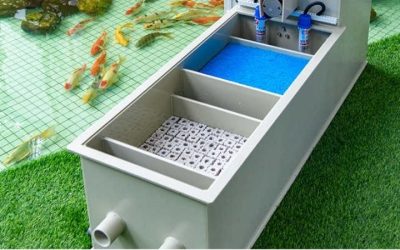
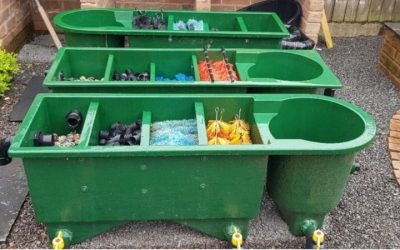
Carbon media should be placed after mechanical filtration (sponge or filter floss) and before biological media in the flow path. This order protects the carbon’s surface area from being clogged by particulate waste — extending its effective lifespan — while ensuring filtered water passes through the biological stage last for final polishing.
Dosing guideline: approximately 1 cup (240ml) of granular activated carbon per 20 gallons of tank water. Under-dosing gives minimal effect; over-dosing wastes media without proportional benefit since adsorption rate is limited by contact time and dissolved compound concentration.
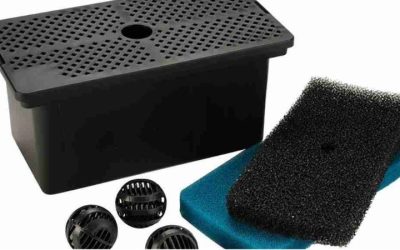
In canister filters, use a mesh media bag to contain granular carbon — loose granules migrate and can block impeller housings. Pair carbon with a quality sponge filter stage for comprehensive mechanical-chemical-biological coverage.
Carbon Types: Granular, Pellet, and Extruded
| Type | Surface Area | Best For | Drawback |
|---|---|---|---|
| Granular Activated Carbon (GAC) | Highest | General freshwater use | Dusty; rinse thoroughly before use |
| Pelletized Carbon | Medium | Canister filters, less mess | Lower surface area than GAC |
| Extruded/Cylindrical | Medium-high | Fluidized reactors | Specialized application |
| Bituminous Coal Carbon | Very high | Medication removal | Higher cost |
| Lignite Carbon | Lower | Budget option | Exhausts faster |
When to Replace Activated Carbon
Most activated carbon in aquariums is exhausted within 2–4 weeks of continuous use. Visual yellowing of water returning after the filter, persistent odors, or a return of medication color after treatment all indicate the carbon is spent. Do not try to reactivate carbon at home — the process requires temperatures above 800°C and is not practically achievable without industrial equipment.
For post-medication use, run fresh carbon for 48–72 hours immediately after completing the treatment course, then remove it and do a 30% water change to dilute any remaining trace compounds before restoring normal filtration. Monitor water parameters closely — illness often compromises the nitrogen cycle, and your aquarium ammonia alert badge is valuable insurance during this period.
Frequently Asked Questions
Does activated carbon remove beneficial bacteria from aquarium water?
No. Activated carbon does not remove free-floating nitrifying bacteria from the water column in meaningful amounts. The vast majority of beneficial bacteria in a cycled tank live in biofilm on surfaces — filter media, substrate, hardscape — not suspended in the water. Carbon targets dissolved organic molecules, not bacteria. You can safely run carbon in a cycled tank without disrupting biological filtration.
Can I use aquarium activated carbon in a shrimp tank?
Yes, with one important caveat: carbon adsorbs copper, and shrimp are extremely sensitive to copper toxicity. If your tap water contains trace copper (common with newer copper plumbing), running carbon actually protects shrimp by removing it. However, never run carbon and copper-based medications simultaneously with shrimp — even the trace amounts that pass through are lethal.
How do I rinse activated carbon before using it?
Rinse granular carbon in a fine mesh bag under cold tap water until the runoff is clear — typically 30–60 seconds. This removes carbon dust that would temporarily cloud your aquarium. Do not rinse with hot water; heat can slightly accelerate early off-gassing of surface compounds. Place the rinsed bag directly into the filter; there is no need to pre-soak.
Will activated carbon remove the brown tint from driftwood?
Yes — tannins from driftwood are among activated carbon’s most effective removal targets. New driftwood in a tank can produce significant tannin discoloration within days; a full dose of fresh carbon clears this within 24–48 hours in most cases. For tanks where the blackwater tannin aesthetic is desired (biotope Amazon setups, for example), skip the carbon and embrace the color.
How long does activated carbon last if stored unused?
Unopened, dry activated carbon in sealed packaging retains full effectiveness indefinitely — the binding sites only saturate when exposed to water containing dissolved compounds. Once wetted and used in a filter, the clock starts. Store spare carbon in sealed, airtight containers away from strong odors (garages, cleaning supply areas) — atmospheric VOCs can pre-saturate a portion of the binding sites before the carbon ever reaches your tank.
A Practical Carbon Schedule for Mixed Tanks
For a planted community tank, a practical approach is to run activated carbon for one week per month during your regular water change cycle. This provides a monthly chemical polish — removing accumulated tannins, phenols, and organic waste that biological filtration misses — while limiting the impact on trace element availability for plants.
Combine this schedule with a liquid carbon supplement for plant growth (not the same as activated carbon — this is a carbon-chain compound used as a CO2 alternative) and your tank benefits from both chemical clarity and healthy plant nutrition throughout the month.
Ready to decide? Our #1 pick for 2026 is the Chlorine and chloramines.
Live price & availability on Amazon.
Related Reviews & Guides

Best Artificial Aquarium Night Light for Bedroom: Guide
Common Mistakes When Buying an Auto Top Off System: Key Tips