Last Updated: October 9, 2026
- Top Pick: CUCZUUS 29.21×11.69 x0.16in Clear Tempered Glass Canopy
- Best Value: CUCZUUS 1PCS 23.07×11.69in Tempered Glass Canopy
- Premium Choice: CUCZUUS 19.33×9.65in Clear Tempered Glass Canopy

TL;DR: An aquarium glass cover or canopy reduces evaporation by up to 90%, keeps jumping fish in, and blocks dust and debris — without the visual bulk of a traditional hood. This guide covers types, sizing, hinge styles, and the best picks for rimless and framed tanks.
Aquarium Glass Canopy Cover Top: Reduce Evaporation and Protect Your Scape
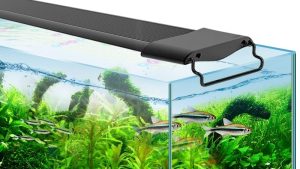
The open-top look that defines modern aquascaping comes with a practical trade-off: evaporation, escaping fish, and airborne dust settling on the water surface. A well-chosen aquarium glass canopy resolves all three without the visual weight of a plastic hood or the maintenance headache of an acrylic cover that fogs over time.
As an Amazon Associate we earn from qualifying purchases at no extra cost to you.



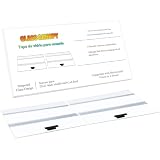


Tempered glass tops sit flush on the tank rim or on low-profile support clips, maintaining the clean visual line of a rimless build while cutting evaporation losses that can otherwise reach 2–4 litres per day on a 90-litre display tank. For saltwater tanks, reduced evaporation means a more stable salinity — fewer top-off corrections, longer periods between auto-top-off refills.
🛒 Best Price Today on Amazon
Prime members get fast, free shipping on everything above, plus member-only deals. New members get a 30-day free trial — cancel anytime.
Start 30-Day Prime Free Trial →See Today’s Amazon DealsGlass Canopy vs Acrylic vs Mesh Covers
Each cover material has specific strengths. Knowing the trade-offs helps you choose the right type for your setup.
- Tempered glass — scratch-resistant, optically clear, does not yellow with age or UV exposure. Heavier than acrylic but sits stable on tank rims. Most popular choice for display tanks.
- Cast acrylic — lighter, easier to cut for custom equipment holes. Scratches easily during cleaning; can yellow after 2–3 years of UV lamp exposure.
- Mesh/screen tops — maximum gas exchange for CO2-injected planted tanks; allows full aerial growth of emergent plants. Offers no meaningful evaporation control and must be combined with a humidity-tolerant lid frame.
- Polycarbonate panels — budget option, impact-resistant. Some UV yellowing risk; less optically clear than glass.
Top Aquarium Glass Canopy Picks




As an Amazon Associate we earn from qualifying purchases. Product prices and availability are accurate as of the date/time indicated.



As an Amazon Associate we earn from qualifying purchases. Product prices and availability are accurate as of the date/time indicated.


As an Amazon Associate we earn from qualifying purchases. Product prices and availability are accurate as of the date/time indicated.
Sizing and Hinge Configurations
Most glass canopy sets ship as two hinged panels — a larger fixed rear section and a smaller hinged front section that lifts for feeding and maintenance. This split design allows feeding access without removing the entire cover, and the rear panel stays in place during water changes.
Standard sizing increments (60 cm, 90 cm, 120 cm length with matching width options) cover most common tank footprints. For custom-dimension rimless tanks, specialist glass suppliers can cut panels to exact dimensions with polished edges and pre-drilled hinges — budget 2–3 weeks lead time.
Glass thickness for covers is typically 4–6 mm. Thinner panels flex when rested on the rim and can slip; 5 mm is the practical minimum for tanks over 60 cm in any direction.
Spec Comparison Table
| Feature | Glass Canopy | Acrylic Cover | Mesh Top |
|---|---|---|---|
| Evaporation reduction | 85–90% | 80–85% | 10–20% |
| Optical clarity (new) | Excellent | Good | N/A |
| Optical clarity (5 yr) | Excellent | Fair (yellowing) | N/A |
| Scratch resistance | High | Low | Medium |
| Custom cut difficulty | Hard (specialist) | Easy (DIY) | Easy (DIY) |
| Weight (per 30×30 cm) | ~600 g (5 mm) | ~180 g (5 mm) | ~80 g |
| CO2 retention | Good | Good | Poor |
Lighting Considerations
Interposing a glass panel between your light and the water surface reduces PAR (photosynthetically active radiation) by 5–15% depending on glass type and cleanliness. Low-iron (ultra-clear) glass — marketed as Starphire, Optiwhite, or equivalent — reduces this loss to under 5%, making it the preferred choice for high-light planted tanks or coral reef setups with demanding SPS corals.
Condensation deposits mineral scale on the glass underside rapidly in hard water areas. Clean the underside weekly with a diluted white vinegar wipe; this prevents the mineral film from accumulating into a light-blocking layer. Combine this routine with your broader aquarium glass cleaning guide workflow.
Pendant lights need enough clearance above the glass to avoid excessive heat build-up — check manufacturer minimum distances. LED strip lights mounted at the tank rim may rest on the glass edge; ensure they are IP67-rated for the condensation environment. For full lighting guidance, see our best aquarium lights for planted tanks overview.
If you’re running open-top and reconsidering, our comparison of open-top vs covered aquarium setups covers the evaporation, gas exchange, and light transmission data in full detail.
FAQ: Aquarium Glass Canopy Cover Top
Will a glass canopy reduce CO2 levels in a planted tank?
Slightly. A fully covered glass top restricts surface agitation and gas exchange, which can cause CO2 to accumulate above injection levels or, conversely, trap the CO2 more efficiently so you need slightly less injection. Most planted tank keepers find CO2 requirements drop 10–20% after adding a glass cover — an unexpected benefit alongside the evaporation control.
How do I cut holes in a glass canopy for equipment cables?
Do not attempt to cut tempered glass — it shatters into granules. Request cut-outs at the time of purchase from a glass supplier. For annealed (non-tempered) glass covers, a diamond hole saw on a low-speed drill with a water dam around the cut site works well for round cable holes up to 50 mm diameter.
Can I use a glass canopy with an overhead pendant light?
Yes. Most pendant systems clear the cover comfortably. The glass top will accumulate condensation on the upper surface; keep it clean to avoid water dripping onto the pendant housing. Some pendant mounts clip directly to the tank rim below the glass plane — these are not affected by the cover at all.
What type of hinge is best for a glass aquarium cover?
Plastic hinges (ABS or nylon) are the standard choice — they do not corrode in the humid environment above the water surface, are easy to snap off for glass replacement, and are nearly invisible from the front of the tank. Avoid metal hinges in saltwater setups unless they are 316 stainless steel rated for marine environments.
How often should I replace a glass aquarium canopy?
Tempered glass panels rarely need replacement — they do not degrade with age. Replace when the glass chips, develops deep surface etching from mineral scale that cannot be removed, or when a hinge failure causes a drop that stresses the panel. Inspect hinge condition annually and replace plastic hinges every 3–4 years as a precaution.
Frequently Asked Questions
What are the benefits of a glass canopy?
It stops fish jumping out, cuts evaporation dramatically so top-offs and salt creep become less frequent, helps retain heat, and keeps dust and curious pets out. The trade-offs are reduced gas exchange, condensation on the underside, and roughly five to ten percent less light reaching the water.
Will a canopy block too much light for plants?
A clean pane loses only a modest amount, but a film of calcium and algae can cut output far more severely. Wipe both sides weekly with a razor or vinegar-damp cloth. If the light was already marginal for carpeting plants, remove the canopy or upgrade the fixture rather than fighting the loss.
Does a lid reduce oxygen in the tank?
A tight lid limits gas exchange slightly, which matters most in warm, heavily stocked or medicated tanks. Leave the rear cable cut-out open, keep the filter outflow rippling the surface, and add an airstone overnight if fish gasp. In a normal community tank the effect is negligible.
How do I stop condensation and hard water spots?
Some condensation is unavoidable, but a small clip fan across the surface helps and cools the tank in summer too. For mineral deposits, lay the pane flat, cover it with a paper towel soaked in white vinegar for ten minutes, scrape with a razor, then rinse thoroughly before refitting.
Can I fit a canopy on a rimless tank?
Not the usual plastic-hinged type, which is cut for rimmed tanks. Rimless tanks use custom low-iron glass sitting on small clear mounting clips at the tank edge. Have the edges polished, notch a corner for cables, and check clearance for lily pipes, heaters and the light mount.
Related Reviews & Guides

Aquarium Filter Floss and Polish Pad
5 Best Aquarium Water Conditioners and Dechlorinators