Last Updated: October 4, 2026
- Top Pick: AquaMiracle Aquarium Powerhead Pump Circulating Water Pump 135 GPH for 10-40 Gallon Aquariums with Aerating Features
- Best Value: AQUANEAT 2 Pack Aquarium Circulation Pump,800 GPH Fish Tank Powerhead, Saltwater Wave Maker, Submersible Water Pump with Suction Cup
- Premium Choice: Carefree Fish Aquarium Magnetic Dual Powerheads 25W 5400Gph for 30~300Gal Fish Tank Wave Maker Quiet and Strong Submersible Water Circulation Pump for Freshwater and Saltwater

Proper water circulation is one of the most overlooked yet critical factors in a healthy aquarium. Whether you keep a reef tank that demands high flow for coral health, a freshwater planted tank that needs gentle turnover, or a FOWLR system where oxygenation matters most, the right powerhead makes all the difference. Dead spots in water flow lead to detritus accumulation, low oxygen zones, and stressed livestock — problems that a well-positioned circulation pump eliminates entirely.
Modern aquarium powerheads have evolved far beyond simple propeller pumps. Today’s best units feature controllable flow rates, wave-making modes, magnetic mounting systems, and energy-efficient DC motors that keep operating costs low. Understanding which features matter for your specific tank type and livestock will help you choose the right circulation pump and position it for maximum effect.
As an Amazon Associate we earn from qualifying purchases at no extra cost to you.


🛒 Best Price Today on Amazon
Prime members get fast, free shipping on everything above, plus member-only deals. New members get a 30-day free trial — cancel anytime.
Start 30-Day Prime Free Trial →See Today’s Amazon DealsQuick Picks: Aquarium Powerheads and Circulation Pumps
Why Trust Our Picks
Our powerhead recommendations are based on flow rate accuracy versus manufacturer claims, noise levels during continuous operation, mounting stability and repositionability, energy efficiency relative to flow output, and real-world reliability reported by aquarium hobbyists across freshwater and saltwater setups. We considered a range of tank sizes and livestock types to ensure each recommendation serves its intended use case effectively, from nano reef tanks to large community aquariums.
Best Aquarium Powerheads: Reviews
1. Fluval Sea CP2 Circulation Pump
The Fluval Sea CP2 Circulation Pump sets a high standard for what a mid-range aquarium powerhead can deliver. Powered by a brushless DC motor, the CP2 runs with remarkable quietness — virtually inaudible during normal operation — while consuming just 8 watts to produce 2,500 liters per hour of circulation. This energy-to-flow ratio is among the best in its class. The 360-degree rotating head allows you to direct flow precisely where it’s needed, and the wide-angle output creates a broad, turbulent flow pattern that mimics natural ocean currents rather than a narrow jet that can damage corals or stress fish. The magnetic mounting system uses a strong neodymium magnet that holds securely on glass up to 12mm thick, and repositioning the pump requires no tools — simply slide it along the glass to a new position. The CP2 is rated for tanks up to 90 gallons and is fully submersible for in-tank use. Fluval’s build quality is excellent, with corrosion-resistant materials suitable for both freshwater and saltwater applications. The included controller allows for basic flow rate adjustment, though it lacks the wave-making modes of more expensive reef powerheads. For most reef and FOWLR tanks in the 30–90 gallon range, the CP2 hits the ideal balance of performance, quietness, and build quality.
- Pros: Ultra-quiet DC motor, excellent energy efficiency, 360-degree rotating head, strong magnetic mount, suitable for salt and freshwater
- Cons: No wave-making or programmable flow modes, controller is basic compared to premium reef powerheads
2. Hydor Koralia 425 Circulation Pump
The Hydor Koralia line has been a trusted name in reef circulation for over a decade, and the Koralia 425 remains one of the most popular powerheads among beginner and intermediate reef keepers for good reason. Its distinctive propeller design generates a broad, pulsing flow that replicates natural tidal movement — critically important for corals that depend on multidirectional water flow to feed, respire, and shed detritus. The 425 GPH output is ideal for smaller reef tanks in the 10–40 gallon range, where too much flow can become just as problematic as too little. The universal magnet mount is simple but effective, holding securely on standard aquarium glass without the slipping issues that plague some cheaper mounting systems. Hydor Koralia pumps are renowned for their reliability and longevity — many hobbyists report running the same unit for five or more years with minimal maintenance. The AC motor is slightly less energy-efficient than modern DC alternatives, but the flow pattern quality and proven track record make this a compelling choice for anyone who values reliability over cutting-edge features. It’s also one of the most reef-safe powerhead designs available, with a propeller guard that prevents small creatures from being injured by the impeller.
- Pros: Broad, natural flow pattern ideal for corals, excellent long-term reliability, reef-safe propeller guard, trusted brand with decade-long track record
- Cons: AC motor is less energy-efficient than DC alternatives, no flow rate adjustment, fixed flow direction
3. Hygger 1600GPH Aquarium Powerhead
The Hygger 1600GPH Powerhead has quickly become one of the most popular budget circulation pumps on the market thanks to its impressive feature set at a very accessible price point. The dual-outlet design is particularly noteworthy — two separate nozzles can be angled independently to create crossing flow patterns that eliminate dead spots more effectively than single-outlet units. The adjustable flow rate dial allows you to tune output from roughly 800 to 1,600 GPH, giving flexibility for tanks of different sizes and livestock requirements. The magnetic mount holds reliably on glass up to 10mm thick and offers good positioning flexibility. While the motor is noisier than premium DC units and the build quality doesn’t match the longevity of Hydor or Fluval products, the Hygger performs genuinely well for its price and is particularly well-suited for freshwater tanks where the exact flow pattern matters less than in a sensitive reef environment. For hobbyists on a tight budget who need reliable circulation in a 20–75 gallon freshwater or lightly stocked saltwater tank, the Hygger delivers excellent value and features that competitors at double the price don’t always include.
- Pros: Dual independent outlets, adjustable flow rate, budget-friendly, suitable for freshwater and saltwater, good coverage for the price
- Cons: Louder than premium DC pumps, build quality less durable long-term, flow rate claims may be slightly optimistic
Buyer’s Guide: Aquarium Powerheads
Calculating the right flow rate: For reef tanks with SPS corals, aim for 40–60 times your tank volume in total circulation per hour. For LPS and soft coral reefs, 20–40 times is typically sufficient. FOWLR tanks can manage with 10–20 times turnover. Freshwater planted tanks generally need 5–10 times turnover to avoid uprooting plants while maintaining oxygenation.
Flow pattern matters as much as volume: A narrow, high-velocity jet from a single powerhead can damage corals and stress fish even if the total GPH is technically sufficient. Look for powerheads with broad, diffuse flow patterns or use multiple lower-output units positioned at angles to each other to create the turbulent, multidirectional flow that reef ecosystems require.
DC vs. AC motors: DC motor powerheads are generally quieter, more energy-efficient, and often include controllable flow rates and programmable wave modes. AC motor units are simpler, cheaper, and often more reliable over long periods since they have fewer electronic components. For reef tanks with corals, DC units with wave modes are worth the premium. For fish-only or freshwater tanks, AC units are often the better value.
Positioning for maximum effect: Mount powerheads near the top of the tank, angling flow across the surface for gas exchange and down toward the substrate to prevent detritus accumulation. In reef tanks, position multiple powerheads to create opposing flow currents — this creates the random, turbulent movement that mimics natural reef conditions and is most beneficial for coral health and feeding.
FAQ
Can too much flow harm my fish or corals? Yes — excessive flow can physically stress fish, preventing them from resting or feeding normally. For corals, too much direct flow can cause tissue recession. Always aim for turbulent, multidirectional flow rather than a single powerful jet, and observe your livestock’s behavior after adding or adjusting powerheads.
How often should I clean my powerhead? Powerheads should be inspected monthly and cleaned every one to three months depending on your tank’s organic load. Remove the impeller and clean it with a small brush to prevent buildup that reduces flow and causes noise. Salt creep on the exterior can be removed with a damp cloth.
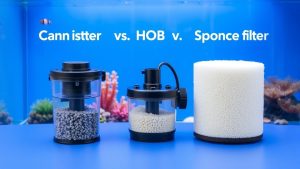
Do I need a powerhead if I already have a canister or hang-on-back filter? Usually yes — filter return flows are designed for water processing, not tank-wide circulation. Most filters return water to one area of the tank, leaving dead spots elsewhere. A dedicated powerhead positioned to complement the filter return provides the full-tank circulation that fish and corals need.
Final Verdict
The Fluval Sea CP2 earns best overall honors for its exceptional quietness, energy efficiency, and broad flow pattern in a well-built, repositionable package. The Hydor Koralia 425 is the runner-up for its proven reliability, reef-safe design, and natural flow pattern that coral keepers have trusted for years. The Hygger 1600GPH Powerhead delivers outstanding value for budget-conscious hobbyists who need solid circulation without premium pricing. Match your powerhead choice to your tank’s specific needs and your livestock will thank you with visible health and activity.
Frequently Asked Questions
How much flow do I need in gallons per hour?
Freshwater community tanks are comfortable around 10 to 20 times tank volume per hour in total circulation. Soft coral reefs want roughly 20 to 30 times, and SPS dominated reefs commonly run 40 times or more. A 55 gallon reef therefore needs somewhere near 1500 to 2000 GPH combined from powerheads plus the return pump.
Where should I aim a powerhead?
Aim across the tank or at the opposite glass rather than directly at corals, plants or fish. The goal is random turbulent motion that lifts detritus into the water column so the filter can capture it, not a jet blasting one spot. Two opposing powerheads set slightly off axis produce far better mixing than one strong stream.
Will a powerhead stress my fish?
It can. Bettas, fancy goldfish, gouramis and long-finned varieties come from still water and struggle in strong current, showing as constant swimming against flow or hiding behind decor. Provide low-flow refuges, or use a wider diffuser nozzle. River species like hillstream loaches and danios want the opposite and thrive in high flow.
Do controllable or wave-making pumps matter?
For a reef, yes. Alternating and pulsing flow prevents dead spots where detritus settles and mimics natural surge, which corals extend their polyps into. For freshwater the benefit is smaller, and a fixed powerhead is usually fine. Controllable DC pumps also draw less power and can be dialed down, which is useful on nano tanks.
How do I stop a powerhead from getting noisy?
Grinding or rattling is almost always the impeller. Pull it out, check the ceramic shaft for cracks and clean calcium buildup off the impeller and its housing with a vinegar soak. A buzzing that starts suddenly usually means the pump is sucking air from the surface, so lower it or reduce the surface vortex above the intake.
Related Reviews & Guides

Best Rotary Drum Filter for Large Aquariums: Expert Picks
10 Best Betta Fish Foods: Top Picks for a Healthy Betta 2026