Last Updated: October 21, 2026
A bigger tank does not mean a bigger pump. The best auto top off system for a 125 gallon tank is chosen by how far it must lift water from the reservoir and how many independent ways it stops overfilling, not by raw gallons per hour, because on a large system redundancy and reach matter more than a headline flow number.
As an Amazon Associate we earn from qualifying purchases.
By David Nguyen
How to Choose an Auto Top Off System for a 125 Gallon Tank
On a big system the right ATO is set by installation and safety, not by tank volume. The four criteria below focus it: measure the reservoir-to-sump vertical lift, prioritize independent overfill protection, check the sensor mount thickness, and confirm freshwater or reef compatibility for your particular setup.
Measure Reservoir-to-Sump Vertical Lift
Lift is the first number that matters, not gallons. Among these systems the maximum head ranges from about 8 feet up to 20.34 feet, so the vertical rise from your reservoir water level to the discharge point decides which pumps can even reach, before any headline flow figure is even considered at all here.
That said, maximum head is the zero-flow endpoint, not the flow delivered at your lift. So measure the real vertical rise in your installation and treat each maximum head as a ceiling rather than a promise, since actual delivered flow falls as the pump works against more and more height.
Prioritize Independent Overfill Protection
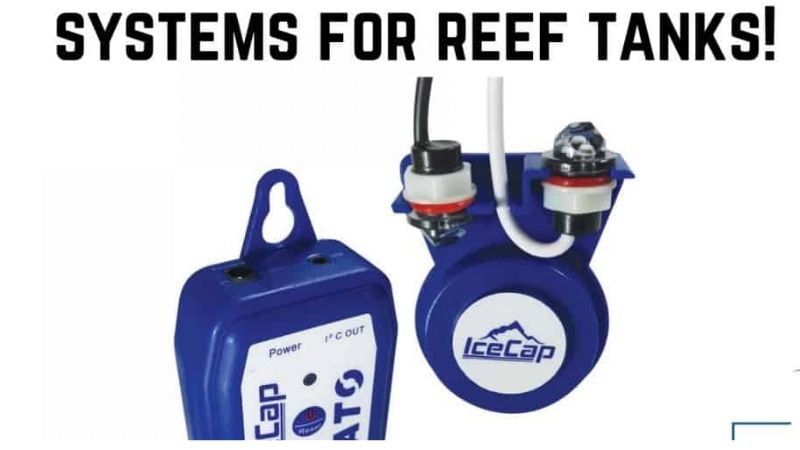
On a large system, redundancy is the point. The Tunze pairs an optical control sensor with an independent thermal safety sensor, Neptune stacks two optical sensors, IQ-Fill and a mechanical float valve, Red Sea adds backup probes with runtime and leak logic, and the XP Aqua uses dual optical sensing with a QST timer.
So weigh how each system fails safe, not just how it fills. More independent layers mean fewer single points of failure that could overfill a display, which on a 125-gallon build matters far more than a few gallons per hour of headline pump speed that you will very rarely actually use.
Check Sensor Mount Thickness
A sensor only works if it actually fits your glass or rim. The Tunze mounts on glass up to about 15 millimeters, the XP Aqua Duetto2 up to about 12 millimeters, and the Neptune ATK uses a magnetic mount rated up to about a quarter inch, so the mount limit is a genuine compatibility check.
So measure where the sensor will sit before buying anything. A mount that will not clamp your rim or reach through your glass thickness is a practical dealbreaker regardless of the pump, which is why matching the sensor’s stated limit to your actual tank or sump comes early, not last.
Confirm Freshwater vs Reef Compatibility
Compatibility is a hard gate, not a preference. Red Sea states the ReefATO+ is seawater only, while the Tunze Osmolator 3 explicitly supports both freshwater and marine use, so the water your 125 holds narrows the field before any of its other specs are even worth comparing on your build.
So read the manufacturer’s scope rather than a retailer tag. Where a seller’s metadata suggests freshwater use that conflicts with the maker’s seawater-only wording, the manufacturer wins, which is why confirming compatibility against the maker keeps a mismatched system off your shortlist right from the very start.
Top Picks
Each pick below is judged on lift range and safety redundancy rather than raw flow, because those decide real-world stability on a large system. The table pairs product, best use, key spec and the caveat to keep, and the gallons-per-hour figures are published maxima, not delivered flow at your lift.
| Product | Best For | Key Spec | Watch Out For |
|---|---|---|---|
| Tunze Osmolator 3 | Best overall for flexible large-system installs | 9.84 ft standard / 20.34 ft boost head; dual sensing | BRS and direct price differ |
| Neptune ATK v2 | Best for long vertical runs and Apex | 14 ft head; three-layer safety | 1/4 in mount limit; highest price |
| Red Sea ReefATO+ | Best smart reef monitoring | 75 gph max; 8 ft head; leak and temp alerts | Seawater only |
| XP Aqua Duetto2 | Best compact plug-and-play | 74 gph; 8.2 ft head; dual optical | Lower max head than Tunze or Neptune |
Tunze Osmolator 3
The Tunze Osmolator 3 leads for flexible large installs: published maxima of 42.3 gallons per hour standard and 47.6 boost, maximum heads of 9.84 and 20.34 feet, and an optical control sensor backed by an independent thermal safety sensor, priced around $250 at BRS or under $300 direct as of 09/2026.
Its wide head range and dual, independent sensing suit varied reservoir placements on a big system. Note the price conflict between sellers, and read the two head figures as zero-flow ceilings, so confirm the boost or standard reach against your actual lift rather than assuming full flow at that height.
Neptune ATK v2
The Neptune ATK v2 is built for long vertical runs and Apex expansion: a PMUP v2 pump rated 100 gallons per hour at zero head and up to a 14-foot maximum head, with two optical sensors, IQ-Fill and a mechanical float valve, priced around $275 at BRS or under $350 direct as of 09/2026.
Its three-layer safety stack is the draw for a large, monitored build. Keep two caveats: the magnetic mount is rated only to about a quarter inch, and the kit’s 24-volt, 36-watt power supply is separate from the pump’s 17-watt consumption, so do not read the power-supply rating as the pump’s actual draw.
Red Sea ReefATO+
The Red Sea ReefATO+ suits a smart, monitored reef: a 75-gallon-per-hour maximum with an 8-foot head, a controller that normally targets about 18 gallons per hour, plus leak and temperature monitoring, priced around $225 as of 09/2026 for the whole connected, monitored feature set.
Its firm limit is water type, since Red Sea states it is seawater only. Treat that as a hard gate for a 125-gallon reef rather than a preference, and lean on its monitoring and controlled delivery rather than the headline maximum, which is a published ceiling rather than its normal everyday flow.
XP Aqua Duetto2
The XP Aqua Duetto2 is the compact, plug-and-play option: a 74-gallon-per-hour maximum with an 8.2-foot head, a dual optical sensor, a QST overfill timer and a siphon break, priced around $175 as of 09/2026 for a straightforward, lower-cost plug-and-play setup on a big display tank.
It gives dual sensing at the most accessible price here, with the trade of a lower head ceiling. Its 8.2-foot maximum is below the Tunze and Neptune figures, so confirm it clears your reservoir lift, and mount it on glass within its roughly 12-millimeter limit before relying on it.
Frequently Asked Questions
These answers keep sizing tied to lift and safety rather than tank gallons, since evaporation, not display volume, drives top-off demand. Each opens with the direct answer and the condition behind it, so a big-tank instinct to chase gallons per hour never overrides the numbers that actually govern a stable install.
Does a 125-Gallon Tank Need a Higher-GPH ATO?
Not necessarily at all. Top-off replaces evaporation slowly, so the lift, the safety layers and the installation’s actual evaporation demand matter more than display gallons, which means a higher gallons-per-hour rating is not automatically the right choice for a physically larger display tank.
So size by the install, not the volume. Evaporation depends on surface area, humidity, airflow, temperature and equipment, which is why a 125-gallon build is better matched by reservoir lift and redundant safety than by reaching for the highest headline flow number on the shelf today.
How Much Pump Head Do I Need?
Measure the actual vertical rise from the reservoir’s water level to the discharge point, then choose a pump whose maximum head clears it with room to spare. That measured lift, not a rule of thumb, is what really tells you which systems can reach your particular setup at all in practice.
Keep in mind that maximum head is the zero-flow endpoint. A pump at its rated head delivers essentially nothing, so you want real margin above your measured lift, since delivered flow drops as the pump fights more height and no shared flow-at-head curve is verified across these systems.
Can the Reservoir Sit Far Below the Aquarium?
Possibly, but only within a pump’s head limit. Neptune publishes a 14-foot maximum head and Tunze publishes 9.84 feet standard and 20.34 feet boost, so a low reservoir can work if the vertical rise stays comfortably inside the chosen pump’s rated maximum head figure with margin to spare.
But validate the real delivered flow at your lift. Because no shared pump curve was verified across these systems, the actual flow at your height needs real-world checking, so treat the maximum head as a ceiling and confirm the install actually performs before trusting it unattended.
Can ReefATO+ Be Used on a Freshwater 125?
Not according to Red Sea, which clearly states the ReefATO+ is seawater only. So for any freshwater 125-gallon tank it is simply the wrong choice, whatever a retailer listing might imply about broader compatibility somewhere else on the very same retailer product page for that particular unit.
So follow the manufacturer over seller metadata. Where a retailer labels it freshwater compatible in conflict with Red Sea’s seawater-only wording, the maker’s scope governs, which is why a freshwater build should look to a system such as the Tunze that explicitly supports both fresh and marine use.
Final Thoughts
The best auto top off system for a 125 gallon tank is decided by reservoir lift and layered safety, not by display gallons or a headline gallons-per-hour number. Measure your real vertical rise, prefer independent overfill protection, match the sensor mount to your glass, and confirm freshwater or seawater scope.
Best Filter for 10 Gallon Tank Setups: Sized by Turnover
Best Aquaculture Water Tank With Steel Frame: Top Compared