Last Updated: October 21, 2026
Most overflow marketing leans saltwater, so the best aquarium overflow box for freshwater tanks is chosen on plainer terms: real freshwater compatibility, your actual return flow, a hang-on or drilled architecture, and the physical footprint on the display.
As an Amazon Associate we earn from qualifying purchases.
By David Nguyen
How to Choose an Overflow Box for Freshwater Tanks
Freshwater buyers can ignore much of the reef-focused pitch and judge these boxes plainly. Rank genuine freshwater compatibility first, then your actual return flow, the hang-on or drilled architecture, and the physical footprint — remembering the real question is whether your filtration even uses a sump.
Freshwater Compatibility
Compatibility matters less than the marketing implies, because an overflow moves water regardless of salinity. The Xaqua INOUT carries an explicit freshwater listing, which is reassuring, but a plastic-and-acrylic box works the same on a freshwater tank as on a reef in practice.
So treat a freshwater label as a convenience, not a hard requirement. What actually decides fitness is whether your filtration design uses an external sump at all; freshwater compatibility matters less than that, and a generic overflow serves a freshwater sump perfectly well.
Actual Return Flow
Size the box to delivered flow after head, as with any tank. The Eshopps PF-300 passes 300 GPH, the Eclipse S 600 GPH, and the Xaqua INOUT and Prodigy M reach up to 660 and 700 GPH, spanning the entire range a typical freshwater return will ever require in practice.
Freshwater returns are often moderate, so a mid-range box usually suffices. Match the rating to your pump rather than the top number, since capacity beyond your delivered flow adds cost and, on a display tank, footprint you gain nothing from carrying every single day.
HOB or Drilled Architecture
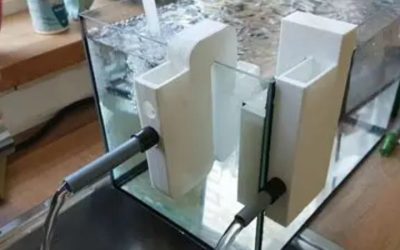
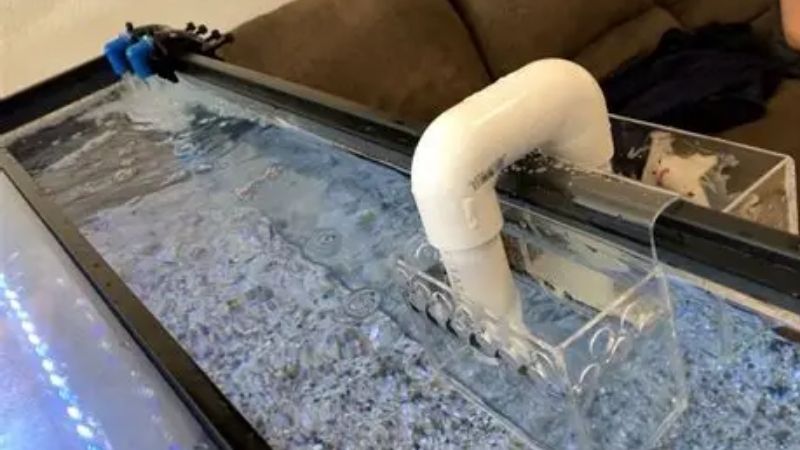
Architecture is the real fork for freshwater buyers. The PF-300 hangs on the back and skips drilling at the cost of a siphon to maintain, while the Eclipse S is drilled for quieter, more reliable gravity flow through dual one-inch drains once it is set up.
Price tracks architecture loosely: the Xaqua INOUT at about $100 is roughly 17.5% below the PF-300 using the PF-300 as the base, yet the two work very differently. Choose the architecture that fits your tank and skills, not the smaller sticker on its own.
Physical Footprint
Footprint decides how the box lives on a freshwater display. The Eshopps Prodigy M is an ultra-slim internal box at 8 by 0.625 by 6 inches, giving a display-side envelope around 33.3% smaller than the Eclipse S’s 6-by-1.25 face — though that is not the total installed footprint.
That slim profile suits a viewing-focused freshwater tank, but a smaller face does not shrink flow needs. The Prodigy M still passes up to 700 GPH, so choose it for the discreet display envelope, and size the return to your pump rather than to the slim box itself.
Top Picks
These four overflows are ranked for a freshwater build by real fitness rather than saltwater marketing. Each lists verified specs, a relative price tier, and the drawback that matters most when the true question is your return flow, your architecture, and whether a sump belongs on the tank.
| Product | Best For | Key Spec | Watch Out For |
|---|---|---|---|
| Xaqua INOUT Freshwater | Best overall | Up to 660 GPH; freshwater listing; combined return | Drilling; benefit is freshwater-specific |
| Eshopps PF-300 | Best for a no-drill build | 300 GPH HOB U-tube; up to 75 gal | Siphon/U-tube upkeep |
| Eshopps Prodigy M | Best for a slim footprint | Up to 700 GPH; ultra-slim internal box | Slim face is not flow sizing |
| Eshopps Eclipse S | Best for higher flow | 600 GPH drilled; dual 1-in drains | Requires a drillable panel |
Xaqua INOUT Freshwater
The Xaqua INOUT Freshwater is the freshwater overall pick because it pairs a genuine freshwater listing with a combined overflow and directional return in one drilled unit rated up to 660 GPH. For a freshwater sump build, that consolidated design covers the job cleanly at a fair price.
At about $100 currently as of 09/2026, it is the value leader here and requires drilling. Its freshwater-specific benefit should not be generalized to every overflow, but for a freshwater tank the explicit listing and combined return make it the most straightforward choice on offer.
Eshopps PF-300
The Eshopps PF-300 is the no-drill build option, a 300-GPH hang-on U-tube with a one-inch bulkhead and guidance up to 75 gallons. For a freshwater keeper who will not drill, it delivers a reliable feed to a sump without touching the tank’s glass at all.
Around $125 retail or under $150 from the maker as of 09/2026, it sits about 21.2% above the Xaqua using the Xaqua as the base, and keeps siphon upkeep. That maintenance is the price of skipping the drill, so weigh it against your comfort with a permanent hole.
Eshopps Prodigy M
The Eshopps Prodigy M is the slim-footprint pick, an ultra-thin internal box at 8 by 0.625 by 6 inches rated up to 700 GPH. On a freshwater display where the view is the point, its narrow face keeps the overflow nearly out of sight along the back glass.
At about $175 retail or under $200 from the maker as of 09/2026, it is the priciest here, and a slim footprint does not replace flow sizing. Its display-side envelope runs roughly a third smaller than the Eclipse S, but you still size the return to your pump, not the box.
Eshopps Eclipse S
The Eshopps Eclipse S is the higher-flow choice, a drilled box rated 600 GPH with dual one-inch drains in a compact 6-by-3-by-6-inch body. For a larger freshwater tank or a stronger return, it offers capacity and quiet gravity flow the smaller boxes cannot match.
At about $150 retail or under $150 from the maker as of 09/2026, it requires a drillable panel, so confirm that first. On a typical freshwater build its 600-GPH rating is generous, so treat the excess as headroom and size the pump to the tank rather than the box.
Frequently Asked Questions
Freshwater buyers ask a familiar set of questions, often about whether saltwater-focused gear even applies. Each answer opens with the practical call, then the condition that changes it, so you can judge an overflow on flow and architecture rather than the salinity on its label.
What spec should decide this purchase?
Freshwater compatibility should frame it, but the deeper question is whether your filtration uses a sump at all. An overflow moves water regardless of salinity, so a freshwater label reassures without being the real constraint; the sump plan and return flow decide far more.
Once a sump is confirmed, size to delivered flow and pick an architecture you can install and maintain. A freshwater listing is a nice-to-have, but the box that fits your flow, your drilling comfort and your display will serve better than one chosen on the label alone.
Which numbers are hard facts and which are heuristics?
The GPH ratings, dimensions and September 2026 prices are hard facts, and the roughly 17.5% price gap between the Xaqua and PF-300 is arithmetic on the PF-300 base. The Prodigy’s roughly a third smaller display-side envelope is also concrete, though not the total installed footprint.
The heuristic is how those map to your tank. A slim face still needs a pump-sized return, and a freshwater label does not change flow math, so use the facts to compare boxes and your own return flow to size the exact one you actually buy and install for the build.
Is the highest headline number always better?
No. A 700-GPH rating or a genuine freshwater listing only helps if it matches your build, and figures measured differently do not compare cleanly across architectures. A slim internal box and a drilled dual-drain unit solve different problems at the same nominal flow.
The right freshwater pick fits your return flow, your drilling comfort and your display footprint. Let those decide between these boxes, and treat a big capacity number or a reassuring salinity label as secondary to whether the unit actually suits the tank you are plumbing.
When might the reader not need this?
Many freshwater tanks never need an overflow, because they run on canister or internal filtration with no sump. Since a box exists only to feed a sump safely, a freshwater keeper without a sump plan can skip the category entirely for that particular tank.
An overflow earns its place when you want a sump’s extra volume, equipment space or flexibility. Confirm that design first, because freshwater compatibility matters less than whether the filtration actually uses an external sump, and without one the box solves a problem you do not have.
Final Thoughts
For freshwater, the best aquarium overflow box for freshwater tanks is the one that fits your return flow, architecture and display, not the one with the loudest freshwater label. Confirm your filtration actually uses a sump first, then size to delivered flow and pick hang-on or drilled to match the tank you own.
Best Aquarium Overflow Box for the Money: Smart Value Picks
Best Auto Top Off System for a 75 Gallon Tank: Smart Picks