Last Updated: October 21, 2026
Silence comes from physics, not a brand label, so the best quiet aquarium overflow box is chosen on its drain mechanism first, then how finely you can tune it, the lid and water level it runs at, and the actual return flow it must carry without roaring through an undersized drain.
As an Amazon Associate we earn from qualifying purchases.
By David Nguyen
How to Choose a Quiet Aquarium Overflow Box
Quiet is mainly a plumbing and tuning property, not a brand you buy, so weigh these boxes by how they handle noise at the source. Rank the drain mechanism first, then tunability, the lid and water level, and finally the actual return flow the box must pass.

Drain Mechanism
Noise starts where air and water mix in the drain. A Herbie full-siphon design runs the main drain completely full, which reduces the gurgling air-water churn that makes overflows loud. The Fiji Cube EOF-8 and Eshopps Eclipse M both support dual-drain Herbie-style plumbing aimed at that quieter behavior.
A hang-on U-tube like the Eshopps PF-800 is inherently harder to silence, since its siphon path traps and releases air more readily. All four here sit around the 800-GPH class, so capacity alone cannot explain the noise; the drain mechanism is what actually sets the baseline volume.
Tunability
Even a quiet design needs adjustment, and tunability is what lets you reach silence. BRS recommends a gate valve rather than a ball valve for fine Herbie siphon tuning, because a gate valve moves in small increments that let you dial the siphon to the exact quiet point.
Product-specific guidance matters here too. For the Eclipse, BRS tunes the water to roughly half an inch below the emergency-drain top, but that figure is specific to that box, so do not generalize it. Choose a design you can adjust finely, since tuning, not the sticker, delivers the quiet.
Lid and Water Level
The lid and the water level in the box shape how much falling-water and splash noise escapes. A covered overflow muffles the sound of water entering the box, and a higher, steadier water level shortens the drop that creates splashing at the surface inside the chamber itself.
These are setup choices as much as product features. Running the box at the level its design intends, with any lid in place, cuts the falling-water component of the noise, so factor in whether a given box supports a lid and a stable working level before judging it on quiet alone.
Actual Return Flow
Flow drives noise, so an oversized return can make any box louder. Matching the overflow and pump to your real delivered flow keeps water moving smoothly rather than roaring through an undersized or overdriven drain, which is often where a loud overflow problem actually originates in the first place.
Size to your pump after head, not the box’s maximum. The Fiji EOF-8’s 800-GPH rating is a ceiling, not required flow, so pushing more water than the tank needs only adds turbulence and sound; a right-sized, well-tuned drain is quieter than a big one run hard every hour.
Top Picks
These four overflows map to different quiet-drain approaches rather than a single silent winner, since no matched noise test under identical flow and plumbing exists. Each lists verified specs, a relative price tier, and the drawback that matters most when quiet depends on your own tuning.
| Product | Best For | Key Spec | Watch Out For |
|---|---|---|---|
| Fiji Cube EOF-8 | Best for a Herbie siphon | 800 GPH; dual-drain/Herbie-ready | Rating is not required flow |
| Eshopps Eclipse M | Best for fine tuning | 800 GPH; 2-drain Herbie-style | Quiet depends on tuning |
| Eshopps PF-800 | Best for a no-drill option | 800 GPH HOB U-tube | Siphon is harder to silence |
| Xaqua INOUT | Best for a combined unit | Up to 660 GPH; overflow + return | Different architecture; drilling |
Fiji Cube EOF-8
The Fiji Cube EOF-8 suits a keeper chasing quiet through a Herbie siphon, a low-profile drilled external box rated 800 GPH with dual-drain, Herbie-suitable plumbing. Run as a full siphon, that design minimizes the air-water mixing that makes overflows loud in the first place.
At about $150 on sale or under $200 regular as of 09/2026, it requires drilling and, importantly, tuning to reach its quiet potential. Do not equate its 800-GPH capacity with required return flow; size the pump to your tank and dial the siphon in for the silence the design allows.
Eshopps Eclipse M
The Eshopps Eclipse M is the fine-tuning pick, a drilled 800-GPH box with a two-drain Herbie-style architecture built to be adjusted toward quiet. With a gate valve on the siphon, it can be trimmed in small steps to the level where the drain runs almost silently.
At about $150 retail or under $200 from the maker as of 09/2026, its quiet performance depends on tuning and return flow. BRS’s roughly half-inch-below-emergency guidance is specific to this box, so follow it here rather than assuming the same figure applies to any other overflow.
Eshopps PF-800
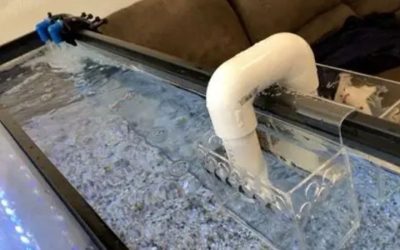
The Eshopps PF-800 is the no-drill option, an 800-GPH hang-on U-tube for tanks that cannot be drilled. It brings serious capacity without a hole, but a U-tube siphon traps and releases air more readily, so it is inherently harder to make as silent as a tuned drilled drain.
Around $125 retail or under $150 from the maker as of 09/2026, its 800-GPH maximum is not forced sump flow. Expect to work harder on level and flow to keep it quiet, and accept that a hang-on siphon usually trades some silence for the convenience of skipping the drill.
Xaqua INOUT
The Xaqua INOUT is the combined-unit alternative, a drilled design rated up to 660 GPH that merges overflow and directional return. Its different architecture changes how water enters and leaves the box, so its noise behavior depends heavily on how you set it up rather than a fixed rating.
Around $100 to under $100 currently as of 09/2026, it requires drilling and works differently from a dedicated multi-drain overflow. Judge its quiet on your own installation, since with no matched noise testing available, tuning and flow, not the listing, will decide how silent it actually runs.
Frequently Asked Questions
Buyers chasing silence ask a consistent set of questions about an overflow. Each answer opens with the practical call, then the condition that changes it, so you can locate quiet in the drain mechanism and your tuning rather than a marketing claim printed on the box.
What spec should decide this purchase?
The drain mechanism should decide it, because it sets the baseline noise before any tuning. A Herbie full-siphon design starts quieter than a hang-on U-tube, so choose the architecture that suits your tank and skills, since that choice matters more than any silent label on the packaging.
After the mechanism, weigh tunability, lid and water level, and flow together. A design you can adjust finely, run at the right level, and match to your real flow will reach quiet, while a poorly tuned or overdriven box of any brand will not, whatever the listing promises.
Which numbers are hard facts and which are heuristics?
The GPH ratings, dimensions and September 2026 prices are hard facts, and all four boxes sitting around the 800-GPH class is a fact that shows capacity alone cannot explain noise. Those figures describe the hardware, not how loudly it will run in your particular setup.
The tuning guidance is heuristic and product-specific. BRS’s gate-valve advice and the roughly half-inch Eclipse level are starting points, not universal rules, and no matched dB test exists across these boxes, so treat quiet as a tuning outcome rather than a rankable measured spec.
Is the highest headline number always better?
No, and a bigger flow rating can make a box louder, not quieter. Capacity is a ceiling, so pushing more water than the tank needs adds turbulence and noise, and figures measured under different conditions do not compare across these drain architectures in any reliable case.
Quiet is mainly a plumbing and tuning property, not a brand or a number. A right-sized, well-tuned Herbie drain beats a larger overflow run hard, so let the drain mechanism and your adjustment, not the top GPH figure, decide which box actually runs silently on your tank.
When might the reader not need this?
If your overflow is already quiet after tuning, a new box will not help; the fix is usually a gate valve and patience, not a purchase. Noise most often comes from setup, so exhaust tuning before assuming the hardware itself is the real source of the sound.
And if you have no sump at all, there is no overflow to silence. A box exists only to feed a sump, so confirm that plan first, and when noise is the concern, treat a quieter drain mechanism as one input among tuning, level and flow rather than a guaranteed cure.
Final Thoughts
For silence, the best quiet aquarium overflow box is the drain mechanism you can tune to run without air-water churn, matched to your real flow and set at the right level. Quiet is a plumbing and tuning property, so choose a Herbie-capable design, add a gate valve, and dial it in rather than trusting a silent label.

Best Budget Dosing Pump: Top Expert Buying Guide for Tanks

4 Best Aquarium Submersible Pumps