Last Updated: October 4, 2026
- Top Pick: FISHNOSH Automatic Fish Feeder for Aquarium with Digital Thermometer – 2026 Auto Fish Food Dispenser Programmable, Vacation Feeder for Fish, Adjustable Portions, Auto Fish Feeder for Small & Big Tanks
- Best Value: AquaMiracle Programmable Automatic Fish Feeder for Aquarium, Auto Fish Food Dispenser with Timer, Volume Adjustable Vacation Aquarium Feeder with Digital Display, for Granules Pallets Strips
- Premium Choice: Petbank Automatic Fish Feeder for Aquarium Portion Control & Moisture-Proof

TL;DR: An aquarium digital feeder eliminates missed feedings, overfeeding, and vacation stress — programmable dispensers portion and schedule meals automatically. This guide covers what to look for in a large-tank model, top picks, and how to calibrate portion sizes correctly.
Aquarium Digital Feeder: Consistent Feeding for Large Tanks
Consistency is one of the most underrated factors in fish health. Fish fed at irregular intervals — or in wildly variable quantities — experience measurable stress responses that suppress immune function, reduce spawning success, and in some species trigger aggression cycles. An aquarium digital feeder removes the human variable entirely: the same portion, at the same time, every day, regardless of work schedules, weekends, or holidays. For large tanks housing expensive or sensitive species, that consistency is worth far more than the cost of the device.
As an Amazon Associate we earn from qualifying purchases at no extra cost to you.


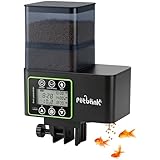
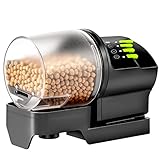
Large-tank digital feeders differ from compact nano models in drum capacity, dispenser aperture size, and mounting options. A 100-litre planted community tank with small tetras and a bristlenose pleco has very different feeding demands than a 400-litre South American biotope with medium cichlids and large catfish — the dispenser needs to handle larger pellet sizes, higher volume per portion, and possibly multiple feeding events per day without jamming or bridging in the drum.
🛒 Best Price Today on Amazon
Prime members get fast, free shipping on everything above, plus member-only deals. New members get a 30-day free trial — cancel anytime.
Start 30-Day Prime Free Trial →See Today’s Amazon DealsKey Features to Look for in a Large-Tank Aquarium Digital Feeder
Not all automatic feeders are built for large tanks. Evaluating these five specifications before buying will prevent the most common frustrations with undersized or poorly designed units.
- Drum capacity: Aim for at least 100 ml (roughly 50–70 g of dry pellet food) to reduce refill frequency. Large tanks with multiple feedings per day will exhaust a 50 ml drum in under a week.
- Aperture size range: The dispenser opening must accommodate your largest pellet diameter. Most quality units offer an adjustable aperture from 1 mm to 8 mm — essential for tanks mixing flake, micro-pellet, and 4–6 mm sinking pellets.
- Feeding event programming: Look for at least 4 programmable events per 24 hours. Carnivorous cichlids and large catfish benefit from 3–4 small meals rather than one large daily portion.
- Portion control: Rotation-based dispensers allow fine-grained portion adjustment by controlling drum rotation duration (typically in seconds). Dial-based systems are less precise and prone to over-dispensing with larger, irregularly shaped foods.
- Moisture protection: Large tanks generate significant surface humidity. Units with a ventilation fan in the drum compartment — or a sealed drum with desiccant packs — prevent food clumping and dispenser jamming far better than basic open-drum designs.
Top Aquarium Digital Feeder Picks


As an Amazon Associate we earn from qualifying purchases. Product prices and availability are accurate as of the date/time indicated.



As an Amazon Associate we earn from qualifying purchases. Product prices and availability are accurate as of the date/time indicated.


As an Amazon Associate we earn from qualifying purchases. Product prices and availability are accurate as of the date/time indicated.
Calibrating Portion Sizes for Large Tanks
The standard overfeeding rule applies regardless of feeder type: offer only what all fish consume completely within 3–5 minutes. The digital feeder’s job is to deliver that calibrated amount on schedule — not to determine the correct amount for you. Calibration is a one-time setup task that pays dividends every day thereafter.
To calibrate, run a test dispense over a sheet of white paper and weigh the output on a kitchen scale. Adjust the rotation duration or portion dial until the dispensed amount matches your target feeding quantity. Then run the feeder for one week while you observe fish behaviour and water quality — uneaten food accumulating on the substrate or ammonia readings ticking upward signal the need to reduce portion size.
For tanks with multiple species at different feeding levels (surface, mid-water, bottom), consider running two feeders: one dispensing floating flake or sticks for upper and mid-level feeders, one dispensing sinking wafers or pellets on a slightly offset schedule for bottom dwellers. This prevents dominant surface feeders from intercepting all food before bottom species receive their portion.
Spec Comparison Table
| Feature | Entry-Level | Mid-Range | Premium Large-Tank |
|---|---|---|---|
| Drum capacity | 50 ml | 100 ml | 150–200 ml |
| Max pellet size | 3 mm | 6 mm | 8–10 mm |
| Daily feeding events | 2 | 4 | 6–8 |
| Moisture protection | None | Ventilation fan | Fan + sealed drum |
| Power source | 2× AA battery | 2× AA or USB | AA + USB backup |
| Display type | No display | LCD | LCD + app control |
| Mounting options | Clip only | Clip + bracket | Clip + bracket + rail |
Mounting and Positioning for Large Tanks
On large open-top tanks, position the feeder over a moderate-flow zone — not directly above a powerhead outlet (food scatters too widely) and not over a dead zone (food piles in one spot). A position near the surface return outlet from a canister filter works well: gentle outward flow distributes the food across a broad area without sending pellets straight to the overflow.
For rimmed tanks with a glass canopy, most digital feeders include a slot that fits over the rim gap. Verify the feeder’s clip width against your specific canopy gap measurement before purchase — gaps vary from 20 mm to 80 mm depending on the tank manufacturer and lighting system in use.
If your large tank uses a sump return system, ensure the feeder dispenses into the display tank surface — not into the overflow box. Food entering the sump bypasses fish entirely and creates an organic load on the sump filter media. For sump-based large tank setups, see our aquarium sump setup guide for positioning best practices.
Pairing an automatic feeder with a quality aquarium water test routine is the best way to confirm your calibrated portions are not creating an ammonia or nitrate burden over time. Test weekly for the first month after installing a new feeder and adjust portions based on results. For vacation coverage, combine the feeder with a full aquarium vacation care checklist to ensure nothing is missed during extended absences.
FAQ: Aquarium Digital Feeder
Can an aquarium digital feeder handle large pellets for cichlids?
Yes, provided you select a model with an adjustable aperture large enough for your pellet diameter. Most 5–6 mm cichlid pellets pass through feeders with aperture settings of 6 mm or larger. Test with a manual dispense before programming — if pellets jam or bridge in the drum, reduce loading volume and increase aperture size. Irregularly shaped sticks or freeze-dried foods are more prone to bridging than uniformly shaped pellets.
How do I prevent food from getting wet and clogging the aquarium digital feeder drum?
Humidity from large open-top tanks is the primary failure mode for automatic feeders. Select a model with an active ventilation fan that circulates dry air through the drum, and add a small desiccant packet inside the drum with each food refill. Position the feeder so the dispenser spout is as close to the water surface as practical — the shorter the drop, the less surface spray deflects back toward the drum opening. Never overfill the drum; food at the very top of a full drum is exposed to more humidity and compresses under its own weight.
How many times per day should I set a digital feeder for large cichlids?
Three to four small feeding events per day is optimal for most medium to large cichlid species. This pattern mimics natural foraging behaviour, reduces aggression around feeding time (smaller meals are consumed quickly with less competition), and maintains more stable water quality than one large daily feeding. Set events at morning, midday, evening, and a late feed if the species is crepuscular or nocturnal.
Will an automatic feeder work with flake food in a large tank?
Flake food is the most difficult food type for automatic feeders. Flakes are irregular in shape, crush into dust under their own weight, and absorb humidity rapidly. If you must use flake, load the drum to no more than half capacity, choose a feeder with a large-diameter drum opening, and set smaller portion rotations to avoid clumping. Granules and small pellets are far more reliable in automatic feeders and produce less water-clouding dust — consider switching from flake to a high-quality micro-pellet for automated feeding.
What happens to the feeding schedule when there is a power outage?
Battery-powered feeders are unaffected by mains power outages and maintain their programmed schedule throughout. USB-only feeders without battery backup will lose their clock and require reprogramming after power is restored — a significant disadvantage for tanks in areas with unreliable power. Dual-power models (USB primary, battery backup) are the safest choice for large tanks where uninterrupted feeding schedules are important.
Frequently Asked Questions
How much food should an auto feeder dispense?
Set the smallest portion the unit allows, then test-run it into a dry dish for a few days and count what falls. Fish should finish everything within two or three minutes. On a large tank it is far safer to feed two or three small portions daily than one heavy drop.
What food types work in a digital feeder?
Dry pellets and floating sticks meter best. Flake bridges and clumps inside the drum, freeze-dried food swells and jams, and nothing frozen or moist will work at all. Large tanks holding cichlids or goldfish are ideal candidates because those fish eat pellets, which flow reliably.
How do I stop the food going damp and clogging?
Mount the feeder above the water on a bracket rather than resting it on a glass lid, leave a gap so warm humid air escapes, and direct fans or filter outflow away from it. Use the supplied silica gel pack or built-in fan, and refill the hopper only every few weeks.
Can I rely on it while away on holiday?
Yes, but run it for at least a week beforehand to confirm portion size and that it has not jammed. Do a large water change and clean the filter before leaving, and ask someone to check in. Fish handle several days of underfeeding far better than a stuck-open hopper.
Does it work over a saltwater tank?
It does, though salt creep and humidity are harsher on both electronics and food. Mount it higher, check the battery contacts for corrosion regularly, and stick to pellets rather than flake. Many reefers automate pellet feeding and add frozen food by hand when they are home.
Ready to decide? Our #1 pick for 2026 is the Drum capacity.
Live price & availability on Amazon.
Related Reviews & Guides

What Size Aquarium Overflow Box Do You Need? Easy Guide
Best Aquarium Sump for Beginners: Top Expert Buying Guide