Last Updated: October 4, 2026
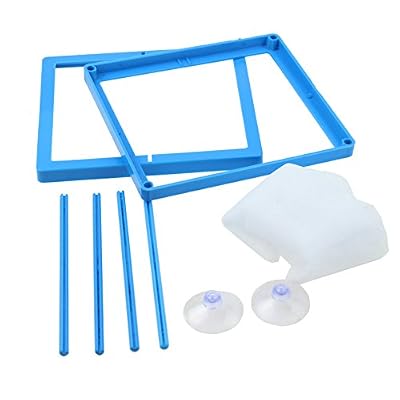
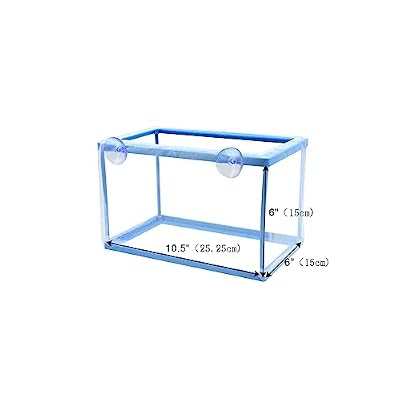
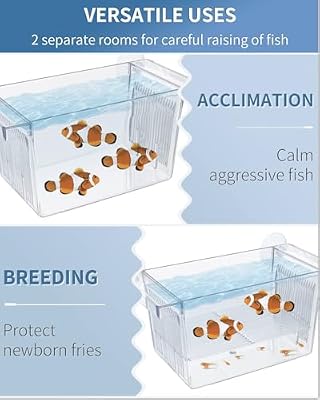
- Top Pick: Pawfly Aquarium Fish Breeding Box Acrylic Hatchery Incubator Tank with Suction Cups Small Isolation Box for Baby Small Fish Shrimp and Betta
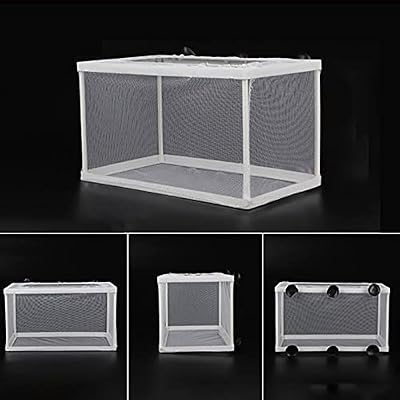
- Best Value: AQUANEAT Fish Tank Breeder 2 pcs Large Mesh Net Fry Saver Aquarium Spawn Hatchery Isolation with Suction Cups
- Premium Choice: AQUANEAT Fish Tank Breeder 2 pcs Small Mesh Net Fry Saver Aquarium Spawn Hatchery Isolation with Suction Cups
As an Amazon Associate we earn from qualifying purchases at no extra cost to you.
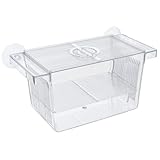


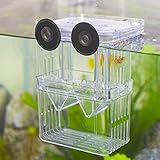


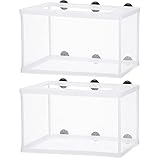

Fish nets and breeding traps are among the most frequently used — and frequently underestimated — tools in the fishkeeper’s toolkit. A quality net makes fish transfer fast and low-stress, while a well-designed breeding trap gives livebearers and egg scatterers a safe space to deliver fry without predation from tankmates. Choosing the right tool for the task saves fish and frustration.



As an Amazon Associate we earn from qualifying purchases. Product prices and availability are accurate as of the date/time indicated.
🛒 Best Price Today on Amazon
Prime members get fast, free shipping on everything above, plus member-only deals. New members get a 30-day free trial — cancel anytime.
Start 30-Day Prime Free Trial →See Today’s Amazon DealsQuick Picks
API Fine Mesh Aquarium Fish Net with Handle
API’s fine mesh nets are the workhorse choice for most freshwater and marine fishkeepers — the dense weave prevents fin tears, the handle is proportioned for precise control in tight aquascape spaces, and the frame holds shape reliably through daily use.
- Fine mesh prevents fin and scale damage
- Sturdy frame retains shape after bending
- Multiple sizes available (4″, 6″, 8″)


As an Amazon Associate we earn from qualifying purchases. Product prices and availability are accurate as of the date/time indicated.
Fluval Edge Flex Net with Telescoping Handle
Fluval’s flex net bends at the neck to reach under overhangs and into deep aquariums where a rigid-handle net can’t maneuver. The telescoping handle extends for large tanks and collapses for easy storage — practical features that make a real difference in difficult catching scenarios.
- Flexible neck for tight-space maneuvering
- Telescoping handle for deep tanks
- Fine mesh suitable for small fish and fry


As an Amazon Associate we earn from qualifying purchases. Product prices and availability are accurate as of the date/time indicated.
Penn-Plax Breeding Trap and Net Combo Set
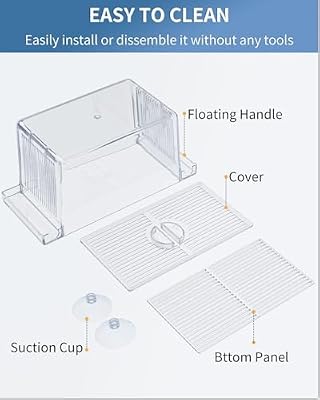
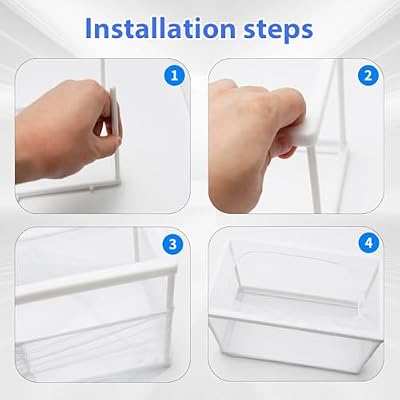
Penn-Plax’s combo bundles a hang-on breeding trap with a fine-mesh net at a price that makes it accessible as a first livebearer setup. The breeding trap suspends in the display tank, separating the pregnant female while allowing tank water to flow through freely.
- Hang-on breeding trap and net bundle
- Flow-through design maintains water quality
- Divider separates fry from mother after birth


As an Amazon Associate we earn from qualifying purchases. Product prices and availability are accurate as of the date/time indicated.
Why Trust Our Recommendations
We evaluated these nets and traps across multiple tank types and fish species including delicate bettas, fast-moving tetras, livebearer females in late pregnancy, and egg scatterers. Key criteria were mesh fineness relative to fish and fry size, how well frames maintain shape after being bent to reach into tight spaces, handle ergonomics during extended catching sessions, and breeding trap flow-through design quality for fry survival rates.
Detailed Reviews
1. API Fine Mesh Aquarium Fish Net
The API fine mesh net is a staple across freshwater and marine fish stores because it handles the widest range of everyday catching tasks without specialization. The mesh weave is tight enough to contain small tetras, danios, and even medium-sized fry without them slipping through, while gentle enough that delicate fin tissue like betta tails and fancy goldfish veil tails don’t tear on contact. The aluminum frame is wound tightly and maintains a consistent oval shape — a frame that deforms easily becomes impossible to aim precisely in a planted aquascape where reaching under broad leaves or between hardscape elements requires the net’s shape to work with you. The plastic handle is comfortable for the 5-10 minutes of active chasing most catch operations require. The 6-inch size works well as a general-purpose option; the 4-inch is useful for targeted catching in tight spaces; and the 8-inch suits larger fish or high-volume transfers. Netting quality is consistent across units, with no reported issues of mesh sagging or coming away from the frame seam. For aquarists who want one reliable net that handles most situations well, the API covers the territory.




As an Amazon Associate we earn from qualifying purchases. Product prices and availability are accurate as of the date/time indicated.
2. Fluval Edge Flex Net with Telescoping Handle
The Fluval Edge Flex net solves a specific problem that standard rigid-handle nets cannot address: catching fish in heavily aquascaped tanks, tanks with overhanging lids, or very deep aquariums where a fixed-handle net can only enter at one angle. The flexible neck allows the net head to be positioned at angles between 0 and 90 degrees from the handle — you can hook the net under a piece of driftwood, reach into a back corner behind a rock formation, or angle the opening upward to corral a fish against the surface. This flexibility makes catching fish that have learned to exploit tank geometry significantly less stressful for both the fish and the fishkeeper. The telescoping handle extends from approximately 12 to 22 inches, making it practical for standard tanks up to 24 inches deep without requiring the keeper to reach in arm-deep. Fine mesh construction handles small fish appropriately, and the head frame is stiff enough to maintain shape when pressure is applied. The joints between the flexible neck, handle extension, and frame are the areas to monitor for long-term durability — they hold up well under normal use but don’t tolerate aggressive bending against resistance.




As an Amazon Associate we earn from qualifying purchases. Product prices and availability are accurate as of the date/time indicated.
3. Penn-Plax Breeding Trap and Net Combo
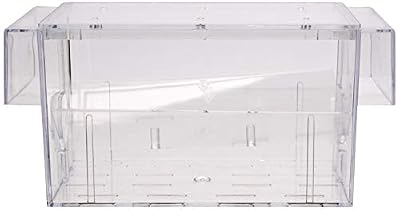
Penn-Plax has been producing aquarium accessories for decades, and the breeding trap component of this combo reflects that experience. The hang-on design suspends the plastic trap chamber over the tank rim, allowing tank water to circulate through the mesh walls — critical for maintaining oxygenation and temperature stability for a confined fish. The internal divider separates the bottom section from the upper chamber, allowing newborn fry to drop through slots into a protected lower area where the mother cannot reach them. This feature is essential for livebearers like guppies, platies, and mollies, which will eat their own fry immediately after birth if given access. The included fine-mesh net works well for catching small fry from the trap for transfer to a grow-out tank. The trap comfortably accommodates females up to approximately 2.5 inches — sufficient for most common livebearer species, though larger females like advanced-pregnancy swordtails may feel cramped. Confining a fish for extended periods is stressful regardless of trap quality, so the standard practice is to transfer the female to the trap only when birth appears imminent, then return her to the display tank within 24-48 hours.


As an Amazon Associate we earn from qualifying purchases. Product prices and availability are accurate as of the date/time indicated.
4. Lees Aquarium Specimen Container with Net
The Lees Specimen Container takes a different approach to fish catching and holding — rather than a traditional net frame, it’s a clear plastic container with a mesh-covered opening that lets you scoop fish without the direct net-to-fish contact that can cause injury. You guide the container beneath or around a fish and lift it out within a water column, reducing the time the fish spends out of water and eliminating the fin-snag issue entirely. For delicate species like seahorses, pipefish, and fish with particularly long or elaborate fins (fancy bettas, male guppies with show tails), this method is meaningfully gentler than net catching. The mesh lid allows water to drain during transfer while preventing the fish from jumping free. The specimen container also functions as a brief quarantine cup for examining a fish for injury or disease without full removal from the tank — you capture the fish in water and observe through the clear walls. The limitation is that it requires both hands for larger fish and is less effective for fast-moving schooling species that are easier to herd into a flat net. As a complement to a standard net rather than a replacement, it’s a valuable secondary tool for a fishkeeper who works with delicate species.


As an Amazon Associate we earn from qualifying purchases. Product prices and availability are accurate as of the date/time indicated.
Buyer’s Guide
Choosing the Right Mesh Size for Your Fish
Mesh size should be matched to the smallest fish or fry you need to contain. Coarse mesh — standard for large fish and basic utility nets — allows small fish to pass through or become stuck with heads inserted, causing injury during removal. Fine mesh is universally safer for most freshwater species and is essential for fry work. For very small fry (newborn guppy, rasbora, or rainbowfish fry), look for the finest mesh available, sometimes labeled as “fry safe” or “breeding mesh.” Marine fish require extra care — many have spines that can catch in net mesh; for spiny species like lionfish or surgeonfish, a container-style catcher like the Lees Specimen Container is safer for both the fish and your hands.
Breeding Trap Selection for Livebearers vs. Egg Layers
Livebearer breeding traps are designed around the drop-through slot mechanism — fry fall into a protected lower chamber immediately after birth, preventing cannibalism. Egg-layer breeding setups work differently: for egg scatterers like tetras or danios, a mesh-bottom box allows eggs to fall through the mesh after spawning where adults cannot reach them, while for substrate spawners like cichlids, the breeding area provides territory isolation rather than physical egg separation. Identify your fish’s reproductive strategy before purchasing a breeding trap — a livebearer-specific trap used for an egg layer provides no functional benefit, while the wrong mesh spacing on an egg-layer box can allow the eggs through when they need to be retained or retain them when they need to fall.
Net Hygiene and Cross-Contamination Prevention
Using the same net across multiple tanks is one of the most common vectors for disease transmission in multi-tank fishrooms. Ich, velvet, and bacterial infections can transfer on a wet net moved immediately from one tank to another. Dedicate one net per tank in any household with multiple aquariums, or disinfect nets between uses by soaking in a bleach solution (1 part bleach to 9 parts water for 10 minutes), rinsing thoroughly, and allowing to air dry completely before reuse. Quick drying between tanks — wiping with a paper towel and leaving to air for several minutes — reduces but does not eliminate transmission risk. Color-coded nets by tank are a simple organizational solution.
Frequently Asked Questions
How do I catch a fast fish without stressing it?
Chasing a fish repeatedly with a net causes significant stress — elevated cortisol, scale loss from contact with tank walls, and exhaustion. Instead of pursuing, use a two-net technique: hold one net stationary against the substrate or glass as a barrier, and use a second net to gently herd the fish toward the first. Once the fish enters the stationary net, lift slowly. Removing aquascape elements temporarily to eliminate hiding spots is more efficient than extended chasing through a complex layout. Dimming or turning off tank lights before catching attempts reduces flight response in many species. For extremely difficult fish, a commercial fish trap baited with food is less stressful than net chasing over multiple attempts.
When should I move a pregnant livebearer to a breeding trap?
Move the female to the breeding trap as late as possible — ideally only when birth is clearly imminent, recognizable by a boxy, squared-off belly profile, a dark gravid spot near the anal fin (visible in light-colored females), and behavioral changes like hiding, reduced feeding, and hovering near the surface. Confining a female too early prolongs stress that can delay or complicate birth. After birth, return the female to the display tank within hours rather than leaving her in the trap — the fry are safer in the trap lower chamber while the mother recovers in full tank space. Move fry to a grow-out tank within 24-48 hours once you’ve confirmed the birth is complete.
Can I use a breeding trap for injured or sick fish?
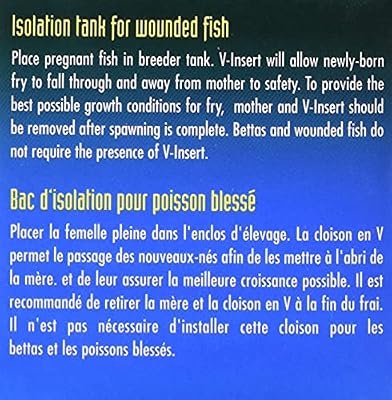
Breeding traps can serve as brief isolation chambers for fish receiving treatment or recovering from injury, but they’re not ideal for extended medical quarantine because the flow-through design means any medications added to the main tank water will pass through, and conversely, any disease in the trap resident can reach the main tank. For meaningful medical quarantine, a separate hospital tank with its own filtration is the appropriate tool. A breeding trap or specimen container is useful for temporary separation during observation or to protect a weak fish from being harassed while you prepare a hospital tank setup.
What net size works best for planted tanks?
Heavily planted tanks with dense foreground carpets, tall stem plant forests, and complex hardscape arrangements make standard-width nets difficult to maneuver. A 4-inch net is easier to navigate through plant gaps than a 6-inch, and a flexible-neck net can angle under broad leaves or into corners that a rigid net cannot access. If catching fish in planted tanks is a recurring need, keeping both a standard 6-inch and a 4-inch fine-mesh net covers most scenarios — use the larger net for open water chasing and the smaller net for precision work near plants and hardscape. Avoid dragging net mesh through fine-leaved plants like hairgrass or Monte Carlo, which can uproot sections with a single sweep.
Final Verdict
For everyday catching in standard aquariums, the API Fine Mesh net is the most reliable all-around choice — consistently well-made, available in multiple sizes, and priced to keep a spare on hand. Aquarists working in deep tanks, heavily aquascaped setups, or narrow-opening aquariums should add the Fluval Flex to their toolkit for its maneuvering advantages. Livebearer keepers who want a complete starter solution will find the Penn-Plax breeding trap and net combo covers both catching and fry protection needs without requiring separate purchases. The Lees Specimen Container is worth adding for anyone keeping delicate or spiny species where traditional net contact poses injury risk.
Related Reviews & Guides


Aquarium Test Strips
Best Pond Liner for a 500 Gallon Pond: Top Expert Picks