Last Updated: October 4, 2026
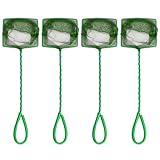
- Top Pick: 4Pcs Aquarium Fish Net, 4 Inch Quick Catch Mesh Nylon Fishing Nets
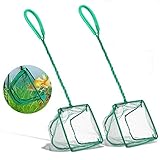
- Best Value: 2 Pack Aquarium Fish Nets, DSSPORT 4 Inch Small Mesh Fish Catch Nets with Plastic Handle Green
- Premium Choice: Pawfly 4 Inch Aquarium Fish Net with Braided Metal Handle Small Square Net with Soft Fine Mesh Sludge Food Residue Wastes Skimming Cleaning Net for Fish Tanks Small Koi Ponds and Pools
 Fish Net Aquarium Variety Pack” style=”max-width:100%;height:auto;margin-bottom:1rem” loading=”lazy”>
TL;DR: The right fish net prevents injury, stress, and disease transfer between tanks. Variety packs covering fine-mesh shrimp nets, medium community nets, and deep-bag nets for larger fish give hobbyists the right tool for every catch. This guide breaks down mesh sizes, frame shapes, handle lengths, and hygiene practices that protect both fish and shrimp.
Best Fish Nets for Aquariums: Variety Pack Guide for Shrimp, Community Fish, and Large Specimens
Netting a fish sounds trivial until you have spent 20 minutes chasing a skittish tetra through a planted aquascape, uprooted two stems, and stressed the fish so badly it is hiding behind the filter intake. Net selection is a legitimate husbandry topic. Mesh size, bag depth, frame shape, and handle stiffness all affect catch efficiency and fish welfare. A variety pack covering multiple sizes is more versatile than buying a single “all-purpose” net.
As an Amazon Associate we earn from qualifying purchases at no extra cost to you.


🛒 Best Price Today on Amazon
Prime members get fast, free shipping on everything above, plus member-only deals. New members get a 30-day free trial — cancel anytime.
Start 30-Day Prime Free Trial →See Today’s Amazon DealsTop Fish Net Variety Packs


As an Amazon Associate we earn from qualifying purchases. Product prices and availability are accurate as of the date/time indicated.


As an Amazon Associate we earn from qualifying purchases. Product prices and availability are accurate as of the date/time indicated.




As an Amazon Associate we earn from qualifying purchases. Product prices and availability are accurate as of the date/time indicated.
Mesh Size: The Most Important Variable
Mesh size determines what you can catch without harming it. Very fine mesh (under 0.5 mm) is essential for neocaridina and caridina shrimp — standard mesh allows legs, antennae, and swimmerets to tangle, causing amputations and death. Fine mesh also works for fry and nano fish like chili rasboras and exclamation point rasboras.
Medium mesh (1–2 mm) suits most community fish: tetras, danios, corydoras, livebearers, and small cichlids. It drains quickly, so fish spend less time in contact with the net. Coarse mesh (3–5 mm) is appropriate for large, thick-bodied fish like oscars, large goldfish, or koi in pond transfers — fine mesh retains too much water and tears under the weight of heavy specimens.
Net Specifications Comparison
| Net Type | Mesh Size | Frame Width | Best For | Avoid Using On |
|---|---|---|---|---|
| Shrimp / fry net | 0.3–0.5 mm | 2–3 in | Shrimp, fry, nano fish | Large fish (clogs, slow drain) |
| Fine community net | 1 mm | 3–4 in | Tetras, rasboras, small corydoras | Shrimp (leg tangling) |
| Medium community net | 1.5–2 mm | 4–6 in | Most community fish up to 4 in | Shrimp, fry |
| Deep bag net | 2 mm | 5–6 in, deep bag | Skittish fish, long fish (angels, gouramis) | Very small fish (escape risk) |
| Coarse large net | 3–5 mm | 8–12 in | Goldfish, cichlids, koi | Small fish, shrimp |
Frame Shape and Bag Depth
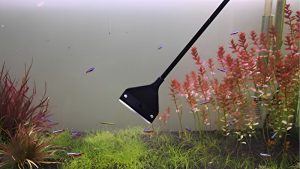
Rectangular frames scoop more efficiently along tank bottoms and corners. Round frames are better for open-water chasing. D-shaped frames with a flat edge are ideal for planted tanks — you can lay the flat edge flush with the substrate without catching stems. Bag depth matters as much as frame size: a shallow net allows fish to flip out during the transfer from tank to bucket. A bag depth of at least 1.5x the frame width keeps most fish contained during the lift.
Long-handled nets (12–18 in handles) give reach in deep tanks and allow more controlled, slower movements that reduce fish flight responses. Short-handled nets work for shallow tanks but force your hand closer to the water surface, which increases fish avoidance behavior. Telescoping handles are a practical compromise for hobbyists with multiple tank sizes.
Two-Net Technique for Stress Reduction
The most effective netting method for planted tanks or tanks with decoration uses two nets: one held stationary as a “corral” in front of the fish, and a second net used to gently herd the fish forward into the first. Fish tend to flee in a straight line when startled; positioning the corral net in that line dramatically improves first-attempt catch rates. This method also reduces the time fish spend in the net, which is the primary stress variable.
For shrimp tanks, the two-net technique works especially well paired with a fine breeding box or isolation container. Scoop through the colony with a fine net and transfer the catch to a floating container while you sort, rather than attempting to isolate individual shrimp with repeated scooping. If you are setting up a dedicated breeding tank, our livebearer breeding tank guide covers isolation container setups that minimize stress during fry separation.
Disease Control and Net Hygiene
A net used in an infected tank and immediately placed in a healthy tank is one of the most common vectors for ich, velvet, bacterial infections, and pest snails. Dedicate one net per tank if possible, or disinfect between uses. A 10-minute soak in a 1:20 bleach-water solution (1 tablespoon bleach per gallon) followed by thorough rinsing and air drying kills most pathogens and parasites. Never soak nets in the same bleach solution used for equipment that contacts fish directly — residual bleach is toxic.
For hobbyists running a disease quarantine protocol, a dedicated quarantine net (never used in display tanks) is a basic biosecurity measure. Our fish quarantine tank setup guide covers full protocol for new fish introduction, including equipment separation. For ich treatment specifically, our ich treatment guide details how long infectious stages survive on nets and equipment.
Related Guides
- Quick Picks: Best Natural Driftwood for Aquarium Decoration
- Best Aquarium Gravel Vacuum: Top Picks for Clean Tanks 2026
- Best Betta Fish Food: Top Picks for a Healthy Betta 2026
Frequently Asked Questions
Can I use a regular fish net for cherry shrimp or bee shrimp?
No. Standard aquarium nets have mesh openings of 1.5–3 mm, which is large enough for shrimp legs, antennae, and swimmerets to pass through and tangle. Removing a shrimp from standard mesh almost always causes leg or antenna loss, which stresses the animal and creates entry points for bacterial infection. Use only fine-mesh nets specifically labeled for shrimp or fry — mesh openings of 0.3–0.5 mm are appropriate.
How do I net a fish that keeps hiding in plants or decoration?
Temporarily remove or rearrange decoration to reduce hiding spots before attempting to net. Reduce flow by turning off wave makers during the catch — high flow gives fish more escape vectors. Dim the lights or cover three sides of the tank with a dark cloth to reduce the fish’s visual field. The two-net technique (one corral, one herder) is far more effective than chasing with a single net in a complex environment.
What size net do I need for a 4-inch angelfish?
Angelfish are tall-bodied; their dorsal and ventral fins extend well beyond body length. A net with at least a 5-inch frame width and a deep bag is needed to contain the full fin span without bending or crushing fins. A 6-inch deep-bag net is ideal. Avoid coarse mesh — angelfish fins snag easily in mesh openings above 2 mm.
How often should I replace aquarium nets?
Replace nets when mesh shows tears, deformation, or stiffening from mineral deposits or repeated bleach treatments. Torn mesh can injure fish by catching scales and fins. Inspect nets before each use by holding them up to light — tears and holes are easy to spot. A quality nylon net used properly and cleaned regularly can last 2–3 years; cheap nets with weak handle connections often fail within months under regular use.
Is it safe to use the same net in both freshwater and saltwater tanks?
Only after thorough rinsing and drying. Residual salt on a net used in a freshwater tank can stress freshwater fish. More importantly, marine pathogens like marine velvet (Amyloodinium) can survive on moist equipment and infect freshwater fish that are susceptible to related parasites. If you keep both system types, color-code or label nets by system and maintain strict separation. Our saltwater vs. freshwater comparison guide covers cross-contamination risks in more detail.
For complete shrimp tank setup context, including what equipment to have on hand before your shrimp arrive, see our dedicated freshwater shrimp tank setup guide.
Ready to decide? Our #1 pick for 2026 is the Shrimp / fry net.
Live price & availability on Amazon.
Related Reviews & Guides
Best Dosing Pump for Freshwater Tanks: Top Expert Guide
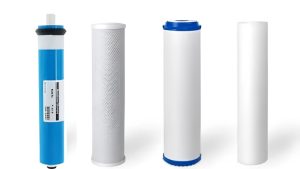
Best RODI Replacement Membrane and Cartridges: Top Picks