Last Updated: October 9, 2026
- Top Pick: AAwipes 8-in-1 Aquarium Test Kit for Fish Tanks – Quick & Accurate Water Testing Strips for Aquariums & Ponds. Tests pH, Ammonia, Alkalinity, Hardness, Chlorine, etc. (K02-50)
- Best Value: Merydi Aquarium Test Strips, 9 in 1 Fish Tank Test Kit for Freshwater Ponds, 150 ct
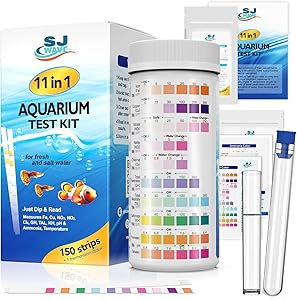
- Premium Choice: 11 in 1 – Aquarium Test Strips | 950 Tests – 150 Strips | Fish Tank Aquariums Water Test Kit & ebook | Aquarium Thermometer | Fish Tank Water Testing Kit Includes 50 Ammonia Strips | Versatile Usage
Reliable water quality testing is the foundation of successful fishkeeping and reef keeping. Without accurate readings of ammonia, nitrite, nitrate, pH, and — for saltwater tanks — alkalinity, calcium, and magnesium, you’re essentially flying blind, unable to detect dangerous parameter shifts before they harm your livestock. The right test kit gives you the data you need to intervene before problems escalate.
Test kits come in two main formats: liquid reagent kits and test strips. Liquid reagent kits are significantly more accurate and reliable, while test strips offer speed and convenience at the cost of precision. For serious fishkeepers and all reef hobbyists, liquid reagent kits are the only responsible choice. Understanding which parameters matter most for your tank type will help you select the kit that covers your specific needs without overspending on tests you don’t need.
As an Amazon Associate we earn from qualifying purchases.





🛒 Best Price Today on Amazon
Prime members get fast, free shipping on everything above, plus member-only deals. New members get a 30-day free trial — cancel anytime.
Start 30-Day Prime Free Trial →See Today’s Amazon DealsQuick Picks: Aquarium Test Kits
API Master Test Kit
- Tests pH, ammonia, nitrite, and nitrate
- 800+ tests per kit — exceptional value
- Color comparator for accurate readings


As an Amazon Associate we earn from qualifying purchases. Product prices and availability are accurate as of the date/time indicated.
Salifert Reef Test Combo Kit
- Covers alkalinity, calcium, magnesium, and nitrate
- Lab-grade accuracy for demanding reef parameters
- Designed specifically for saltwater reef systems






As an Amazon Associate we earn from qualifying purchases. Product prices and availability are accurate as of the date/time indicated.
Tetra EasyStrips 6-in-1 Aquarium Test Strips
- Tests 6 parameters in 60 seconds
- No mixing or waiting — instant results
- Ideal for routine freshwater monitoring





As an Amazon Associate we earn from qualifying purchases. Product prices and availability are accurate as of the date/time indicated.
Why Trust Our Picks
Our test kit recommendations are based on accuracy comparisons with reference solutions, cost per test calculation, ease of use across experience levels, parameter coverage relative to common aquarium needs, and feedback from both freshwater and saltwater hobbyists. We considered how each kit performs under real aquarium conditions — where colors can be affected by tannins, salt, or biological compounds — rather than just in ideal laboratory settings. Reliability and consistency across multiple test sessions was a key factor in our final selections.
Best Aquarium Test Kits: Reviews
1. API Master Test Kit
The API Freshwater Master Test Kit has been the gold standard for freshwater aquarium testing for decades, and it continues to earn that reputation through consistent accuracy, remarkable value, and a comprehensive parameter range. The kit covers the four most critical water quality parameters for any fish tank: pH (6.0–7.6 high range included), ammonia, nitrite, and nitrate — the complete nitrogen cycle monitoring set that every fishkeeper needs. Each test uses color-matching with a printed comparator card, and while color interpretation has a small subjective element, the reagents are precise enough that two people reading the same tube will arrive at very similar conclusions. The kit includes enough reagent for over 800 individual tests across all four parameters combined — an extraordinary value that makes the per-test cost one of the lowest in the hobby. The test tubes, caps, and comparator cards are well-made and durable, and the included instruction booklet is clear enough for complete beginners to follow without difficulty. For freshwater aquariums — from simple community tanks to planted tanks to cichlid setups — the API Master Test Kit provides everything needed to monitor water quality through fish-in cycling, parameter instability, and ongoing maintenance testing. It’s also usable in saltwater tanks for the same four core parameters, making it a versatile choice even for new saltwater hobbyists who don’t yet need reef-specific tests.
- Pros: 800+ tests per kit, covers all core nitrogen cycle parameters, accurate liquid reagents, excellent value, beginner-friendly instructions
- Cons: Does not test alkalinity, calcium, or magnesium needed for reef tanks; color matching can be tricky under yellow artificial lighting
2. Salifert Reef Test Combo Kit
Salifert is the brand that serious reef keepers turn to when they need results they can actually trust. The Dutch company has built its reputation on developing test kits with laboratory-grade accuracy specifically calibrated for the complex chemistry of saltwater reef systems. The Reef Test Combo Kit covers the parameters that matter most for coral health and calcification: alkalinity (dKH), calcium (ppm), magnesium (ppm), and nitrate. These four parameters must be maintained within tight ranges for SPS corals to calcify properly and for LPS corals to thrive, and inaccurate test results can lead to dangerous dosing errors. Salifert’s titration-based tests for alkalinity and calcium are particularly praised for their resolution — the alkalinity test can detect shifts as small as 0.2 dKH, and the calcium test resolves to within 10 ppm. This level of precision is essential for maintaining the stability that sensitive corals demand. The kits are straightforward to use once you understand the titration method, though beginners may need a few practice runs to feel confident reading endpoints. Reagents are stable when stored properly, and each individual test kit within the combo provides 50–100 tests, making the cost per test very reasonable given the accuracy delivered. For anyone keeping a reef tank with corals, Salifert is the uncompromising choice.
- Pros: Lab-grade accuracy for reef parameters, high resolution for alkalinity and calcium, trusted by professional reef keepers, reef-specific parameter coverage
- Cons: More expensive than basic kits, titration method has a learning curve, does not include ammonia or nitrite tests
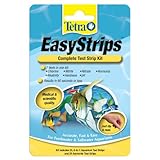
3. Tetra EasyStrips 6-in-1 Aquarium Test Strips
Tetra EasyStrips 6-in-1 Test Strips occupy the budget and convenience tier of aquarium testing, and they serve that role genuinely well for routine freshwater monitoring. A single strip dipped in tank water for one second and held horizontally for 60 seconds produces color readings for six parameters: nitrate, nitrite, hardness, chlorine, alkalinity, and pH. No mixing, no waiting through multiple reagent steps, no measuring — just dip, wait, and compare. For established freshwater tanks with stable parameters, where you’re simply checking that everything is within normal ranges rather than troubleshooting a crisis, this level of accuracy is often sufficient. Tetra has improved strip accuracy significantly in recent years, and while they still can’t match liquid reagent kits for precise readings, they’re adequate for detecting obvious parameter problems. The 100-strip count makes the per-test cost extremely low, and the color chart on the bottle is easy to read. Strips are particularly useful for quick checks after water changes, before adding new fish, or during vacation monitoring. They are not appropriate for cycling a new tank, diagnosing specific water quality problems, or any reef tank application — for those situations, liquid reagent kits are essential.
- Pros: Extremely fast and convenient, tests 6 parameters simultaneously, very low cost per test, good for routine checks in established tanks
- Cons: Less accurate than liquid reagent kits, not suitable for reef tanks or cycling, color interpretation can be ambiguous at borderline values
Buyer’s Guide: Aquarium Test Kits
Which parameters should you test? For freshwater fish tanks, the essential parameters are ammonia, nitrite, nitrate, and pH. For planted tanks, add CO2 or KH testing. For saltwater FOWLR tanks, add specific gravity (salinity). For reef tanks, all of the above plus alkalinity, calcium, and magnesium are required for coral health.
How often should you test? During the nitrogen cycle of a new tank, test ammonia and nitrite daily. For established tanks, weekly testing of ammonia, nitrite, nitrate, and pH is standard. Reef tank parameters (alkalinity, calcium, magnesium) should be tested weekly or more frequently when adjusting a dosing regimen.
Test kit expiration matters: Liquid reagents degrade over time, especially once opened. Most kits have a 2–3 year shelf life when unopened but should be used within 6–12 months of opening for best accuracy. Note the expiration date on your kit and replace it if readings seem inconsistent with your tank’s history or livestock behavior.
Verifying accuracy with reference solutions: If you suspect your test kit is giving inaccurate readings, purchase a prepared reference solution with known parameter values and test it. Significant deviation from the reference value indicates the kit needs replacement. This is particularly important for reef tank parameters where small errors can lead to costly dosing mistakes.
FAQ
Why does my ammonia test read positive even with no fish in the tank? Some tap water sources contain chloramines — a combination of chlorine and ammonia — that standard dechlorinators break into ammonia that registers on tests. Use a dechlorinator that neutralizes ammonia (like Seachem Prime) and your reading should drop. If it persists, test your tap water directly to confirm the source.
What is the ideal pH for a freshwater aquarium? Most freshwater community fish thrive at pH 6.8–7.6. Specific species have preferences — African cichlids prefer 7.8–8.5, while soft water species like discus prefer 6.0–7.0. Always research the preferred range of your specific fish and aim to match it consistently rather than chasing a “perfect” number.
Can I use a freshwater test kit for a saltwater tank? Yes for ammonia, nitrite, nitrate, and pH tests — these reagents work in saltwater. However, saltwater-specific tests for salinity, alkalinity, calcium, and magnesium require dedicated reef test kits. Never use freshwater hardness strips in a reef tank as they’re calibrated for different mineral compositions.
Final Verdict
The API Master Test Kit is the best overall choice for freshwater hobbyists and saltwater beginners, delivering accurate liquid reagent testing for core nitrogen cycle parameters at an unbeatable cost per test. The Salifert Reef Test Combo Kit is essential for reef keepers who demand precision for the critical parameters that determine coral health and calcification. Tetra EasyStrips 6-in-1 serves as the ideal quick-check tool for established freshwater tanks where speed matters more than laboratory precision. Build your research regimen around the kit that matches your tank type and testing frequency for reliable, actionable water quality data.
Frequently Asked Questions
Which water parameters actually need testing?
Ammonia, nitrite, nitrate and pH cover the essentials for any freshwater tank. Planted tanks add KH and GH, and reef tanks add salinity, alkalinity, calcium, magnesium and phosphate. Ammonia and nitrite should read zero in an established tank; anything above zero means the biological filter is not keeping up with the bioload.
Are liquid test kits more accurate than strips?
Yes. Test strips are quick but have wide color bands and degrade rapidly once the bottle is opened, particularly the nitrite and nitrate pads. Liquid reagent kits resolve smaller increments and last longer, though they still expire. Always check the expiration code, and shake the nitrate second bottle vigorously for a full minute or results read falsely low.
How often should I test the water?
Test daily while cycling a new tank, since ammonia and nitrite change fast. Once established, weekly nitrate and pH before the water change is enough, plus ammonia any time fish look off, after adding new stock, or after a filter cleaning. Reef tanks with stony corals should track alkalinity two or three times a week.
My tank is cycled but nitrate keeps climbing. What now?
Rising nitrate is normal; it is the end product of the nitrogen cycle and only water changes, live plants or a dedicated denitrator remove it. Aim to keep it under 40 ppm in freshwater community tanks and under 10 ppm in reef tanks. A larger or more frequent water change is the simplest fix, alongside less feeding.
Why does my pH reading differ from tap water?
Tap water is often supersaturated with carbon dioxide from pressurized pipes, which suppresses pH. Let a sample sit out or aerate it for 24 hours and retest; the pH usually rises. Tank pH also drifts down over time as nitrification produces acid and KH gets consumed, which is why testing KH tells you whether your pH is stable or about to crash.
Related Reviews & Guides


Best Energy Efficient Pond Aerator: Top Smart Buying Guide
11 Best Aquarium Thermometers for Accurate Readings