Last Updated: October 21, 2026
The best rodi system for a 125 gallon tank is not chosen from the tank’s gallons; it is chosen from how much water you make at once and how long you can wait. A 25-gallon change on a 150 GPD unit takes about four hours, so the production window drives the pick.
As an Amazon Associate we earn from qualifying purchases.
By David Nguyen
How to Choose an RODI System for a 125 Gallon Tank
Display volume is context, not the equation, so start from a realistic change size and the hours you can give it. A 25-gallon batch is a sensible planning unit for a 125-gallon system; match that to a rated hourly output, confirm feed pressure, and let stage count follow your tap chemistry.
Size by Production Window, Not Gallons
A 125-gallon tank does not call for a 125 or 150 GPD unit; those numbers measure daily output, not tank size. The useful question is how long a typical change takes: at 150 GPD you make about 6.25 gallons an hour, so a 25-gallon batch finishes in roughly four hours, an easy overnight or afternoon fill.
The same 25-gallon batch on a 100 GPD unit, at about 4.17 gallons an hour, runs closer to six hours. That is 50 percent longer for a fixed batch, which is the correct way to state it, not that 150 GPD is 50 percent faster, since rate and batch time move by different percentages entirely.
Feed Pressure Before Output
Rated GPD assumes a pressure the membrane rarely sees on weak plumbing. The 150 GPD builds want 65 PSI minimum, while the BRS 100 accepts 50 PSI, so on a soft line the slower unit may deliver closer to its rating than a starved 150 would. Measure your pressure before shopping on output alone.
Below the rated minimum, real output falls and reject water climbs, so a booster becomes a fix for pressure rather than for speed. On a large tank that batches often, a membrane running at proper pressure is worth more than a bigger number that never quite reaches its rating in practice.
Reject Ratio Over Frequent Changes
A 125-gallon system runs a lot of water through the year, so the reject ratio compounds. At 1.5:1 a 25-gallon batch sends about 37 gallons to drain; at 3:1 the same batch wastes roughly 75, a meaningful utility difference once you multiply it across the regular changes a big tank demands.
Published ratios assume set pressure, temperature and inlet TDS and are not directly comparable across brands, so treat them as rated guides only. Capturing reject for other uses matters more here than on a nano, simply because the absolute volumes involved are so much larger every week.
Stage Count for Your Tap
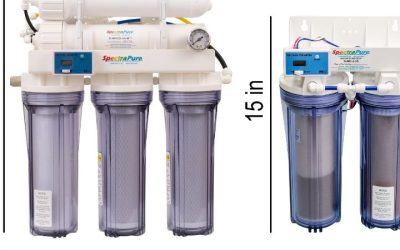
Match stages to water chemistry rather than to tank size. Chloraminated municipal water needs the dual-carbon pretreatment on the Premium Plus builds, while a low-chlorine supply can run Value Plus stages; on a high-volume system, correct pretreatment keeps DI resin from exhausting prematurely.
That recurring media cost is the real ownership expense on a large tank: sediment, carbon, DI resin and a TDS meter to time replacements. Buying pretreatment for your actual source water, not for a stage-count bragging point, is how you keep those refills on a sane and predictable schedule.
Top Picks
For 65-plus PSI plumbing on chloraminated water, one unit does earn a conditional overall nod; on softer pressure or cleaner water the ranking shifts. The picks below lead with that condition, then fan out by pressure and chemistry, so read each row against your own line and tap, not as a fixed order.
| Product | Best For | Key Spec | Watch Out For |
|---|---|---|---|
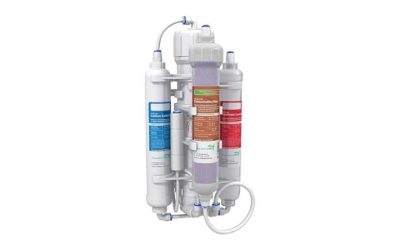
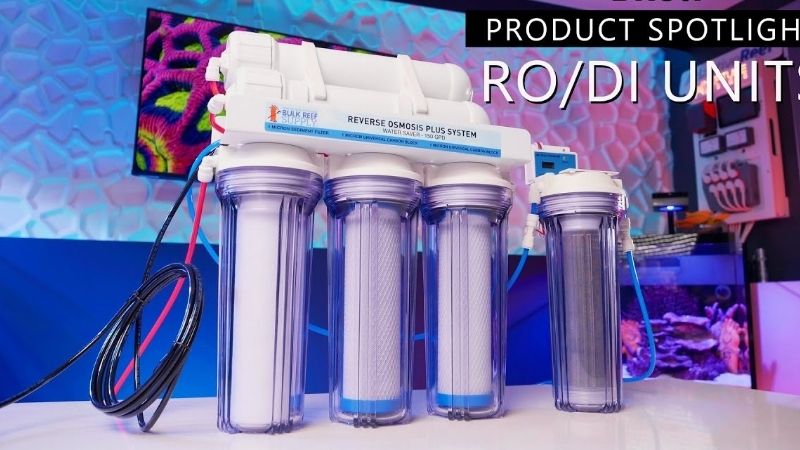
| BRS 5 Stage Premium Plus 150 | Best overall for 65+ PSI chloramine water | 150 GPD, 1.5:1, dual carbon | Needs 65 PSI; ~under $350 |
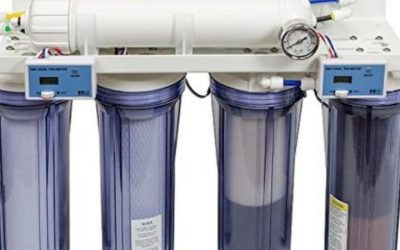
| BRS 4 Stage Value Plus 150 | Fast output on low-chlorine water | 150 GPD, 1.5:1, ~under $300 | No chloramine carbon; 65 PSI |
| BRS 5 Stage Premium Plus 100 | Lower feed pressure (50 PSI) | 100 GPD, 3:1, dual carbon | 3:1 waste; ~6 h per 25 gal |
| AquaFX Whale Shark WS-CC 100 | Lowest reject water | True 1:1, 100 GPD | Wait-list; ~under $400 |
BRS 5 Stage Premium Plus 150
On strong, chloraminated plumbing the BRS 5 Stage Premium Plus 150 is the conditional overall pick for a 125-gallon tank, pairing 150 GPD and a 1.5:1 ratio with dual-carbon pretreatment for around $325 as of 09/28/2026. It clears a 25-gallon batch in about four hours while protecting the membrane from chloramine.
The condition is real: it needs 65 PSI minimum, so weak plumbing undercuts both its speed and its ratio and may require a booster. It is the strongest all-round choice only when your water is chloraminated and your pressure comfortably clears that threshold, so confirm the line first.
BRS 4 Stage Value Plus 150
If your supply is low in chlorine, the BRS 4 Stage Value Plus 150 delivers the same 150 GPD and 1.5:1 ratio for around $300 as of 09/28/2026, roughly eighteen dollars less by dropping chloramine carbon. On the right water it matches the premium unit’s four-hour batch without paying for pretreatment you never use.
Its limit is exactly that missing carbon: on chloraminated water it will chew through DI resin very quickly, so it is not a safe pick there. It also wants 65 PSI, so confirm your line pressure before counting on the fast batch time this class is actually bought for on a large system.
BRS 5 Stage Premium Plus 100
For softer plumbing, the BRS 5 Stage Premium Plus 100 drops the minimum to 50 PSI and keeps dual-carbon pretreatment, around $300 as of 09/28/2026. On a line that cannot sustain 65 PSI, this unit often delivers closer to its rating than a starved 150 would, which is the whole reason to choose it here.
The trade-offs are speed and waste: a 25-gallon batch takes about six hours, and the 3:1 ratio sends roughly 75 gallons to drain per batch. On a high-volume tank that is a lot of water, so this pick makes sense mainly when pressure, rather than patience, is your real limiting constraint.
AquaFX Whale Shark WS-CC 100
Where metered water makes waste the priority, the AquaFX Whale Shark’s true 1:1 ratio halves reject against a 1.5:1 build, at 100 GPD and around $400 as of 09/28/2026. Across the frequent changes a 125-gallon tank demands, that saved water adds up faster than on any small system you could run.
It is the priciest option and is frequently wait-listed, and its ratio assumes 65 PSI, 77 degrees and 250 ppm inlet. At 100 GPD a 25-gallon batch also takes about six hours, so you trade batch speed for the lowest running water cost in the group, which is the trade this unit is built around.
Frequently Asked Questions
Owners of large tanks tend to ask about speed, sizing shortcuts and pressure, so the answers below put hours and gallons on each. They cover the 100-versus-150 decision, why tank gallons are not the sizing number, whether a booster helps, and how the reject ratio scales on a system this size.
Is 100 or 150 GPD Better for a 125 Gallon Tank?
It depends on how long your changes can take. A 25-gallon batch runs about four hours at 150 GPD and about six at 100 GPD, so the 150 saves you roughly two hours per change if your pressure supports it. The 100 GPD unit is the pick only when your line cannot sustain 65 PSI reliably.
Frame the gap as batch time, not headline speed: the 100 GPD batch is about 50 percent longer, which is not the same as the 150 being 50 percent faster. On chloraminated water the faster 150 also needs the dual-carbon build to protect its membrane and DI resin from premature failure.
Does a 125 Gallon Tank Need a 150 GPD System?
No; the tank’s gallons and the unit’s daily rating are unrelated numbers. Sizing follows your change size and the hours you can allow, so a 100 GPD unit is perfectly capable if a six-hour batch fits your routine. The display volume is context here, not the sizing equation itself.
What actually caps real output is feed pressure and inlet water chemistry, not the tank size. A well-fed 100 GPD build at proper pressure can outperform a pressure-starved 150, so measure your line pressure before assuming the bigger number is required for a tank of this volume at all.
Will a Booster Pump Speed Up Water-Making?
Only indirectly. A booster restores output when feed pressure sits below the membrane’s rated minimum, so on a weak line it can bring a 150 GPD unit back toward its four-hour batch. It does not push a properly fed membrane past its rating, no matter how large the tank size involved.
The cost is a motor that draws continuous current, adds heat and vibration, and needs isolation from resonant surfaces. On adequate pressure a booster buys nothing, so verify your PSI first and add one only if the measurement shows you are genuinely below the threshold your unit requires.
How Much Water Will It Waste per Change?
That scales directly with the reject ratio. A 25-gallon batch sends about 37 gallons to drain at 1.5:1 and roughly 75 gallons at 3:1, and a 125-gallon tank runs many such batches across a year, so the ratio that you choose compounds into a real, metered utility cost over the seasons.
Rated ratios assume set pressure, temperature and inlet TDS, so cold or dirty water pushes real reject higher. Capturing that water for irrigation or cleaning recovers a large share on a system this size, where the absolute volumes going to drain each year are genuinely substantial.
Final Thoughts
For a 125 gallon tank, size the rodi system to a 25-gallon window rather than the tank’s label: about four hours at 150 GPD, six at 100, with feed pressure deciding whether either hits rating. Match stages to your tap, budget for DI resin, and capture reject water, since a big tank multiplies every wasted gallon.

Best Aquarium Water Change Pumps for Effortless Cleaning and Maintenance: Top P
6 Best Aquarium Fish Nets 2026