Last Updated: October 21, 2026
The best rodi system for freshwater tanks is only useful if you rebuild what it strips out. RO/DI hands you consistent near-zero water, and a remineralizer such as Seachem Replenish restores general hardness, about 2.8 dGH per 5 mL in 10 gallons, so fish and shrimp get the stable chemistry they need.
As an Amazon Associate we earn from qualifying purchases.
By David Nguyen
How to Choose an RODI System for Freshwater Tanks
Freshwater tanks benefit from RO/DI when tap water is inconsistent or unsuitable, but pure water is a starting point, not the finish. Choose a unit that reliably delivers near-zero TDS at your pressure, match pretreatment to your tap, then plan a safe remineralization routine sized to your livestock.
When Freshwater Benefits From RO/DI
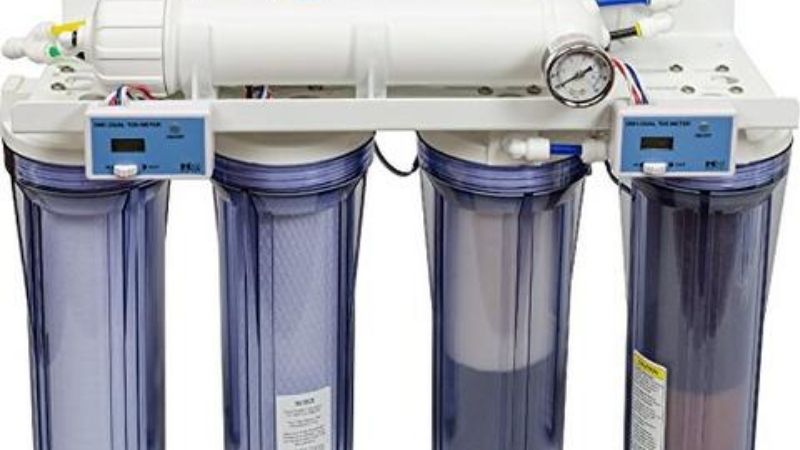
RO/DI earns its place on freshwater when your tap swings seasonally, runs very hard, or carries contaminants you would rather strip and rebuild. For soft-water species and sensitive shrimp, a repeatable near-zero base lets you set hardness on purpose instead of inheriting whatever the municipal supply delivers weekly.
If your tap is already stable and moderately soft, many community tanks do fine on it with a conditioner, so RO/DI is optional rather than mandatory. The deciding factor is consistency: when you need identical water every change, a membrane plus remineralizer beats chasing a moving tap-water target.
Rebuild Minerals Safely With Replenish
Remineralization is a measured step, not an afterthought. By its label, Seachem Replenish raises general hardness about 2.8 dGH per 5 mL in 10 gallons, so 10 mL in 20 gallons adds roughly 2.8 dGH and 20 mL about 5.6 dGH, letting you reach a chosen target for your fish or shrimp reliably.
Do not run long-term zero-mineral water in a general freshwater tank, since fish and invertebrates need dissolved minerals for health. Match the dose to your livestock, since requirements vary, and note that Replenish is aimed at general freshwater rather than planted tanks, where Seachem points keepers to Equilibrium.
Match Pretreatment to Your Tap
Stage count should follow your disinfectant rather than the freshwater label. Chloramine needs dual-carbon pretreatment, while low-chlorine water runs on lighter stages; the wrong carbon lets chloramine strip DI resin quickly and quietly raises the recurring media cost that dominates RO/DI ownership over time.
That recurring spend, meaning sediment, carbon, DI resin and a TDS meter to time swaps, usually outweighs the purchase price across a couple of years. Testing for chloramine first, since it is common and tasteless, is the cheapest way to keep DI replacements on a predictable and affordable schedule.
Output and Value for Your Routine
Freshwater routines are often steady and modest, so size output to your batch, not the tank’s gallons. Stepping from a 75 to a 100 GPD Value unit costs only about $9, near 5 percent, while raising rated output by a third, which is genuine value for anyone who occasionally makes larger fills.
Do not read that output bump as a proportional value jump, since the extra GPD only shortens fill time on a passive build. Pressure still decides whether either reaches its rating, so measure your line first and choose the tier that clears your batch without forcing a booster you did not plan for.
Top Picks
For freshwater the right unit depends on your tap and livestock rather than one winner, so the order below is conditional and pairs each membrane with the remineralizer that finishes the job. Match a row to your own water and hardness target instead of reading it as a fixed overall ranking.
| Product | Best For | Key Spec | Watch Out For |
|---|---|---|---|
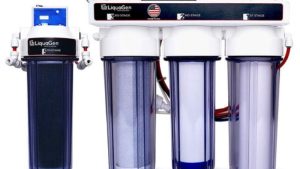
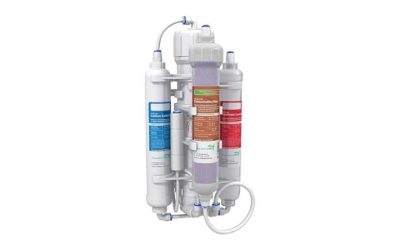
| BRS 4 Stage Value Plus 100 | Low-chlorine water, monitored | 100 GPD, 1.5:1, TDS+PSI+flush | No chloramine carbon; ~under $250 |
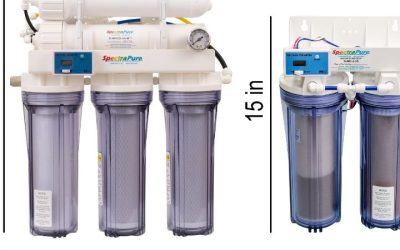
| BRS 4 Stage Value Plus 75 | Tighter budget, smaller tanks | 75 GPD, TDS+PSI+flush, 50 PSI | No chloramine carbon; ~under $250 |
| BRS 5 Stage Premium Plus 75 | Chloramine water, protected DI | 75 GPD, dual carbon, 50 PSI | 3:1 waste; ~under $250 |
| Seachem Replenish | Rebuilding GH for fish and shrimp | ~2.8 dGH per 5 mL in 10 gal | Not for planted tanks; GH only |
BRS 4 Stage Value Plus 100
For most freshwater keepers on low-chlorine water, the BRS 4 Stage Value Plus 100 is the balanced pick at around $225 as of 09/28/2026, pairing a 1.5:1 ratio and 100 GPD with a TDS meter, pressure gauge and flush valve. The gauges make repeatable water genuinely repeatable across every change.
It costs only about $9 more than the 75 GPD version while raising output by a third, so it is the value sweet spot for routines with larger fills. It omits chloramine carbon, though, so confirm your disinfectant first, and remember to pair it with a remineralizer since it delivers only the blank starting water.
BRS 4 Stage Value Plus 75
On a tighter budget or a smaller tank, the BRS 4 Stage Value Plus 75 keeps the same monitoring for around $225 as of 09/28/2026, running from 50 PSI with a TDS meter, pressure gauge and flush valve. For steady, modest freshwater changes its 75 GPD output is entirely sufficient.
Stepping up to the 100 GPD version costs only about $9, so choose the 75 only if your changes stay small. Like the other Value builds it lacks chloramine carbon, so it is the wrong pick on chloraminated water; on the right supply it is a well-monitored, economical base for freshwater remineralization.
BRS 5 Stage Premium Plus 75
Where the tap is chloraminated, the BRS 5 Stage Premium Plus 75 adds dual-carbon pretreatment for around $250 as of 09/28/2026, protecting the membrane and DI resin on demanding municipal water. That keeps zero-TDS batches consistent for freshwater even when your supply carries chloramine year round.
Its drawback is a 3:1 reject ratio, sending about thirty gallons to drain per ten produced, the most wasteful of these builds. That is manageable on modest freshwater changes, and capturing the reject for other uses helps, but on chloramine-free water the leaner four-stage unit saves both money and waste.
Seachem Replenish
Replenish is the step that makes RO/DI safe for freshwater fish and shrimp, raising general hardness about 2.8 dGH per 5 mL in 10 gallons, so 20 mL in 20 gallons adds roughly 5.6 dGH by linear dosing. That lets you set a target on purpose rather than returning stripped water to livestock that needs minerals.
Its limit is scope and fit: it rebuilds general hardness only, and Seachem aims it at general freshwater rather than planted tanks, which are pointed to Equilibrium instead. Dose it to your livestock’s needs rather than a fixed number, and never leave a general tank on long-term zero-mineral water.
Frequently Asked Questions
Freshwater keepers usually ask whether they need RO/DI at all, how much remineralizer to add, and whether output tiers are worth the money. The answers below attach dosing and price numbers to each, so you can build a stable water routine instead of guessing at hardness or overpaying for capacity.
Do Freshwater Tanks Need RO/DI?
Only when your tap is inconsistent or unsuitable. Stable, moderately soft tap water suits many community tanks with a conditioner, so RO/DI is optional there; it becomes valuable when your supply swings seasonally, runs very hard, or when you keep soft-water species and sensitive shrimp that need controlled hardness.
The trade-off is remineralization, since pure water cannot go straight to fish. If you adopt RO/DI, plan a measured GH rebuild from the start, because long-term zero-mineral water stresses freshwater livestock rather than helping it, no matter how clean the starting water looks on a TDS meter.
How Much Replenish Raises 20 Gallons?
By its label, about 10 mL of Seachem Replenish raises general hardness roughly 2.8 dGH in 20 gallons, and about 20 mL roughly 5.6 dGH by linear dosing. Measuring the dose rather than eyeballing it keeps your hardness consistent from one water change to the next across the whole tank.
Because dosing scales linearly, you can size it to any batch and any target within reason for your livestock. Adjust over a few changes to what your fish or shrimp actually prefer, and remember Replenish sets general hardness only, so carbonate hardness stays a separate decision you manage on its own.
Is 100 GPD Worth It Over 75?
Often yes, because the step is so cheap. The 100 GPD Value unit costs only about $9, near 5 percent, over the 75 GPD version while raising rated output by a full third, so it pays off for anyone who occasionally makes larger fills or expects to add more tanks to the routine later on.
Do not read the output bump as a proportional value or quality jump, since it only shortens fill time on a passive build. If your changes stay small and your budget is tight, the 75 GPD unit is perfectly adequate; the 100 is simply inexpensive insurance for a slightly busier routine.
Can I Use Replenish in a Planted Tank?
It is not the intended fit. Seachem aims Replenish at general freshwater and points planted tanks to Equilibrium, which is formulated for the mineral profile plants prefer, so a heavily planted aquascape is better served by the planted-specific remineralizer rather than the general one.
For a lightly planted community tank with fish as the priority, Replenish can still work as a general GH source. Once plants become the focus, though, switching to Equilibrium gives a more suitable balance, and either way you dose to your tank’s measured needs rather than to a single fixed figure.
Final Thoughts
A freshwater rodi system is two decisions working together: a membrane that makes near-zero water at your pressure, and a safe rebuild with something like Replenish, about 2.8 dGH per 5 mL in 10 gallons. Match pretreatment to your tap, never leave livestock on zero-mineral water, and choose output by real batch size.
How to Choose RODI System: Best-Rated Guide for Beginners
Best Python Water Changer Alternative: Top Top Picks