Last Updated: October 4, 2026
- Top Pick: API Freshwater Master Test Kit 800-Test Freshwater Aquarium Water Kit, White, Single, Multi-Colored
- Best Value: Hot Spring Freshwater Spa Test Strips
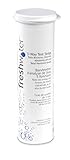
- Premium Choice: AAwipes 8-in-1 Aquarium Test Kit for Fish Tanks – Quick & Accurate Water Testing Strips for Aquariums & Ponds. Tests pH, Ammonia, Alkalinity, Hardness, Chlorine, etc. (K02-50)
Choosing a freshwater test kit is less about buying the package with the largest number of tests and more about matching the kit to your aquarium, testing routine, and comfort level. Many beginners make the same mistakes: they buy spa strips for a fish tank, choose strips that do not measure ammonia, assume “11-in-1” automatically means better, or compare prices without checking the number of usable tests.
Another common error is focusing on accuracy claims without considering expiration dates, storage, color readability, or whether the kit measures the parameters that actually affect freshwater fish. A $10 strip kit can be useful for regular screening, while a $36 liquid kit may be a better choice for cycling a new aquarium or investigating sick fish. The best answer to “how to choose freshwater test kit” depends on what you need to test and how often you will test it.
As an Amazon Associate we earn from qualifying purchases at no extra cost to you.



Use the guide below to compare test format, coverage, quantity, storage, and total value before buying in 2026.
Decide These 3 Things First
- Choose the water type. Aquarium and pond test kits are designed for freshwater tanks and outdoor ponds. Hot tub or spa strips are not a substitute for aquarium tests because they may prioritize sanitizer, calcium, or spa-specific readings rather than fish-critical parameters.
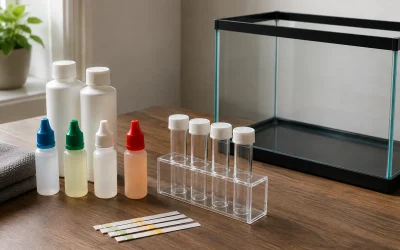
- Choose the testing method. Liquid reagent kits generally involve adding drops to a water sample and comparing the result with a color chart. Test strips require dipping, waiting, and matching several color pads. Strips are faster; liquid kits usually offer more control when a reading is close to a danger range.
- Choose the parameters you actually need. For most freshwater aquariums, pH, ammonia, nitrite, and nitrate are the essential starting group. Hardness, alkalinity, chlorine, and copper can also matter, particularly with tap water, shrimp, live plants, or specialized fish.
If you are establishing a new tank, prioritize ammonia and nitrite. If the aquarium is mature and stable, nitrate, pH, and periodic hardness or alkalinity checks may be more relevant. A kit with eight or 11 tests is not automatically useful if it leaves out ammonia or provides readings you will never interpret.
Size and Test Quantity
Test quantity includes both the number of tests advertised and the number of tests for each parameter. A kit labeled for 800 tests may not provide 800 tests for every reading. Liquid kits often contain separate bottles with different test capacities, while strip kits may count each strip as one complete multi-parameter test.
For a single 10- to 30-gallon aquarium, a kit offering 50 to 100 complete tests can last several months or longer. A freshwater strip kit with 50 strips may be adequate for routine weekly checks. A 150-strip kit can make more sense for multiple tanks, a new aquarium, or a hobbyist who tests after water changes.
Liquid kits are usually more compact than their test count suggests, but they require a test tube, bottle storage, and a color chart. Check the package dimensions if cabinet space is limited. A practical aquarium kit may occupy roughly 6 to 10 inches wide by 2 to 4 inches deep, while a strip container may be closer to 1 to 2 inches in diameter and 3 to 5 inches tall.
Also check the sample volume. Many liquid tests use about 5 milliliters of aquarium water per reading. A kit that requires multiple tubes or repeated tests can use more water and take longer than a single strip.
Materials and Reagent Quality
Most test strips use paper or polymer-backed pads treated with dry reagents. The outer container should close tightly because humidity can activate or degrade the pads. Look for a screw-top or snap-top container with a desiccant packet, and avoid products where strips are loose in a thin, poorly sealed bag.
Liquid kits typically include plastic test tubes, caps, a dropper bottle, and a printed color chart. Transparent tubes are important because they let you compare the sample evenly against the chart. Bottles should have clearly marked caps and labels that identify the parameter, dosage, and expiration information.
Material quality does not guarantee a correct reading. Clean test tubes matter just as much. Soap residue, old aquarium water, wet fingers, or a damp strip container can affect the process. Rinse tubes with aquarium water before testing, but do not wash them with household detergent.
For chlorine testing, verify that the kit is intended for freshwater aquarium or tap-water use. Chlorine and chloramine are not always addressed in the same way, and a general multi-test strip may not provide enough detail for troubleshooting treated municipal water.
Construction and Ease of Use
A well-constructed kit reduces opportunities for user error. Liquid kits should have bottles that dispense one drop at a time rather than dribbling. Test tubes should stand upright, hold at least 5 milliliters, and include caps if the instructions require shaking. A wide color chart with distinct increments is easier to read than tiny color blocks packed into a small foldout.
Strips should have enough spacing between pads to prevent colors from bleeding into one another. A typical strip may measure about 2 to 3 inches long and include four to 11 test areas. More pads provide more information, but they also make timing and color matching harder.
Read the instructions for timing. Some strips require a reading after 30 to 60 seconds, while others use different wait times for different pads. Liquid tests may require shaking for 5 to 15 seconds and waiting several minutes. A kit that takes two minutes per test may be fine for monthly checks but inconvenient for daily cycling tests.
Choose a format you will use consistently. A theoretically more comprehensive kit is poor value if it stays unopened in a drawer.
Comfort and Testing Performance
Testing performance is about clarity, repeatability, and useful ranges—not marketing language such as “professional grade” or “instant accurate.” Look for a pH range appropriate to freshwater aquariums, commonly around pH 6.0 to 9.0. A narrow range may offer more useful color separation in a specific environment, while a broad range is convenient for general screening.
For a new aquarium, the kit should measure ammonia and nitrite across low concentrations. These readings can change quickly during cycling, so a color chart with small increments near zero is more useful than one with only broad categories. Nitrate testing is also important because it indicates the buildup of dissolved waste in an established tank.
Strips are comfortable for quick checks because they require no measuring or liquid handling. They are especially convenient for owners with multiple aquariums or those who dislike cleaning test tubes. Liquid kits take more effort but can be easier to interpret when a strip color falls between two blocks.
If you have limited vision or difficulty distinguishing colors, look for large-print charts, clear numerical ranges, or a compatible digital reader. Do not rely on a color kit that you cannot confidently read.
Price Tiers and Cost per Test
Freshwater test kits generally fall into three practical price tiers:
- Budget: $8 to $15. Usually a small strip pack with five to eight parameters and about 25 to 100 total strips. These are suitable for quick screening, but verify that ammonia is included if you are cycling a tank.
- Mid-range: $16 to $30. Often includes 50 to 150 multi-parameter strips or a more complete liquid-and-strip combination. This tier can be a good match for one or two aquariums.
- Premium: $31 to $50 or more. Commonly includes liquid reagents, test tubes, a color card, and enough supplies for several hundred individual parameter tests. These kits are useful for new tanks, breeding projects, or owners who want more detailed follow-up testing.
For comparison, an AAwipes 8-in-1 strip kit is listed around $10, while an 11-in-1 kit with 150 strips and 50 ammonia strips is listed around $25. The API Freshwater Master Test Kit is listed around $35 and uses a liquid-reagent format. Those prices illustrate the difference between low-cost screening strips and a larger liquid test system; they do not prove that one format is best for every aquarium.
Calculate cost per complete test, not just the sticker price. A $20 pack with 150 strips costs about $0.13 per complete strip test. A liquid kit advertised as 800 tests may have different capacities for pH, ammonia, nitrite, and nitrate, so inspect the individual bottle counts before comparing it with strips.
Warranty, Expiration, and Storage
Test kits contain consumable reagents, so warranty coverage is less important than freshness and replacement availability. Check for an expiration date, lot number, or manufacturing information. Avoid a kit with missing date information, especially when buying from a marketplace seller with uncertain inventory turnover.
Most strips should be stored tightly sealed in a cool, dry location. Do not keep them in a humid bathroom, beside an aquarium filter, or above a radiator. Liquid bottles should remain capped and stored according to the label. A kit that lasts 12 to 24 months when properly stored may be more economical than a larger package that expires before you use it.
A manufacturer or retailer return policy is useful if bottles arrive leaking, strips are discolored, or the package is already expired. Because reagents are consumables, confirm whether opened kits can be returned.
Delivery and Storage Setup
There is no furniture-style assembly for an aquarium test kit, but packaging and setup still matter. A liquid kit should arrive with bottles upright, sealed, and separated from the test tubes and printed chart. If a bottle leaks in transit, the entire kit may be difficult to trust.
Before your first test, organize the components in a small tray or lidded box. Keep the color chart flat and dry. Label the test tubes if they are identical, and record results with the date, tank size, and recent water-change information.
For mail-order purchases, inspect the expiration date immediately. During hot weather, avoid leaving the kit in direct sun or a vehicle for hours. Strips are especially vulnerable to humidity after delivery, so close the container as soon as you remove one.
Spec Checklist
| Spec | Budget | Mid | Premium |
|---|---|---|---|
| Typical price | $8–$15 | $16–$30 | $31–$50+ |
| Format | Strips | Strips or combination | Liquid reagents |
| Complete tests | 25–100 | 50–150 | Several hundred individual parameter tests |
| Essential coverage | Check for pH, ammonia, nitrite, nitrate | Usually broader coverage | Typically focused freshwater coverage |
| Time per test | About 1–2 minutes | About 1–5 minutes | About 3–10 minutes |
| Storage footprint | About 1–2 inches wide | About 2–4 inches wide | About 6–10 inches wide |
Red Flags
- The product is labeled for hot tubs, spas, or pools but not freshwater aquariums.
- The kit lists many parameters but omits ammonia, nitrite, or nitrate.
- The package does not show an expiration date, lot number, or storage instructions.
- All strips are loose in a nonresealable bag.
- The color chart is too small to read or uses vague labels without numerical ranges.
- The listing counts “tests” without explaining whether that means individual pads, strips, or reagent drops.
- Price is dramatically lower than comparable kits and the seller provides no information about freshness.
- The instructions do not specify sample volume, dipping time, wait time, or reading time.
FAQ
Are freshwater test strips accurate enough?
They can be useful for routine screening when stored correctly and read within the stated time. Liquid reagents are often preferable when cycling a new tank or investigating a serious water-quality problem because they allow more controlled testing and may offer clearer low-range readings.
What four tests should every freshwater aquarium kit include?
pH, ammonia, nitrite, and nitrate are the essential starting points for most freshwater tanks. Hardness and alkalinity are valuable additions when you keep sensitive fish, shrimp, live plants, or species with specific water requirements.
Can I use spa test strips in a fish tank?
No. Spa strips are designed for hot-tub water and may focus on sanitizer, calcium, or other spa-related measurements. They may not test ammonia or nitrite, which are central to freshwater aquarium care.
Should I buy strips or a liquid freshwater test kit?
Buy strips for speed and convenience, especially if you want frequent general checks. Choose liquid reagents for a new aquarium, multiple cycling tests, breeding setups, or situations where a close reading matters. Some owners use strips for routine monitoring and keep a liquid kit for confirmation.
Ready to decide? Our #1 pick for 2026 is the Typical price.
Live price & availability on Amazon.
Related Reviews & Guides

Review: Fluval Flex Aquarium 15 Gallon – Is It Worth It?
How Many Fish Can You Put in a Tank?