Last Updated: October 21, 2026
The best rodi system for a 75 gallon tank is chosen from how much water you make at once, not from the tank’s label. A realistic 15-gallon change finishes in about 4.8 hours at 75 GPD, 3.6 at 100, or 2.4 at 150, so your production window drives the pick more than gallons do.
As an Amazon Associate we earn from qualifying purchases.
By David Nguyen
How to Choose an RODI System for a 75 Gallon Tank
A 75-gallon tank sits in the middle ground where 75, 100 and 150 GPD all stay reasonable, so the choice turns on batch time, pressure and tap chemistry. Use a 15-gallon change as your yardstick, confirm your feed pressure supports the rating, then let stage count follow your disinfectant type.
Size by a 15-Gallon Production Window
A 75-gallon tank does not call for a 75 GPD unit; those numbers measure daily output, not display volume. A realistic 15-gallon change takes about 4.8 hours at 75 GPD, 3.6 hours at 100 GPD, and 2.4 hours at 150 GPD, so the useful question is how long a batch can run, not the tank size.
Read the gaps by percentage carefully: 150 GPD is a 50 percent higher rate than 100 yet finishes the fixed batch only about a third sooner, and against 75 GPD its rate is doubled while the batch time is halved. Rate and time move by different percentages, so state each one on its own terms.
Feed Pressure Before Output
Rated GPD assumes a feed pressure the membrane rarely sees on weak plumbing. The 150 GPD builds want 65 PSI minimum, while the BRS 100 accepts 50 PSI, so a soft line can leave a starved 150 delivering less than a well-fed 100. Measuring your pressure before buying prevents paying for output you cannot reach.
Below the rated minimum, real output falls and reject water climbs, so a booster becomes a fix for pressure rather than a speed upgrade you chose. On a tank that batches 15 gallons at a time, a membrane fed at proper pressure is worth more than a bigger number that never quite reaches its rating.
Source Water and Stage Count
Match stages to your tap chemistry rather than to the 75-gallon figure. Chloraminated municipal water needs the dual-carbon pretreatment on the Premium Plus builds, while a low-chlorine supply runs fine on the Value Plus stages; the wrong pretreatment strips DI resin fast and raises recurring media cost.
That recurring spend, meaning sediment, carbon, DI resin and a TDS meter to time swaps, is the real ownership cost on a mid-to-large tank. Testing for chloramine before you buy, since it is common and tasteless, is the single cheapest way to keep DI replacements on a predictable and affordable schedule.
Reject Ratio Over the Year
A 75-gallon system runs many changes a year, so the reject ratio compounds into a real utility line. At 1.5:1 a 15-gallon batch sends about 22 gallons to drain; at 3:1 the same batch wastes roughly 45, a meaningful difference once multiplied across a full year of routine water changes.
Published ratios assume set pressure, temperature and inlet TDS and are not directly comparable across brands, so treat them as rated guides only. Capturing reject water for irrigation or cleaning recovers a large share, which matters more here than on a nano because the absolute volumes are larger.
Top Picks
On a 75-gallon tank the right unit depends on your pressure and tap rather than a single winner, so the order below is conditional. Each row names the source water or pressure it suits and flags availability where it matters, so match a row to your own line instead of reading it as a fixed ranking.
| Product | Best For | Key Spec | Watch Out For |
|---|---|---|---|
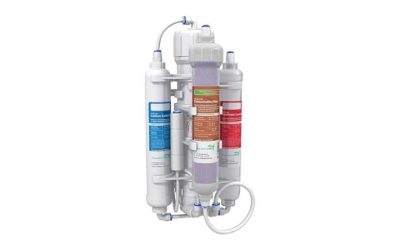
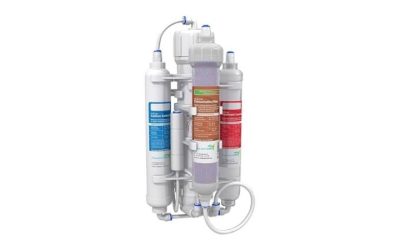
| BRS 5 Stage Premium Plus 150 | Fast batches on chloramine, 65+ PSI | 150 GPD, 1.5:1, dual carbon | Needs 65 PSI; ~under $350 |
| BRS 4 Stage Value Plus 100 | Balanced output on low-chlorine water | 100 GPD, 1.5:1, TDS+PSI+flush | No chloramine carbon; ~under $250 |
| BRS 5 Stage Premium Plus 100 | Chloramine on softer pressure | 100 GPD, 3:1, dual carbon, 50 PSI | 3:1 waste; ~under $300 |
| AquaticLife Twist-In 100 | Compact install, easy service | 100 GPD, 12x4x13 in | Suggests 65 PSI; ~under $150 |
BRS 5 Stage Premium Plus 150
When your line clears 65 PSI and your tap is chloraminated, the BRS 5 Stage Premium Plus 150 clears a 15-gallon batch in about 2.4 hours with dual-carbon pretreatment, around $325 as of 09/28/2026. That extra carbon is what protects the membrane and DI resin from chloramine on demanding municipal water.
The condition is real: it needs 65 PSI minimum, so weak plumbing undercuts both its speed and its 1.5:1 ratio and may force a booster. It is the strongest choice only when pressure and chemistry both line up, so confirm your feed pressure before counting on that two-and-a-half hour fill time.
BRS 4 Stage Value Plus 100
For low-chlorine water, the BRS 4 Stage Value Plus 100 is the balanced pick at around $225 as of 09/28/2026, running a 15-gallon batch in about 3.6 hours and bundling a TDS meter, pressure gauge and flush valve. Those gauges show when the membrane or DI resin is fading before finished water quality slips.
It shares the 1.5:1 ratio but omits chloramine-grade carbon, so it is the wrong unit on chloraminated supplies. It also wants 65 PSI for full output, so a soft line may leave it short of its 100 GPD rating; on the right water, though, it is the sensible middle of this lineup for a 75-gallon routine.
BRS 5 Stage Premium Plus 100
For chloraminated tap on softer plumbing, the BRS 5 Stage Premium Plus 100 drops the minimum to 50 PSI while keeping dual-carbon pretreatment, around $300 as of 09/28/2026. On a line that cannot sustain 65 PSI, this unit often reaches closer to its rating than a starved 150 would, which is the reason to pick it.
The trade-offs are speed and waste: a 15-gallon batch takes about 3.6 hours, and the 3:1 ratio sends roughly 45 gallons to drain per batch. On a 75-gallon tank that is a lot of water over a year, so this pick makes sense mainly when pressure, rather than patience, is your real constraint.
AquaticLife Twist-In 100
When space and service matter, the AquaticLife Twist-In 100 packs into a 12 by 4 by 13 inch body and uses tool-less twist cartridges, around $150 in a recent snapshot. On a 75-gallon tank its 100 GPD output clears a 15-gallon change in about 3.6 hours while staying easy to tuck under a stand.
It suggests 65 PSI for full output, so soft plumbing may leave it well short of its rating and push you toward a booster. Its cartridge format also ties you to its own replacements, so buy it for the compact form and simple media swaps as much as for the output on a tank this size.
Frequently Asked Questions
Owners of a 75-gallon tank usually ask which output tier is worth it, how pressure factors in, and how many stages they need. The answers below attach hours and thresholds to each, so you can right-size around a 15-gallon change rather than defaulting to the largest membrane on the shelf.
Is 75, 100 or 150 GPD Best for a 75 Gallon Tank?
It depends on how long a change can take. A 15-gallon batch runs about 4.8 hours at 75 GPD, 3.6 at 100, and 2.4 at 150, so the 100 GPD tier is the comfortable middle for most routines while 150 suits frequent large changes if your pressure supports it. The 75 GPD unit fits light, patient maintenance.
Frame the difference as batch time, not headline speed: moving from 100 to 150 GPD trims only about an hour off a 15-gallon fill while raising the pressure requirement. On chloraminated water the 150 also needs the dual-carbon build, so match the tier to both your schedule and your tap chemistry.
Does a 75 Gallon Tank Need 150 GPD?
No; the tank’s gallons and the unit’s daily rating are unrelated numbers. Sizing follows your change size and available hours, so a 100 GPD unit handles a 75-gallon tank comfortably if a three-and-a-half hour batch fits your routine. Display volume is context here, not the sizing equation itself.
What actually caps output is feed pressure and inlet chemistry, not the display size. A well-fed 100 GPD build at proper pressure can outperform a pressure-starved 150, so measure your line pressure before assuming the biggest output tier is required for a tank of this size at all.
Will a Booster Pump Help on This Tank?
Only when your pressure is genuinely low. A booster restores output when feed pressure sits below the membrane’s rated minimum, so on a weak line it can bring a 150 GPD unit back toward its 2.4-hour batch. It does not push a properly fed membrane past its rating, no matter how large the tank is.
The cost is a motor that draws current, adds heat and needs isolation from resonant surfaces. On adequate pressure a booster buys nothing, so verify your PSI first and add one only if the measurement shows you are below the threshold your chosen unit actually requires for full flow.
How Much Water Will It Waste per Change?
That scales with the reject ratio. A 15-gallon batch sends about 22 gallons to drain at 1.5:1 and roughly 45 at 3:1, and a 75-gallon tank runs many such batches across a year, so the ratio you pick compounds into a real, metered utility cost over the seasons rather than a one-time figure.
Rated ratios assume set pressure, temperature and inlet TDS, so cold or dirty water pushes real reject higher than the label. Capturing that water for irrigation or cleaning recovers a large share on a tank this size, where the absolute volumes heading to drain each year are genuinely substantial.
Final Thoughts
For a 75 gallon tank, size the rodi system to a 15-gallon window rather than the tank’s label: about 4.8 hours at 75 GPD, 3.6 at 100, or 2.4 at 150, with feed pressure deciding whether any of them hits its rating. Match stages to your tap, budget for DI resin, and capture reject water across the year.
11 Best Aquarium Glass Cleaners: Magnetic Scrapers and Algae Removal Tools
Best Magnet Cleaner With Ceramic Blade: Top Compared Setups