Last Updated: October 21, 2026
The best quiet rodi system is not the one with a marketing decibel number, because none of these units publishes a verified dB figure. An RO/DI membrane is silent; the noise you hear comes from a booster pump, the drain line, and how the unit is mounted to the wall.
As an Amazon Associate we earn from qualifying purchases.
By David Nguyen
How to Choose a Quiet RODI System
Since no maker here lists a decibel rating, ranking by loudness on paper is impossible, so quiet becomes a design question. Decide whether your pressure lets you skip a booster pump, plan the drain line, and mount the unit to a surface that will not amplify vibration into the room.
Where RO/DI Noise Actually Comes From
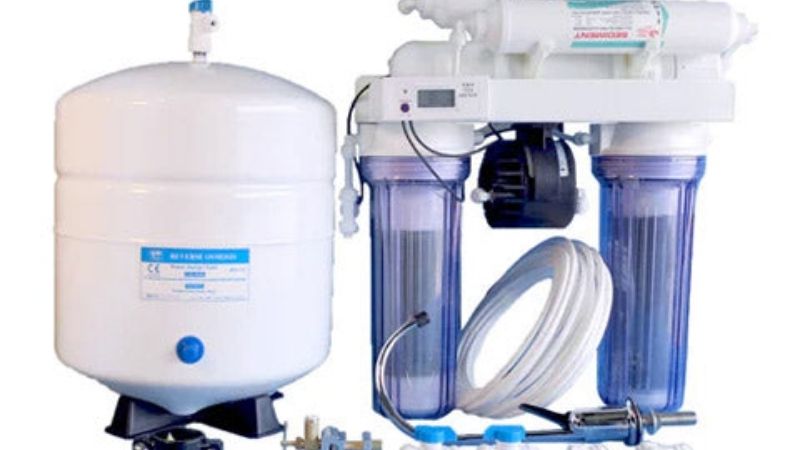
A pressure-fed RO/DI has no motor, so the filter body itself is effectively silent while making water. The audible parts are the drain flow trickling to waste and, if fitted, a booster pump, the only component with a spinning motor and therefore the main source of hum and vibration in the whole system.
Because there is no published decibel data across this set, treat any quietest label with suspicion and reason from mechanics instead. Removing the booster from the equation, where feed pressure allows, does more for silence than any published sound claim, since it deletes the one moving part entirely.
Feed Pressure and the Booster Question
Whether you need a booster is the single biggest noise variable. The BRS 75 GPD builds run on 50 to 90 PSI, and the AquaticLife Classic 100 calls for a booster below 40 PSI, so a home with strong plumbing can stay entirely passive and, in practice, nearly silent through a full fill.
If your line dips under those minimums, a booster restores output but introduces motor whine and vibration you will hear. In that case the quiet strategy shifts from avoiding the pump to isolating it, which means the mounting decision below matters far more than which membrane you chose.
Mounting and Vibration Transmission
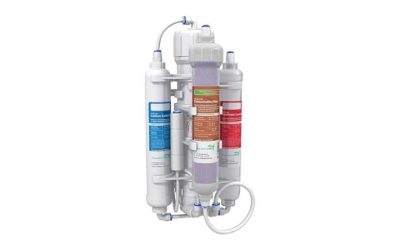
Vibration only becomes noise when it reaches a resonant surface, so how you mount the unit changes what you hear. A rigid bracket on a hollow cabinet wall turns that panel into a speaker, while a compact chassis like the AquaticLife Twist-In at 12 by 4 by 13 inches is easier to place on a damped shelf.
Rubber feet, a foam pad or a freestanding tote under the unit break the path that carries a booster’s buzz into the floor. This is the cheapest acoustic upgrade in the hobby, and it applies equally to every model here regardless of the stage count or the output rating on the box.
Output Rate Is Not an Acoustic Metric
It is easy to assume a slower unit is quieter, but production rate says nothing about sound. A 75 GPD build works out to about 3.125 gallons per hour and a 100 GPD unit to roughly 4.17, and those are throughput numbers, not decibels; a passive 100 GPD system can be as silent as a passive 75.
What changes with a higher rate is drain flow volume and, sometimes, the pressure needed to hit rated output. Choose GPD for how much water you make per session, then manage noise through the booster and mounting decisions, which are the levers that actually move the needle on sound.
Top Picks
With no verified decibel figures in this category, there is no outright quietest unit, so the picks below are framed by how easily each stays passive and how simple it is to isolate. Read every row as a setup that can run quietly, not as a lab-ranked sound score, because that data does not exist here.
| Product | Best For | Key Spec | Watch Out For |
|---|---|---|---|
| AquaticLife Twist-In 100 | Compact, easy to isolate | 100 GPD, 12x4x13 in | No maker dB spec; ~under $150 |
| BRS 4 Stage Value Plus 75 | Staying passive on 50+ PSI | 75 GPD, 50-90 PSI, TDS+PSI+flush | No dB spec; needs adequate pressure |
| BRS 5 Stage Premium Plus 75 | Chloramine feed, still passive | 75 GPD, dual carbon, 50-90 PSI | No dB spec; ~under $250 |
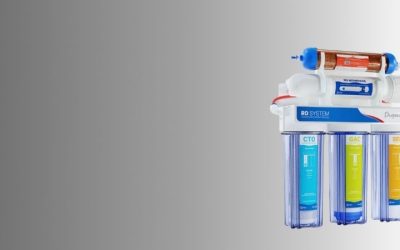
| AquaticLife Classic 100 | Low-pressure homes | 100 GPD; booster below 40 PSI | Booster adds motor noise; ~under $200 |
AquaticLife Twist-In 100
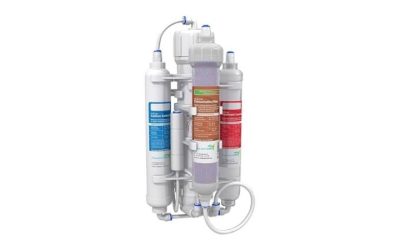
The AquaticLife Twist-In 100 earns the compact slot because its 12 by 4 by 13 inch body is easy to tuck onto a damped shelf where vibration has nowhere to resonate. At around $150 in a recent retail snapshot, it is also the cheapest way into a 100 GPD passive system, which is the quietest configuration available.
It suggests 65 PSI for full output, so weak plumbing may still need a booster and the noise that brings. Its real limitation for this search is that no maker decibel figure exists, so its quietness rests on being passive and well placed rather than on any published sound rating you can compare.
BRS 4 Stage Value Plus 75
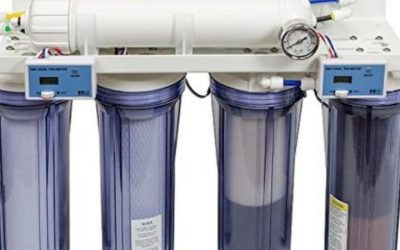
For staying passive without overspending, the BRS 4 Stage Value Plus 75 runs on 50 to 90 PSI and adds a TDS meter, pressure gauge and flush valve, around $225 as of 09/28/2026. Those gauges matter for quiet operation, because they show when a clogging membrane starts demanding more pressure than your line can give.
Its four stages target low-chlorine water, so chloraminated supplies want the Premium Plus instead. Like everything here it ships without a decibel spec, so its appeal is a wide passive pressure window that lets many homes skip the one component in the system that actually makes noise.
BRS 5 Stage Premium Plus 75
When the tap is chloraminated, the BRS 5 Stage Premium Plus 75 keeps you passive and protected, adding dual-carbon pretreatment for around $250 as of 09/28/2026 on the same 50 to 90 PSI window. Correct pretreatment also guards the membrane, so it keeps working and is less likely to push you toward a booster.
The premium buys chemistry handling, not a lower sound level, since no dB data accompanies it. Priced roughly eighteen dollars above the Value Plus 75, it is the right quiet choice specifically for chloramine, where the alternative is a shortened membrane life and eventual pressure trouble down the line.
AquaticLife Classic 100
The AquaticLife Classic 100 is the honest pick for low-pressure homes, since it explicitly calls for a booster below 40 PSI, at around $200 in a recent snapshot. That candor is useful: it tells you exactly when this unit stops being silent and starts carrying a motor you will then need to isolate carefully.
Run above 40 PSI it behaves like any passive membrane; run under it and the booster becomes the loudest thing in the room. Mount that pump on foam and route the drain to minimize splash, and even the powered configuration can be tamed to a low, steady hum rather than an intrusive rattle.
Frequently Asked Questions
The questions here keep circling one missing number, a decibel rating, so the answers reason from what actually vibrates instead. They cover whether these units are loud at all, how a booster changes things, the effect of mounting, and whether a slower membrane buys you any real silence in practice.
Are RODI Systems Loud in the First Place?
A passive one is not. With no motor, a pressure-fed RO/DI’s only sound is water moving through the drain line, which is usually a soft trickle. That is why the quietest setup is simply one that never needs a booster, achievable on the 50 to 90 PSI window these BRS units will accept.
Loudness enters with a booster pump or a poorly placed chassis that turns a cabinet into a sounding board. Neither problem is inevitable, so most complaints trace back to the pump or the mounting rather than to the filter itself, which stays quiet when it is fed and placed correctly.
How Much Noise Does a Booster Pump Add?
Enough to change the room, because it is the only motorized part in the system. There is no published decibel figure to quote, but a booster adds a continuous hum plus vibration whenever it runs, which is why the AquaticLife Classic’s under-40-PSI trigger is worth checking against your line.
If you must run one, isolation is the fix: foam feet, a rubber pad, or mounting the pump away from thin resonant panels. Booster noise is manageable, but it is real, so the first question is always whether your pressure lets you avoid a pump entirely rather than how to quiet one.
Does Mounting Really Change What I Hear?
More than the model does. Vibration turns into audible noise only when it reaches a resonant surface, so a unit hard-mounted to a hollow wall can sound far worse than the same unit on a padded shelf. A compact chassis such as the 12 by 4 by 13 inch Twist-In is easier to place well.
Rubber feet or a foam block under the unit interrupts that path for a few dollars. It is the highest-value and cheapest acoustic tweak available and works on every model here, which matters because none of these units offers a sound spec you could otherwise shop by directly instead.
Is a Lower GPD Unit Quieter?
No; output and sound are separate. A 75 GPD unit at about 3.125 gallons per hour is not inherently quieter than a 100 GPD unit at roughly 4.17, because neither number describes noise. A passive membrane of either rate is essentially silent aside from the drain flow heading to waste.
What a higher rate can change is the drain volume and the pressure needed for full output, which only indirectly touches the booster question. Pick the output rate by batch size, then let the mounting and pressure decide how quiet the finished install actually feels in a quiet room.
Final Thoughts
A quiet rodi system is built, not bought off a printed number, because none of these units carries a verified decibel rating to shop by. Confirm your feed pressure clears the membrane minimum so you can skip a booster, and if you cannot, spend on foam isolation and a clean drain run rather than a promised number.
Best Aquarium Water Conditioner for Tap Water: Buyer Guide
6 Best Freshwater Aquarium Water Test Kits 2026