Last Updated: October 4, 2026
A best 7 stage rodi filter for 0 tds water search usually means one thing: you want a zero reading at the tap and want it to last. Seven stages help by splitting deionisation into cation, anion and mixed bed, but pressure and resin condition decide the result.
As an Amazon Associate we earn from qualifying purchases.
As an Amazon Associate we earn from qualifying purchases at no extra cost to you. Prices and availability are accurate as of the date shown and are subject to change.
By David Nguyen
Quick answer: For most people in 2026, the best 7 stage rodi filter for 0 tds water is the BRS 7 Stage Pro Plus 75 — our #1 rated choice. See the full ranked comparison, alternatives and buying advice below.
How to Choose a 7 Stage RO/DI System
Stage count alone tells you little, since manufacturers count stages differently. What matters is how deionisation is split, what output you need, whether your pressure supports it, and how much water goes down the drain per gallon produced. Seven stages arranged well beats seven stages counted creatively.
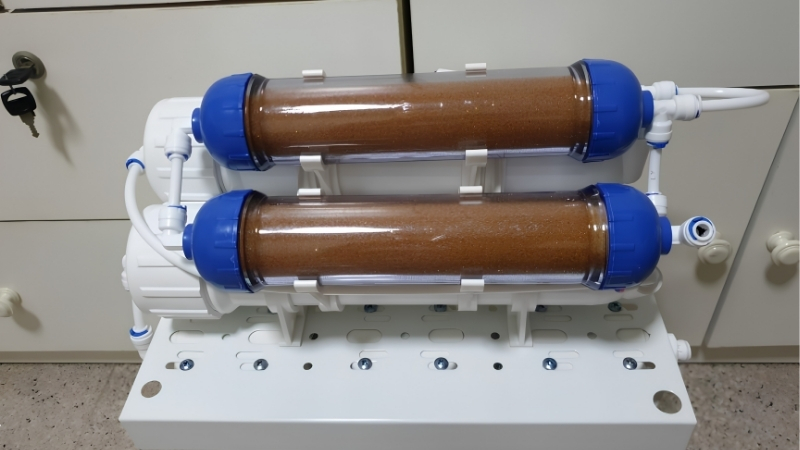
Three Separate DI Stages Do the Work
The BRS 7 Stage Pro Plus systems split deionisation into cation, anion and mixed bed cartridges rather than relying on one combined canister. Each stage targets different ions, and separating them lets you replace only the exhausted media. That arrangement is what separates a genuine seven-stage system from one padding the count with duplicate prefilters.
That split also makes diagnosis easier. When output TDS climbs, the sequence of stages tells you which media is spent, and high carbon dioxide in feed water tends to exhaust anion resin noticeably faster than the others. Dissolved carbon dioxide passes straight through the membrane and converts to carbonic acid in the DI chamber.
Pick Output You Actually Need
BRS offers 75, 150 and 200 GPD versions, which work out to roughly 3.125, 6.25 and 8.33 gallons per hour in theory. The right choice follows your weekly water change volume plus daily top-off demand. Reservoir size matters too, since a buffer lets a slower system keep up with the same weekly demand.
Higher output does not mean cleaner water. A 200 GPD system produces faster, but purity comes from membrane rejection and DI resin, so a 75 GPD unit with fresh media reaches zero TDS just as reliably as a larger one. Output rate and purity are separate properties, and confusing them is the most common mistake in this category.
Check Your Pressure Against the Requirement
Pressure requirements differ across the range. The 75 GPD Pro Plus is rated for 50 to 90 psi, while both the 150 and 200 GPD Water Saver systems require 65 to 90 psi to hit their stated performance. Pressure also drops when other fixtures in the house are running, so measure at a realistic moment.
Measure inlet pressure before ordering a higher-output system. Feeding a Water Saver setup below its rated range reduces production, worsens the waste ratio and puts the membranes under poor operating conditions that shorten their life. Well systems in particular fluctuate as the pressure tank cycles between its cut-in and cut-out points.
Compare Waste Ratios Honestly
The 75 GPD system runs around 3:1 waste to product, while the 150 and 200 GPD Water Saver systems are rated near 1.5:1. At those figures, making 100 gallons of pure water corresponds to roughly 300 gallons of waste versus about 150. Those are rated figures at stated conditions rather than what every household sees.
Real ratios vary with pressure, temperature and feed chemistry, so treat published figures as rated conditions rather than guarantees. On metered water or a septic system, that difference adds up across a year of reef maintenance. Waste water is clean enough for garden or laundry use in many cases, which recovers some of the cost.
Top Picks
Three BRS systems plus an explanation of DI architecture cover this category. Each entry lists manufacturer specifications, a relative price position as of 09/2026, and one genuine drawback.
| Product | Best For | Key Spec | Watch Out For |
|---|---|---|---|
| BRS 7 Stage Pro Plus 75 | Best value | 75 GPD; 1×75 membrane; 50-90 psi; ~3:1 waste | Highest waste ratio of the three |
| BRS 150 Water Saver | Best all-round choice | 150 GPD; 2×75 membranes; 65-90 psi; ~1.5:1 | Needs at least 65 psi inlet |
| BRS 200 Water Saver | Best high output | 200 GPD; 2×100 membranes; 65-90 psi; ~1.5:1 | Dual 100 trades some rejection |
| Triple DI setup | Why it matters | Cation, anion and mixed bed stages | Anion can exhaust first on high CO2 |
BRS 7 Stage Pro Plus 75: Best Value
At roughly $350 as of 09/2026 this is the entry point, about 13.0% below the 150 version. It produces 75 GPD from a single 75 GPD membrane on 50 to 90 psi, with cation, anion and mixed bed DI plus triple TDS monitoring and a pressure gauge. Triple monitoring means you can see TDS after the membrane and after each DI stage.
Its waste ratio around 3:1 is the highest here, meaning roughly three gallons to drain per gallon produced at rated conditions. On metered water that running cost matters more than the $54 saving against the 150 GPD system. Check whether your local water is metered before treating this as the cheaper option.
BRS 150 Water Saver: Best All-Round Choice
Around $425 as of 09/2026, the 150 GPD Water Saver doubles output using two 75 GPD membranes and cuts waste to roughly 1.5:1. That combination of faster production and halved drain volume is why it suits most serious reef setups. It sits about 15.0% above the 75 GPD system, a gap near $54 as of 09/2026.
It needs 65 to 90 psi, a higher floor than the 75 GPD system, so low-pressure households may need a booster pump. Measure before ordering, since the water-saving advantage depends on running within that pressure band. Two 75 GPD membranes also age together, so plan to replace them as a pair.
BRS 200 Water Saver: Best High Output
At roughly $450 as of 09/2026, about 25% above the 75 GPD system, this version reaches 200 GPD using two 100 GPD membranes while keeping the same 65 to 90 psi requirement and roughly 1.5:1 waste ratio. That makes it the fastest option here at roughly 8.33 gallons per hour in theory.
BRS notes that the dual 75 configuration offers better membrane rejection than moving to dual 100, which can reduce DI resin consumption over time. More output therefore comes with a trade-off worth weighing against resin cost. Higher DI consumption can quietly erase the convenience of faster production over a couple of years.
Why Separate DI Stages Matter
A single combined DI canister exhausts as one unit, so you replace everything when any part of the media is spent. Splitting cation, anion and mixed bed means each cartridge is replaced on its own schedule.
Water chemistry decides which goes first. Feed water high in carbon dioxide loads the anion resin heavily, and a system that lets you swap only that stage costs noticeably less to run than one replacing all media at once. Keeping a spare anion cartridge on the shelf avoids an emergency order mid water change.
Frequently Asked Questions
Four questions decide most purchases: whether seven stages guarantee zero TDS, why deionisation is split three ways, whether higher output is better, and when a booster pump becomes necessary.
Do seven stages guarantee 0 TDS?
They make it achievable, not permanent. A well-maintained system with fresh resin reaches zero TDS, but that reading depends on media condition, membrane health and feed chemistry rather than stage count. Resin exhausts gradually, and the first sign is usually a reading creeping above zero.
Monitor output with a TDS meter and change media when readings climb, not on a calendar. Triple monitoring on these BRS systems exists precisely because a zero reading is something you verify continuously. Prefilter condition matters as well, since chlorine passing through damages membranes permanently.
Why split DI into three stages?
Because different resins capture different ions. Cation and anion cartridges handle their respective charges while the mixed bed polishes what remains, which uses each media more efficiently than one combined canister. Sequence matters too, since each stage prepares the water for the next.
The practical benefit is targeted replacement. On feed water high in carbon dioxide, the anion stage exhausts first, and replacing only that cartridge is far cheaper than discarding partially used media alongside it.
Is the 200 GPD version always the better buy?
Not necessarily. It produces water faster, but BRS points out that the dual 75 setup in the 150 GPD system offers better membrane rejection than the dual 100 arrangement used to reach 200 GPD.
Better rejection can mean lower DI consumption, which offsets part of the slower output. Choose the 200 GPD version when production speed genuinely limits you, and the 150 when resin economy matters more. Run the numbers on your own weekly volume before paying for the larger system.
Do I need a booster pump?
Measure first. The 75 GPD system works from 50 psi, while the Water Saver versions need 65 psi minimum, so households below that threshold will underperform without help. Pressure below the rated minimum is the clearest signal that a booster is needed.
Low pressure reduces output, worsens waste ratio and stresses membranes. A booster addresses all three, but confirm your measured inlet pressure rather than assuming, since municipal supply varies by time of day and floor level. RO/DI systems and replacement media both discount around Prime Day and Black Friday.
Final Thoughts
The best 7 stage rodi filter for 0 tds water is the one matching your pressure, your consumption and your patience for drain water. The BRS 150 Water Saver near under $450 balances output, rejection and a 1.5:1 waste ratio, while the 75 GPD system saves money if your demand is modest.
Ready to decide? Our #1 pick for 2026 is the BRS 7 Stage Pro Plus 75.
Live price & availability on Amazon.
Related Reviews & Guides

Freshwater vs Saltwater Aquarium: Which Should You Start?

Aquarium Nitrate Phosphate Removal Media