Last Updated: October 21, 2026
Shopping for the best energy efficient rodi system usually means chasing the wrong meter. An RO/DI without a booster pump draws almost no electricity, so the running cost that matters is the water it sends down the drain. These four units are judged on reject ratio first.
As an Amazon Associate we earn from qualifying purchases.
By David Nguyen
How to Choose an Energy-Efficient RODI System
Efficiency here splits into two costs that behave very differently: water sent to drain, and electricity, which only appears once a booster pump is added. Rank the reject-to-product ratio first, confirm your feed pressure, then treat production speed as convenience rather than as any power saving.
Reject-to-Product Ratio
The reject ratio is the real efficiency number, because a passive RO/DI spends water, not watts. At a true 1:1, ten gallons of purified water send about ten gallons to drain; at 1.5:1 that becomes fifteen gallons, and at 3:1 it climbs to roughly thirty gallons of drain water per ten produced.
Moving from 3:1 to 1:1 cuts reject volume by about 66.7 percent against a thirty-gallon baseline, though total feed water drops by half rather than two thirds. Published ratios assume set pressure, temperature and inlet TDS, so treat them as rated figures, not guarantees for your own tap.
Feed Pressure and When Electricity Enters
Electricity only becomes part of the equation when a booster pump is added, and that happens below the pressure a membrane needs. The BRS 100 unit is rated from 50 PSI, while the 150 GPD builds want 65 PSI minimum, so weak plumbing pushes you toward powered hardware you would otherwise skip.
A booster is the single component here that draws meaningful current and adds heat and vibration, so measuring feed pressure before buying can keep the system entirely passive. If your line sits comfortably above the rated minimum, the greenest choice is simply the one that needs no pump at all.
Production Rate Versus Utility Burden
It is tempting to read a higher GPD number as more efficient, but faster output does not lower electricity or water waste on its own. A 100 GPD unit makes about 4.17 gallons per hour and a 150 GPD unit about 6.25, yet both can share a reject ratio and the same passive, near-zero power draw.
Speed matters for convenience, meaning shorter fill sessions, not for utility cost, so choose GPD by how much water you make at once. If two units share a 1.5:1 ratio, the faster one is not the greener one; the reject-to-product figure and the feed pressure decide the actual burden you pay for.
Pretreatment for Your Source Water
Matching pretreatment to your tap is both a performance and a cost decision. Chloramine needs the dual-carbon pretreatment on the Premium Plus builds, while a low-chlorine supply can run the Value Plus stages; the wrong pretreatment shortens DI resin life and drives up recurring media spend.
That recurring cost is the hidden line item in RO/DI ownership: sediment and carbon blocks, DI resin, and a TDS meter to tell you when they are spent. Reusing reject water for plants or cleaning offsets part of the waste, which is where a low reject ratio quietly pays off across a year.
Top Picks
No unit here publishes a watts-per-gallon figure, and a passive RO/DI barely sips power, so there is no outright overall winner on electricity. The honest efficiency ranking runs on reject ratio and feed pressure, which is how these four are ordered below, each with its real trade-off stated up front.
| Product | Best For | Key Spec | Watch Out For |
|---|---|---|---|
| AquaFX Whale Shark WS-CC 100 | Lowest water waste | True 1:1 ratio, 100 GPD | Wait-list; ~under $400; no verified watts |
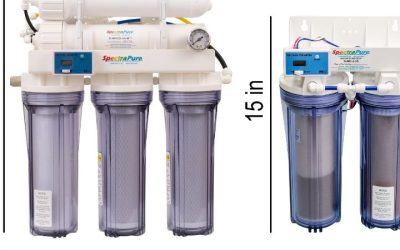
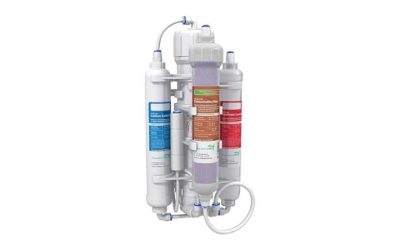
| BRS 5 Stage Premium Plus 100 | Low feed pressure (50 PSI) | 100 GPD, 3:1, dual carbon | 3:1 is the most reject water here |
| BRS 4 Stage Value Plus 150 | Waste-per-dollar at 150 GPD | 150 GPD, 1.5:1, ~under $300 | Low-chlorine only; needs 65 PSI |
| BRS 5 Stage Premium Plus 150 | Chloramine at 150 GPD | 150 GPD, 1.5:1, dual carbon | Needs 65 PSI; ~under $350 |
AquaFX Whale Shark WS-CC 100
If low water waste defines efficiency for you, the AquaFX Whale Shark is the standout, rated at a true 1:1 ratio and 100 GPD at 65 PSI, 77 degrees and 250 ppm input. Halving feed water against a typical 1.5:1 build is a real utility saving in hard-water regions where every drained gallon is metered.
The trade-offs are price and availability: it sits around $400 as of 09/28/2026 and is frequently wait-listed, and its rated ratio assumes those inlet conditions. There is also no published wattage, so treat it as a passive system whose advantage is water, not any verified power figure at all.
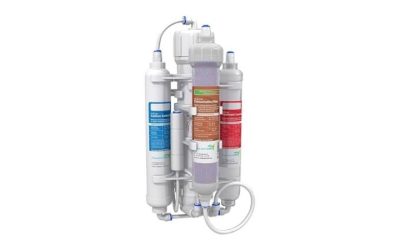
BRS 5 Stage Premium Plus 100
For homes with weaker plumbing, the BRS 5 Stage Premium Plus 100 is the safer call because it is rated from 50 PSI, the lowest minimum here, and its dual-carbon pretreatment handles chlorine or chloramine. That pairing often keeps the build passive on softer pressure where a 150 GPD unit would demand a booster.
The catch is waste: at a 3:1 ratio it produces the most reject water in this group, about thirty gallons per ten produced, so it is efficient on power and pretreatment but not on water. Priced around $300 as of 09/28/2026, it fits mainly when your feed pressure rules out the thriftier 1.5:1 options.
BRS 4 Stage Value Plus 150
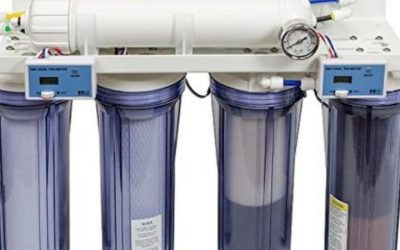
The BRS 4 Stage Value Plus 150 is the pick for the least reject water per dollar at faster output, pairing a 1.5:1 ratio with 150 GPD for around $300 as of 09/28/2026. It also bundles a TDS meter, pressure gauge and flush valve, so you can watch when the media and membrane efficiency begin to fade.
Its limit is pretreatment: four stages target low-chlorine supplies, not chloramine, so it is the wrong unit for chloraminated city water. It also wants 65 PSI minimum, meaning low-pressure homes may need a booster and forfeit the passive, no-electricity advantage that makes this whole class appealing.
BRS 5 Stage Premium Plus 150
Where the tap is chloraminated and you still want speed, the BRS 5 Stage Premium Plus 150 adds dual-carbon pretreatment to the same 1.5:1 ratio and 150 GPD output, around $325 as of 09/28/2026. The extra carbon stage protects the membrane and DI resin, which keeps recurring media cost in check on hard water.
It shares the 65 PSI minimum, so soft-pressure plumbing may still force a booster and its associated draw. Against the Value Plus 150 you pay roughly eighteen dollars more for chloramine capability, not for a better ratio, so buy it for your water chemistry rather than for a lower utility bill each month.
Frequently Asked Questions
Buyers searching this category usually conflate electricity with water and expect one most-efficient box. The answers below separate the two costs, put numbers on the reject ratio, and flag the one component, a booster pump, that turns a silent, passive filter into something that actually draws current.
Does an RODI System Use Much Electricity?
On its own, almost none. A gravity-fed or pressure-fed RO/DI has no motor, so it runs on your house water pressure and draws effectively zero watts while making water. That is why an efficient RODI system is really a water-efficiency question until a pump enters the picture at all.
The exception is a booster pump, added when feed pressure falls below the membrane’s rated minimum, which is 50 PSI on the BRS 100 and 65 PSI on the 150 GPD builds. Only then does the unit pull continuous current, so verifying your line pressure first can keep the whole setup passive.
Which Reject Ratio Wastes the Least Water?
A true 1:1 wastes the least, sending about ten gallons to drain for every ten purified, while a 3:1 build sends roughly thirty. Between those, 1.5:1 lands near fifteen gallons of reject per ten produced, so the AquaFX 1:1 and the 3:1 BRS 100 mark the two ends of the range offered here.
Rated ratios assume set pressure, temperature and inlet TDS, so colder or dirtier water usually pushes real reject higher. Capturing that reject for plants or cleaning recovers part of the loss, which narrows the practical gap between a thrifty and a wasteful ratio over a full year.
Is a 150 GPD Unit More Efficient Than a 100 GPD One?
Not for energy or water by itself. A 150 GPD membrane makes water faster, about 6.25 gallons per hour versus 4.17, but speed does not lower wattage or reject volume. Two units at the same 1.5:1 ratio waste the same water per gallon regardless of which one finishes the batch sooner.
Higher output can even raise the feed-pressure requirement, nudging low-pressure homes toward a booster and its draw. Judge efficiency by the ratio and pressure needs, and pick GPD purely for how large a batch you want to make in a single sitting rather than for any energy savings.
Can I Reuse the Reject Water?
Yes, and it is the simplest way to shrink the real cost. RO/DI reject is just concentrated tap water, so it works for watering plants, topping a garden, pre-rinsing dishes or flushing, recovering a meaningful share of the fifteen to thirty gallons a typical batch otherwise sends to drain.
It is not suitable for the aquarium itself, since its dissolved solids run higher than the source water you started with. Storing reject in a tote near the unit makes reuse practical and low-effort, turning a 1.5:1 or 3:1 build into something much closer to a low-waste system in everyday use.
Final Thoughts
The energy efficient rodi system that fits you is decided before purchase, at the pressure gauge: verify your line clears the membrane’s rated minimum so the build stays passive and draws no current at all. Budget for DI resin and a TDS meter as the ongoing cost, and capture reject water to blunt the biggest waste.

Aquarium Magnetic Algae Scraper Review
Best Rodi Water Filter System For Aquariums: Top Expert