Last Updated: October 4, 2026
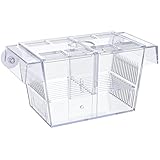
- Top Pick: Pawfly Aquarium Fish Breeding Box Acrylic Hatchery Incubator Tank with Suction Cups Medium Isolation Box for Baby Fish Shrimp Betta and Guppy
- Best Value: Pawfly Aquarium Fish Breeding Box Acrylic Hatchery Incubator Tank with Suction Cups Small Isolation Box for Baby Small Fish Shrimp and Betta
- Premium Choice: Fluval Multi-Chamber Holding and Breeding Box, Large

TL;DR: A fish breeding box isolates gravid females, fry, injured fish, or aggressive specimens inside the main tank without a separate setup. This guide covers box types, flow-through vs. hang-on designs, sizing, and best practices for maximizing fry survival rates.
Fish Breeding Box: Protect Fry and Separate Livestock in Any Tank
Livebearer hobbyists know the math: a single female guppy can drop 30–80 fry, and within minutes the adults — including the mother — will consume most of them. The fish breeding box solves this by creating a physical barrier inside the display tank that shares the same water chemistry and temperature while shielding vulnerable fish from predators or stress. It is one of the most cost-effective tools in freshwater fishkeeping.
As an Amazon Associate we earn from qualifying purchases at no extra cost to you.
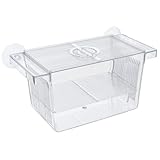
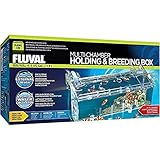

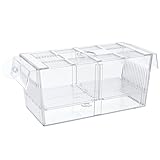


🛒 Best Price Today on Amazon
Prime members get fast, free shipping on everything above, plus member-only deals. New members get a 30-day free trial — cancel anytime.
Start 30-Day Prime Free Trial →See Today’s Amazon DealsThree Core Use Cases
Breeding isolation is the obvious use, but the box earns its place in non-breeding tanks too. First, fry protection: separate newborns until they are large enough to avoid predation — typically 2–4 weeks for most livebearers, longer for egg-layers. Second, quarantine staging: a new fish can be held inside the display tank for 48–72 hours so tank residents habituate to its presence before full release, reducing aggression. Third, injury recovery: a fin-nipped or ill fish can rest in the box without being harassed while still receiving the tank’s stable water parameters. Each use case justifies owning at least one box.
Hang-On vs. Internal Floating Designs
Hang-on breeding boxes clip to the tank rim with the chamber extending outside the tank wall. Water exchange is driven by a small included pump or airline: tank water flows in, overflows back out. These are roomy, easy to clean, and do not reduce tank volume. The drawback is that temperature can fluctuate slightly if the room is cool, and smaller boxes may stress the occupant with limited swimming space.
Internal floating boxes sit inside the tank, anchored by a suction cup or buoyancy trim. Water exchanges through perforated walls or slots — no pump needed. They are cheaper, simpler, and maintain temperature parity with the main tank perfectly. The tradeoff is reduced main-tank swimming volume and visible presence in the aquascape. For fry work, internal boxes are preferred; for quarantine staging, hang-on boxes offer more space.
Top Fish Breeding Box Picks


As an Amazon Associate we earn from qualifying purchases. Product prices and availability are accurate as of the date/time indicated.



As an Amazon Associate we earn from qualifying purchases. Product prices and availability are accurate as of the date/time indicated.


As an Amazon Associate we earn from qualifying purchases. Product prices and availability are accurate as of the date/time indicated.
Breeding Box Specifications Compared
| Feature | Internal Floating | Hang-On with Pump | Hang-On Airstone |
|---|---|---|---|
| Water exchange method | Passive perforations | Submersible pump | Airline / airstone |
| Temperature stability | Excellent | Good | Good |
| Volume impact on tank | Reduces usable space | None | None |
| Typical internal volume | 0.3–1 L | 0.5–2 L | 0.5–1.5 L |
| Setup complexity | Very simple | Moderate | Simple |
| Best for | Fry, shrimp | Staging, recovery | Fry, livebearers |
Maximizing Fry Survival Inside the Box
Fry need microfoods immediately after birth or hatching. Infusoria, first-bite fry food, or finely crushed flake fed 3–4 times daily keeps early mortality low. Keep the box clean — uneaten food fouls water chemistry rapidly in a small volume. A turkey baster is invaluable for targeted feeding and removing waste without disturbing fry. Move fry to a grow-out tank or dense plant cover in the main tank as soon as they exceed the mouth-gape of tank residents.
For livebearers specifically, a divider box with a v-shaped bottom or drop-through slots allows newborn fry to fall away from the mother immediately, preventing cannibalism. Introduce the female when she shows a gravid spot darkening and a boxy belly profile — too early and she stresses unnecessarily, too late and fry arrive unseparated.
Breeding boxes integrate well with a dedicated grow-out strategy. Our livebearer breeding tank setup guide covers the full workflow from conditioning adults to growing out juveniles. For shrimp breeders, cross-reference the freshwater shrimp tank setup guide — berried females and shrimplets have different isolation needs than fish fry. When quarantining incoming fish, pair box isolation with our fish quarantine tank setup guide for a complete disease-prevention protocol.
Which Fish Benefit Most From a Breeding Box
Breeding boxes shine with livebearers, the group that delivers free-swimming young rather than scattering eggs. Guppies, mollies, platies, and swordtails all drop fully formed fry that are immediately at risk from hungry tankmates, including their own parents. Moving a visibly gravid female into the box shortly before she gives birth, then removing her once the fry arrive, lets the young grow in safety while sharing the stable temperature and chemistry of the main display. Because these species reproduce so readily, a breeding box quickly pays for itself by raising survivors that would otherwise vanish within minutes.
Egg-laying species need a different approach. Many tetras, barbs, and danios scatter adhesive eggs and eat them just as fast, so they are usually bred in a dedicated tank with spawning mops or mesh rather than a small box. The breeding box still earns its place with these fish for a separate reason: it is an excellent recovery and observation chamber. A fish nipped during a squabble, a specimen showing early signs of illness, or a timid new arrival that needs to acclimate can all be held in the box where they receive the tank’s stable parameters without being harassed. Knowing which job you need the box to do, raising livebearer fry versus protecting an individual fish, helps you pick the right design and size from the start.
Water Flow and Feeding Inside the Box
The biggest challenge inside any breeding box is keeping the small enclosed volume as healthy as the tank around it. Because the box holds little water, waste from feeding concentrates quickly and oxygen can drop if exchange with the main tank is poor. Designs that draw a steady trickle of tank water through the chamber, whether by a small pump or an air-driven lift, keep parameters matched and prevent the stagnation that stresses fry. If your box relies on slots or mesh for passive exchange, position it where gentle current from your filter or pump can reach it, and keep those openings clear of debris so fresh water keeps moving through.
Feeding fry calls for small, frequent meals of appropriately sized food, since newborn livebearers have tiny mouths. Crushed flake, powdered fry food, or freshly hatched brine shrimp are common choices, offered in small pinches several times a day so the young always have something to graze on. The trade-off is that leftover food fouls the confined water fast, so siphon out uneaten particles and waste with a length of airline tubing between meals. A quick partial water exchange using water from the main tank keeps quality high without shocking the fry with different chemistry. With steady flow, careful feeding, and light daily cleaning, survival rates inside a breeding box climb dramatically.
Frequently Asked Questions
How long should a female livebearer stay in a fish breeding box before giving birth?
Introduce her 24–48 hours before expected delivery at most. Extended confinement causes stress that can delay labor or cause the female to abort fry. Watch for the darkened gravid spot near the anal fin and a squarish body profile; those are reliable indicators that delivery is imminent within 12–24 hours.
Can I use a fish breeding box for egg-layer species?
Yes, with caveats. Egg-laying species that scatter eggs (danios, tetras) can spawn into a breeding box lined with spawning mops or mesh, then adults are removed. Mouthbrooders need more space than most boxes provide. Bubble-nest builders (bettas, gouramis) are better served by a full species tank — boxes are too confining for the extended spawning ritual.
What is the minimum tank size to use a hang-on breeding box without problems?
Most hang-on boxes fit tanks with rims 0.25–0.5 inches thick. Functionally, any tank 10 gallons and above can accommodate one without compromising circulation, provided the main tank filtration is adequate. In nano tanks under 5 gallons, the box and its pump can dominate flow and create dead spots.
How do I clean a breeding box without losing fry?
Use a small turkey baster to remove debris and uneaten food daily. For deeper cleaning, transfer fry to a clean container of tank water using a small cup — never a net, which injures fragile fry. Rinse the box with tank water (never tap water or soap), reassemble, and return fry using the cup method to minimize temperature shock.
At what size can fry be safely released from the breeding box back into the main tank?
The rule of thumb: fry are safe when they exceed the mouth-gape of the largest fish in the tank. For guppies in a community tank with tetras, that is roughly 0.5–0.75 inches. For cichlid tanks, fry may need to reach 1–1.5 inches before release. When in doubt, release into dense plant cover — java moss and floating plants give fry refuge that significantly improves survival.
Ready to decide? Our #1 pick for 2026 is the Water exchange method.
Live price & availability on Amazon.
Related Reviews & Guides

How Often to Clean Aquarium Filter: Full Schedule by Type
Best Canister Filter Media Order and Setup: Smart Guide