Last Updated: October 4, 2026
- Top Aquarium Auto Feeders at a Glance
- Why Auto Feeders Matter More Than You Think
- How Auto Feeders Work: Drum vs. Conveyor vs. Gravity
- Auto Feeder Specifications: What to Compare
- Moisture: The Silent Auto Feeder Killer
- Auto Feeders in Marine and Reef Tanks
- Pre-Vacation Checklist: Setting Up the Auto Feeder
- Frequently Asked Questions
- Related Articles
- Top Pick: Automatic Fish Feeder Dispenser for Aquarium: 200ml Large Capacity Auto Feeders for Small Tank Turtle Betta Koi – Battery Food Feeding Timer for Flakes Pellet Vacation Weekend Day
- Best Value: FISHNOSH Automatic Fish Feeder for Aquarium – New Generation 2026, Auto Food Dispenser with Timer for Small Tank, Big Aquariums & Pond (Blue)
- Premium Choice: Freesea Automatic Fish Feeder for Aquarium: One-Touch Easy Setup & 3 Timers
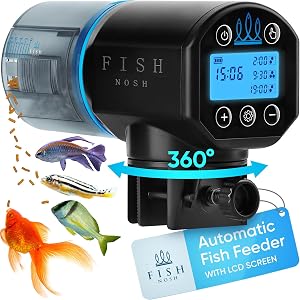
TL;DR: An aquarium auto feeder is the only reliable way to maintain feeding schedules during vacations without burdening a house-sitter. The best units dispense consistent portion sizes, resist moisture clogging, and integrate with smart-home timers. We cover freshwater and marine options across tank sizes — including gravity-fed and programmable drum designs.
Best Aquarium Auto Feeder for Vacation: Keep Fish Fed Without Overfeeding
Leaving fish unattended for a week produces one of two outcomes: starvation from no feeding, or an ammonia crash from a well-meaning neighbor dumping in far too much food. Neither is acceptable. A calibrated aquarium auto feeder for vacation solves both problems — it dispenses pre-measured amounts on a fixed schedule, 24/7, regardless of whether you’re two towns away or on another continent.
As an Amazon Associate we earn from qualifying purchases at no extra cost to you.


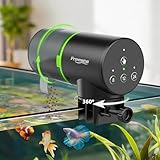



This guide covers how auto feeders work mechanically, what differentiates a reliable unit from a moisture-prone disaster, and which models make sense for freshwater community tanks versus marine setups where overfeeding consequences are more severe.
🛒 Best Price Today on Amazon
Prime members get fast, free shipping on everything above, plus member-only deals. New members get a 30-day free trial — cancel anytime.
Start 30-Day Prime Free Trial →See Today’s Amazon DealsTop Aquarium Auto Feeders at a Glance




As an Amazon Associate we earn from qualifying purchases. Product prices and availability are accurate as of the date/time indicated.


As an Amazon Associate we earn from qualifying purchases. Product prices and availability are accurate as of the date/time indicated.


As an Amazon Associate we earn from qualifying purchases. Product prices and availability are accurate as of the date/time indicated.
Why Auto Feeders Matter More Than You Think
Most hobbyists underestimate what a missed feeding cycle does to a tank’s chemistry. In a heavily stocked system, fish metabolize stored energy quickly — a 72-hour feeding gap causes measurable weight loss and immune suppression in species like discus or marine angels. More critically, the behavioral changes (aggression, competition) that hunger triggers can result in fin damage and disease introduction that persists long after you return.
The inverse problem is more damaging to water quality. A single overfeeding event — one extra pinch of flake — can spike ammonia by 0.5–1.0 mg/L in a 20-gallon system within hours. In a cycled tank, nitrifying bacteria can process moderate overloads, but sustained overfeeding across a 7-day vacation overwhelms the biological filter and collapses the nitrogen cycle. For a primer on why this happens, see our tank cycling and nitrogen cycle guide.
How Auto Feeders Work: Drum vs. Conveyor vs. Gravity
The dominant design is the rotating drum: a cylindrical hopper with a slotted wheel that dispenses a fixed volume per rotation. Drum feeders handle pellets, granules, and micro-pellets reliably. The slot size determines portion size — most units have an adjustable opening.
Conveyor belt designs use a moving belt to carry food from hopper to drop zone. These handle flake food better than drums but are more mechanically complex and harder to clean. Gravity feeders — essentially a timed gate — are the simplest and cheapest, but portion consistency suffers because food bridges across the opening as humidity swells particles.
For vacation use specifically, drum feeders win on reliability. A quality drum unit dispenses within ±5% of target portion size across a full 30-day cycle even as the hopper empties, because the slot volume (not gravity or food weight) controls dispensing.
Auto Feeder Specifications: What to Compare
| Spec | What It Means | Practical Target |
|---|---|---|
| Feeding Frequency | Meals per 24 hours; most support 1–4×/day | 2×/day matches natural feeding rhythm |
| Portion Adjustment | Fixed slot vs. variable opening | Variable = better calibration for fish size |
| Hopper Capacity | Days of food at standard feeding rate | 14+ days for a 2-week vacation buffer |
| Moisture Resistance | Ventilation fan, sealed hopper, desiccant slot | Ventilation fan is most effective |
| Food Compatibility | Pellet size range the drum handles cleanly | Match to your fish’s primary diet size |
| Power Source | AA batteries vs. USB vs. both | Battery backup essential for power-cut resilience |
| Mount Type | Rim-clip, suction, or hinge arm | Rim-clip most universal for rimmed tanks |
Moisture: The Silent Auto Feeder Killer
Tank evaporation creates a humid microclimate around any surface within 10 cm of the water line. Pellets and granules absorb this moisture, swell, and jam the dispensing mechanism — often mid-vacation. The result is either no food dispensed (starvation) or a blocked drum that eventually releases a week’s worth of food at once (ammonia spike).
The most effective solution is a built-in ventilation fan in the hopper that draws dry ambient air across the food supply. Units with this feature cost more but are the only real fix — desiccant packs are a partial measure that requires replacement and doesn’t scale to humid climates. Silica gel packs in the food container are worth adding as a supplemental measure regardless of feeder type.
Before any extended absence, test the feeder for 48 hours over the open tank while you’re still home. Watch the actual dispense — does food reach the water or cling to the funnel? Adjust the mounting angle (typically 5–10° tilt toward the tank) to ensure clean delivery.
Auto Feeders in Marine and Reef Tanks
Saltwater tanks are less forgiving of feeding errors. The higher baseline cost of marine fish, combined with the sensitivity of reef chemistry, means overfeeding in a reef tank produces nutrient spikes that fuel algae blooms and depress coral health. Phosphate and nitrate creep from excess food is one of the primary causes of cyano and dinoflagellate outbreaks in reef systems.
For marine use, reduce the portion size by 30–40% compared to freshwater calibration — saltwater fish are adapted to a lower-calorie, more dispersed food environment and can go longer between meals. Pair the feeder with a reliable protein skimmer to handle the increased dissolved organic load; see our aquarium protein skimmer guide for sizing. Also ensure biological filtration is robust before leaving — check our Fluval 207 canister filter review for filtration capacity benchmarks.
Pre-Vacation Checklist: Setting Up the Auto Feeder
Run through this before departure to minimize failure risk:
- Fill hopper to no more than 60% capacity — overfilling increases bridging risk and reduces ventilation effectiveness
- Test dispense cycle manually and verify food reaches the water surface, not the tank rim or filter intake
- Set feeding times to when the room has lights on — fish rarely eat in darkness, and uneaten nocturnal portions decay overnight
- Check battery level and install fresh cells even if existing ones test OK — a low battery under load may fail mid-trip
- Do a 48-hour trial run before departure with water quality testing at the end; use your aquarium water test kit to confirm ammonia stays at zero
- Consider a secondary feeding backup (slow-release vacation block) for trips over 10 days
Frequently Asked Questions
How long can fish go without food during a vacation?
Healthy adult freshwater community fish (tetras, danios, livebearers) can fast comfortably for 3–5 days. Larger cichlids and goldfish manage 7–10 days without significant stress. Marine fish are more variable — most can handle 5–7 days, but predatory species like lionfish or large angels stress faster. Fry and juvenile fish should not go beyond 2 days without feeding regardless of species. For any trip over 4 days, an auto feeder is the correct solution.
Can I use an auto feeder for frozen or wet food?
No — all consumer auto feeders are designed for dry food only: pellets, granules, flakes, and freeze-dried items. Frozen food would thaw in the hopper within hours, decay, and introduce bacterial contamination. For species requiring meaty diets (predators, carnivorous marines), freeze-dry versions of bloodworms and brine shrimp are the practical vacation substitute — they dispense cleanly from a drum feeder and provide adequate nutrition for short absences.
What portion size should I program for a vacation feeder?
Start at 50% of your normal manual feeding amount and test it. Fish eat less when an owner isn’t present to trigger feeding behavior, and uneaten food in a closed system is a direct ammonia source. The target is complete consumption within 3 minutes of dispensing — any food remaining on the substrate after 5 minutes is excess. Calibrate down until that benchmark is met, then test water parameters with your water test kit after 48 hours to confirm ammonia holds at zero.
Should I do a water change before leaving on vacation?
Yes — a 25–30% water change 24 hours before departure resets nitrate levels, replenishes trace elements, and gives the biological filter maximum headroom before you return. Do it 24 hours (not the day of travel) so you can verify parameters stabilize before departure. A freshwater change is also the right time to clean mechanical filter media; see our guide on the nitrogen cycle for how filter bacteria respond to media cleaning.
Are auto feeders safe for planted aquariums?
Yes, with one caveat: heavily planted tanks are actually more forgiving of short-term overfeeding because plant mass absorbs nitrate and phosphate rapidly. The risk shifts to uneaten food creating anaerobic pockets in dense substrate. Use a slow-sinking pellet rather than surface flake so food reaches the mid-column where fish intercept it before it hits the substrate. If running a CO₂ injection system, turn down or off the CO₂ rate slightly during extended absences — see our CO₂ system setup guide for timer-based flow management. Also review our planted tank substrate guide for substrate depth recommendations that minimize anaerobic zone formation.
Ready to decide? Our #1 pick for 2026 is the Feeding Frequency.
Live price & availability on Amazon.
Related Reviews & Guides
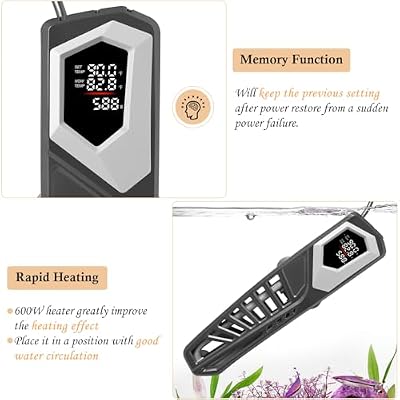
Aquarium Heater Guide: Best Heaters for Every Tank Size
Aquarium Sump Design Guide: Sizing, Baffles and Plumbing