Last Updated: October 4, 2026
- Do You Actually Need a Protein Skimmer?
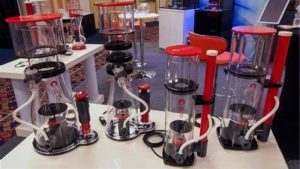
- Types of Protein Skimmers
- Sizing a Protein Skimmer: Don’t Trust the Label Alone
- Top Protein Skimmer Picks
- Key Specs to Compare When Buying
- How to Dial In a New Protein Skimmer
- Maintenance: What Gets Neglected Most
- Skimmer vs Water Changes: Do You Still Need Both?
- Frequently Asked Questions
- Related Articles
- Related Guides
TL;DR: A protein skimmer removes dissolved organic compounds before they break down into ammonia — it’s the most effective piece of filtration equipment for saltwater tanks beyond a sump. Size it for 1.5–2× your tank volume, match the type (hang-on-back, in-sump, or needle-wheel) to your setup, and don’t cheap out: a skimmer that skims inconsistently is worse than none because it creates false confidence.
Protein Skimmer for Saltwater Tanks: Buyer’s Guide + Best Picks by Tank Size
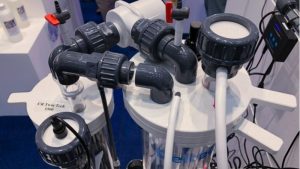
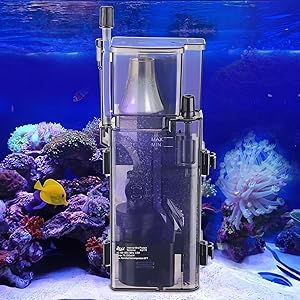
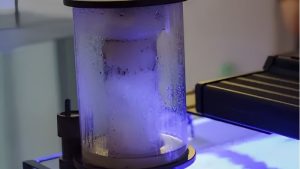
Protein skimmers operate on a principle called foam fractionation: microscopic bubbles attract dissolved organic compounds (DOC) — uneaten food, fish mucus, metabolic waste — which foam upward into a collection cup before they can break down and add to ammonia load. In a reef tank, skimmers are effectively pre-filtration for your biological filter, reducing the total nitrogen load by 30–50% before it enters the cycle at all. This guide covers how to choose, size, and dial in a skimmer for tanks from 30 to 200+ gallons.
As an Amazon Associate we earn from qualifying purchases at no extra cost to you.


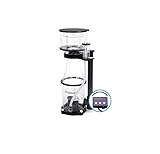
🛒 Best Price Today on Amazon
Prime members get fast, free shipping on everything above, plus member-only deals. New members get a 30-day free trial — cancel anytime.
Start 30-Day Prime Free Trial →See Today’s Amazon DealsDo You Actually Need a Protein Skimmer?
Fish-only freshwater tanks: no. FOWLR (fish-only with live rock) saltwater tanks under 30 gallons with light stocking: debatable. Reef tanks with coral: strongly yes. Heavily stocked FOWLR systems: yes. The more bioload you’re running, the more a skimmer earns its place. Nano reef systems under 20 gallons sometimes skip skimmers in favor of frequent water changes, but any system with SPS coral or high fish density benefits from one.
Types of Protein Skimmers
| Type | Best For | Pros | Cons |
|---|---|---|---|
| Hang-on-back (HOB) | Tanks without sumps, nano reef | No sump required, easy install | Limited to ~75 gal rated, less efficient |
| In-sump | 30–500+ gal with sump | Most efficient, out of display | Requires sump, specific water depth |
| Needle-wheel impeller | Mid–large reef | Fine bubbles, high efficiency | Higher cost, impeller needs cleaning |
| Recirculating | Large systems | Extreme efficiency | Complex plumbing, expensive |
Sizing a Protein Skimmer: Don’t Trust the Label Alone
Manufacturers rate skimmers for best-case, lightly stocked tanks. Real-world sizing rule: buy a skimmer rated for 1.5–2× your actual water volume. Running a 75-gallon reef? Size for a skimmer rated 100–150 gallons. Running a heavily stocked 100-gallon FOWLR? Size for 150–200 gallons. The cost difference between adjacent sizes is usually $30–$60 — worth every dollar for the stability margin.
Water depth in your sump matters too: most in-sump skimmers have a rated operating depth (typically 6–10 inches of water). Too shallow or too deep and bubble formation changes dramatically — the skimmer either floods the cup constantly or barely produces foam. Check specs before buying.
Top Protein Skimmer Picks




As an Amazon Associate we earn from qualifying purchases. Product prices and availability are accurate as of the date/time indicated.


As an Amazon Associate we earn from qualifying purchases. Product prices and availability are accurate as of the date/time indicated.



As an Amazon Associate we earn from qualifying purchases. Product prices and availability are accurate as of the date/time indicated.
Key Specs to Compare When Buying
| Spec | What to Look For | Why It Matters |
|---|---|---|
| Rated tank volume | 1.5–2× your actual volume | Manufacturers overstate; buffer needed |
| Pump type | Needle-wheel or recirculating | Finer bubbles = better DOC contact time |
| Sump depth range | Match your actual sump water level | Wrong depth = flood or no foam |
| Collection cup size | Larger = less frequent emptying | Small cups overflow in heavy systems |
| Neck design | Wide, adjustable neck | Easier cleaning, consistent foam level |
| Noise level | Check reviews for pump noise | Rattling skimmers disrupt open-top tanks |
How to Dial In a New Protein Skimmer
New skimmers take 1–2 weeks to “break in” — the pump impeller and body surfaces need time to lose surface tension from manufacturing oils. During break-in, the skimmer will either over-foam (flooding the cup with watery output) or under-perform. Don’t panic and don’t adjust constantly. Once stable, dial the water level inside the skimmer body: higher water = wetter, higher-volume skimmate; lower water = darker, drier, more concentrated skimmate. Aim for dark brown, coffee-like skimmate — watery green output means the skimmer is pulling too wet.
Maintenance: What Gets Neglected Most
Empty the collection cup at least weekly — skimmate left sitting breaks down and re-enters the water during top-off evaporation. Rinse the cup with fresh water; avoid soap. Clean the neck with a sponge weekly — film buildup on the neck restricts foam from reaching the cup and is the #1 cause of “skimmer stopped working” complaints. Every 2–3 months, pull the pump impeller and soak in white vinegar to dissolve calcium buildup.
Monitor your tank parameters alongside skimmer output — if skimmate production suddenly drops, check if something changed: new livestock, temperature shift, medication dosing (antibiotics and some ich treatments kill the surface-active compounds that skimmers target, making them temporarily ineffective). See our water test kit guide for parameter monitoring essentials and ich treatment guide for notes on skimmer impact during medication.
Skimmer vs Water Changes: Do You Still Need Both?
Yes. A skimmer removes dissolved organics before they become nitrate, but it does not remove nitrate already in the water, doesn’t replenish trace elements depleted by coral, and doesn’t replace the dilution effect of fresh saltwater. Run both: weekly 10–15% water changes plus a properly sized skimmer gives you a reef system with dramatically lower nitrate accumulation. Some advanced systems with large refugiums and vodka/carbon dosing push water change intervals to monthly, but those are not beginner setups.
For summer temperature management (skimmers run less efficiently above 82°F), see our aquarium chiller guide. For overall saltwater system setup context, see our glass vs acrylic tank comparison and quarantine tank setup guide.
Frequently Asked Questions
Can I use a protein skimmer on a freshwater tank?
No — foam fractionation only works at marine salinity (specific gravity 1.020+). Freshwater lacks the surface tension differential that allows bubbles to carry organic compounds. In freshwater, mechanical filtration, biological filtration, and regular water changes via gravel vacuum (gravel cleaner guide) cover the equivalent role.
How long does it take a protein skimmer to start working?
Break-in period is 7–14 days typically. You’ll see initial over-foaming or inconsistent output during this period. Once broken in and properly adjusted, expect consistent daily skimmate production in a stocked tank. A skimmer producing zero output on a stocked tank after 2 weeks suggests incorrect water level adjustment, pump failure, or a neck clogged with biofilm.
What size protein skimmer do I need for a 75-gallon reef?
Size for 100–150 gallons rated capacity minimum. With moderate coral and 5–8 fish, a skimmer rated 120 gallons will work well. Add a fish or two beyond that and you’ll want the 150-gallon model. Skimmers rated exactly for your tank volume leave zero margin — any bioload increase and you’ll be doing emergency water changes to compensate.
Should I run my protein skimmer 24/7?
Yes, continuously. Turning a skimmer off overnight (some people do this thinking lights-off means less waste) means 8 hours of unprocessed DOC accumulating in your system. The only time to turn a skimmer off intentionally is when dosing certain medications (antibiotics, copper — these can damage the biofilm on your skimmer pump) or when adding new corals that emit slime coats during acclimation, which can cause violent over-skimming for 24–48 hours.
My skimmer is producing watery output — is something wrong?
Wet, watery skimmate usually means the skimmer body water level is set too high, the skimmer is newly installed and still breaking in, or you’ve recently added a supplement or food that increases surface tension temporarily. Lower the water level inside the skimmer body by adjusting the outlet pipe or air valve. If the issue persists after 2 weeks, check the impeller for wear — worn needle-wheel impellers produce larger, less efficient bubbles that carry less DOC per volume of foam.
Ready to decide? Our #1 pick for 2026 is the Hang-on-back (HOB).
Live price & availability on Amazon.
Related Reviews & Guides
Best Protein Skimmer for a Frag System: Top Expert Picks

Quick Picks: Best Cleanup Crew Options for Freshwater Tanks