Last Updated: October 4, 2026

Coral fragging has become one of the most rewarding — and economically sensible — aspects of reef keeping. Instead of paying premium prices for wild-caught or aquacultured corals every time you want to add to your display, fragging allows you to propagate from your own colonies, trade with other hobbyists, and participate in the coral rescue and aquaculture network that’s genuinely helping reduce wild collection pressure. But the foundation of every successful frag is the plug or disk it’s attached to — and the differences between materials, sizes, and designs matter more than most beginners realize.
🛒 Best Price Today on Amazon
Prime members get fast, free shipping on everything above, plus member-only deals. New members get a 30-day free trial — cancel anytime.
As an Amazon Associate we earn from qualifying purchases.



Quick Picks
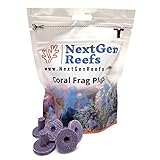
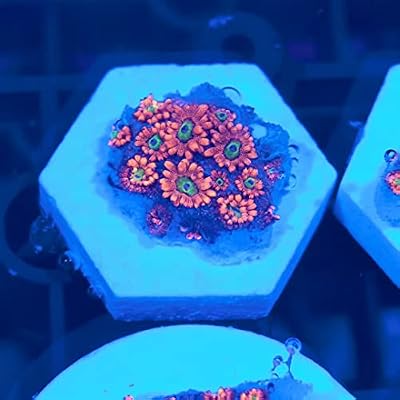
Two Little Fishies FragaRack Frag Plugs
- Calcium carbonate base integrates into rockwork
- Consistent diameter fits standard frag racks
- Coral-safe mineral composition




As an Amazon Associate we earn from qualifying purchases. Product prices and availability are accurate as of the date/time indicated.
Innovative Marine Frag Disks Ceramic
- Large flat surface for encrusting corals
- Ceramic material bonds well with super glue
- Low-profile design reduces flow shadow


As an Amazon Associate we earn from qualifying purchases. Product prices and availability are accurate as of the date/time indicated.
EcoTech Coral Frag Plugs Bulk Pack
- Bulk pricing for frequent fraggers
- Standard plug diameter for universal rack compatibility
- Consistent quality across the pack


As an Amazon Associate we earn from qualifying purchases. Product prices and availability are accurate as of the date/time indicated.
Why Trust Our Picks
We’ve fragged and mounted everything from fast-growing Montipora capricornis encrusters to temperamental Acropora staghorns and soft corals with variable adhesion behavior. Our evaluation focuses on three practical concerns: how well the plug material accepts cyanoacrylate (super glue) adhesive, how quickly and completely the coral encrusts over the plug base, and whether the plug integrates into rockwork aesthetically over time — or remains a permanent eyesore in your display.
Plug vs. Disk: Choosing the Right Format for Your Coral
The distinction between plugs and disks matters more than it might initially seem. Plugs — the classic mushroom-cap-on-a-stem design — fit into standardized frag rack holes and elevate the coral off the substrate, which improves flow around the base and reduces detritus accumulation. They’re ideal for branching corals (Acropora, Montipora branching forms), polyp colonies (Zoanthids, Palythoa), and any coral that benefits from being positioned upright.
Disks (or flat frags) are the better choice for encrusting corals — Montipora capricornis, Leptastrea, Chalice corals, and encrusting Acropora. A flat surface gives the coral’s tissue an easy path to spread outward in all directions, which is how these species naturally grow. Plugs work for encrusters in a pinch, but the small cap area slows initial growth and the stem creates an awkward mounting challenge when the coral eventually tries to spread over the edge.
Individual Reviews
Two Little Fishies FragaRack Plugs — Best Overall
Two Little Fishies’ calcium carbonate plugs are the closest thing to a universal standard in the fragging hobby — their dimensions are consistent batch to batch, they fit virtually every commercial frag rack on the market, and the calcium carbonate composition is genuinely reef-safe and gradually integrates into the tank’s natural mineral ecosystem. The material accepts super glue readily and provides enough surface texture for coral tissue to grip during the initial attachment phase. Over time, encrusting corals grow directly over the plug body, eventually rendering it invisible — a result you don’t consistently get with plastic or ceramic alternatives that corals grow around rather than over.
- Pros: Calcium carbonate integrates into rockwork, consistent dimensions, universal rack compatibility, coral tissue adheres well
- Cons: Slightly more expensive per plug than bulk plastic alternatives; can crumble if handled roughly before coral attachment
Innovative Marine Ceramic Frag Disks — Runner-Up
For encrusting corals specifically — the Montipora capricornis, chalice, and Leptastrea crowd — Innovative Marine’s ceramic disks are the most practical format available. The flat surface maximizes the coral’s initial footprint, the ceramic material fires at a temperature that creates a slightly rough surface texture (ideal for coral adhesion), and the low-profile design minimizes the flow shadow under the disk that can trap detritus and inhibit growth from the underside. The disks stack cleanly in a frag tank and display well when placed on a flat surface in the display — no stem poking up awkwardly from the rockwork.
- Pros: Ideal for encrusting corals, low flow shadow, clean aesthetic, good super glue bonding surface
- Cons: Doesn’t fit standard plug racks (stems required for most rack systems); heavier than calcium carbonate options
Bulk Calcium Carbonate Frag Plugs — Best Budget
For active fraggers who go through dozens of plugs per month — whether for personal propagation or running a small coral sales operation — bulk packs of calcium carbonate plugs from various reef suppliers offer the same material benefits as branded options at significantly lower per-unit cost. Quality varies more than with name-brand products (dimensional consistency and surface finish in particular), so it’s worth ordering a sample pack from a new supplier before committing to a large bulk order. The best bulk plugs are indistinguishable from premium branded options; the worst have inconsistent stem diameters that cause them to rattle in frag racks.
- Pros: Significant cost savings at volume, calcium carbonate material, good for high-frequency fraggers
- Cons: Quality control varies by supplier; dimensional inconsistency can cause rack fit issues; always sample before bulk ordering
Fiji Cube Frag Rack with Magnetic Mount — Best Display Solution
The plug and disk themselves are only half the equation — where you stage frags in your tank matters equally. Fiji Cube’s magnetic frag racks use a strong magnet mount that attaches to the exterior of the tank glass, holding a removable tray of frag plug holes on the inside. This approach keeps frags off the substrate (eliminating detritus accumulation underneath), positions them in optimal flow, and allows the entire rack to be removed instantly for coral swaps, photography, or cleaning — without disturbing any rockwork arrangement. The magnet is strong enough to hold even fully loaded racks on glass up to 3/4 inch thick.
- Pros: No tank drilling required, removable for easy access, adjustable height positioning, compatible with standard plug sizes
- Cons: Magnet strength limits to glass tanks (not acrylic); larger racks with heavy plugs may slip on thicker glass
Buyer’s Guide: Fragging Materials and Adhesives
Cyanoacrylate super glue gel is the near-universal adhesive for attaching coral frags to plugs — it’s reef-safe, cures quickly underwater, and bonds well to both coral skeleton and plug material. Use gel formulation rather than liquid; liquid super glue disperses too quickly in water before it can cure. The Reef Glue brand (essentially reef-branded Loctite super glue gel) has become the community standard, though any gel cyanoacrylate without rubber-toughening additives works fine.
For soft corals that don’t bond well with super glue — mushroom corals, leathers, and many Zoanthid colonies — a two-part reef-safe epoxy putty provides a mechanical hold by surrounding the frag base rather than relying on adhesive bonding. Mix the putty, form a cup shape, press the frag into it, and hold for 30–60 seconds until it begins to set.
FAQ
What’s the best way to attach a coral frag to a plug?
Apply a small amount of super glue gel to the plug top, press the frag firmly against it, and hold for 15–30 seconds above water. Then submerge slowly — the curing reaction accelerates in saltwater. For soft corals, use two-part epoxy putty instead of super glue.
Are plastic frag plugs reef-safe?
Most plastic plugs marketed for reef use are aquarium-safe, but they don’t integrate into the reef the way calcium carbonate plugs do. Corals will grow over and around plastic, but the plug never becomes part of the natural mineral cycle of the tank. Calcium carbonate is the preferred material for display tanks.
How long does it take for a coral to attach to a plug?
The super glue provides initial mechanical hold immediately, but biological attachment — where the coral’s tissue grows over and anchors to the plug surface — typically takes 2–4 weeks. During this period, keep the frag in moderate, stable flow and avoid handling the plug.
Can I frag corals as a beginner?
Yes — start with hardy encrusting species like Montipora capricornis, Zoanthids, and pulsing Xenia. These corals frag easily, attach reliably, and recover quickly from the stress of cutting. Avoid fragging Acropora until you’re comfortable with water quality stability, as branching SPS are less forgiving during the recovery period.
Where should I stage new frags in my tank?
Place new frags in moderate flow and medium lighting — not your strongest flow or brightest spot. This gives the coral time to recover from fragging stress and acclimate to your tank’s specific parameters before being exposed to the most demanding conditions in your system.
Final Verdict
For a universal frag plug that works across coral types, racks, and long-term display integration, Two Little Fishies calcium carbonate plugs remain the community standard for good reason — they’re consistent, reef-safe, and corals genuinely grow over them more naturally than plastic or ceramic alternatives. For encrusting coral specialists, Innovative Marine’s ceramic disks provide the optimal flat surface that allows these species to express their natural growth form. And whatever plugs you choose, pair them with a Fiji Cube magnetic frag rack for a staging system that makes coral management genuinely convenient rather than a tank-disrupting ordeal.
Related Guides
- Best LED Light For Reef Aquarium 2026
- Aquarium Kalkwasser Stirrer
- Best Nano Reef Tank Kit 2026
- Best Saltwater Aquarium Water Test Kit 2026
Frequently Asked Questions
How do I attach a coral frag to a plug?
Dry the base of the frag and the plug briefly with a paper towel, apply a small bead of cyanoacrylate gel superglue, press for about 20 seconds and return it to the tank. For soft corals that will not hold glue, use a two-part reef epoxy or a small rubber band until the tissue grows over the plug.
Should I cure new frag plugs before using them?
Yes. Fresh ceramic and cement plugs release alkaline residue and dust that can spike pH and irritate corals. Soak them in saltwater or RO water for a week, changing the water once or twice, until the leaching stops. Many keepers also let plugs sit in an established tank so coralline algae colonizes them before use.
Where should frag plugs sit in the tank?
Place them on a frag rack in the lower to middle third of the tank at first, then move them up as they show growth and color. Newly cut frags are stressed and photoinhibit easily under full reef intensity. Flow should be moderate and indirect, enough to keep detritus off the tissue but not enough to tear at the cut edge.
How long before a frag encrusts onto the plug?
Encrusting SPS such as montipora often skirt the plug within four to six weeks under stable parameters. Acropora may take two to three months, and euphyllia rarely encrusts a plug at all since it grows out on its own skeleton. Stable alkalinity between 8 and 9 dKH and calcium near 420 ppm matter far more than any additive.
Do frag plugs work in freshwater tanks?
They are designed for saltwater coral propagation, but the same ceramic disks are genuinely useful in freshwater for gluing anubias, bucephalandra and moss so you can reposition plants without uprooting them. The cyanoacrylate gel used is identical and is inert once cured, so it is safe in both freshwater and reef systems.
Related Reviews & Guides


Saltwater Aquarium Equipment Checklist: Numbers and Cost
Best Circulation Pump for Saltwater Aquarium: Top Compared