Last Updated: October 4, 2026
- Top Pick: VIPARSPECTRA 165W LED Aquarium Light Dimmable Full Spectrum LED Reef Lights
- Best Value: NICREW HyperReef 100 Gen 2 Reef LED Light, 100W Reef Aquarium Lighting for SPS LPS Corals and Saltwater Fish Tanks, Enhanced Violet and Blue Spectrum, Wide Angle Lens, 5 Channels Fully Programmable
- Premium Choice: NICREW NavaReef 135 Reef LED Light, 135W Reef Aquarium Lighting for LPS/SPS Corals and Saltwater Fish Tanks, Built-in Timer, Blue Focused Spectrum
🛒 Best Price Today on Amazon
Prime members get fast, free shipping on everything above, plus member-only deals. New members get a 30-day free trial — cancel anytime.
Why Reef Aquarium Lighting Is the Most Critical Equipment Choice
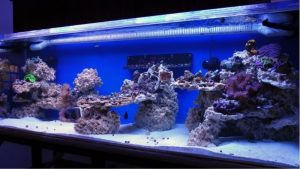
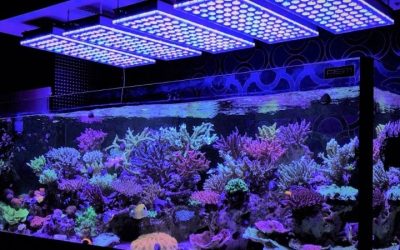
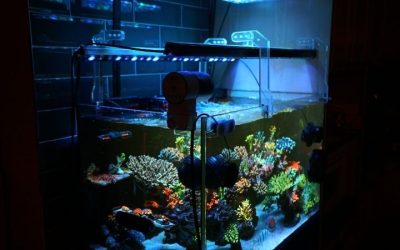
Reef aquarium lighting is arguably the single most important piece of equipment in a coral reef tank. Corals harbor photosynthetic zooxanthellae algae within their tissue that require specific wavelengths and intensities of light to produce the energy corals need to grow and thrive. The wrong lighting results in bleached, dying corals regardless of how perfect every other parameter is. Modern LED technology has made high-quality reef lighting more accessible, efficient, and controllable than ever before. Here are the top reef lighting systems on the market today.
As an Amazon Associate we earn from qualifying purchases at no extra cost to you.



1. Aqua Illumination Prime HD LED Reef Light
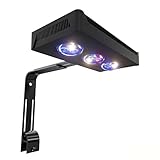
The AI Prime HD is one of the most popular compact LED fixtures in reef keeping, beloved for its powerful output relative to its small footprint. It covers a 24-inch square effectively and produces a full spectrum including UV, violet, blue, cyan, green, red, and white channels that support both SPS (small polyp stony) and LPS (large polyp stony) corals. The Prime HD is controllable via the myAI app, allowing you to program custom sunrise/sunset cycles and adjust intensity and spectrum in real time. Multiple units can be daisy-chained for larger tanks.
2. Kessil A360X Controllable LED Pendant
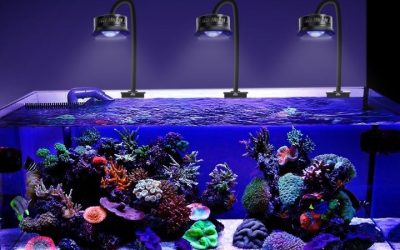
Kessil LED pendants are known for their exceptionally natural light shimmer — the moving light patterns on the tank floor and coral surfaces that mimic sunlight filtering through ocean water. The A360X uses Kessil's proprietary Dense Matrix LED technology to produce intense, focused light output with a remarkable shimmer effect that no other fixture replicates. It covers tanks up to 36 inches and is fully controllable via Kessil's Spectral X controller or compatible aquarium controllers. It is an excellent choice for SPS-dominant reef tanks that demand high PAR output.
3. Radion XR15 Pro G6 LED Light
The Ecotech Marine Radion XR15 Pro G6 represents the pinnacle of consumer-grade reef LED lighting. It features an eight-channel spectrum including far-red and UV that covers the full photosynthetically active range required by the most demanding SPS corals. The Radion integrates seamlessly with Ecotech's VorTech pump controllers and is programmable through the sophisticated Apex or ReefLink ecosystems. It is priced at the premium end but delivers unmatched controllability and coral growth performance for serious reef aquarists.
Buying Guide: Choosing Reef Aquarium Lighting
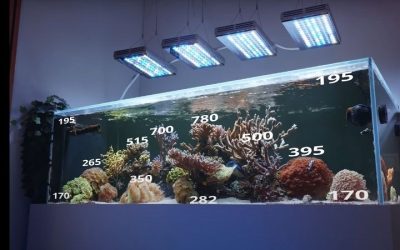
- PAR (Photosynthetically Active Radiation): Measure PAR at the coral placement depth. Soft corals thrive at 50-150 PAR; LPS at 100-250; SPS require 200-400+ PAR at the highest areas of the tank.
- Spectrum: Full-spectrum LEDs including blue, violet, UV, and white channels support the widest range of corals. Blue-weighted spectrum promotes fluorescence and coloration.
- Coverage area: Match the fixture's coverage specification to your tank footprint. Overlap multiple fixtures on larger tanks for even PAR distribution.
- Controllability: App-controlled lights with customizable schedules are strongly preferred. They allow gradual light acclimation for new corals and programming of realistic day/night cycles.
- Heat output: Quality LED fixtures run much cooler than metal halides, reducing chiller requirements and operating costs. Check thermal management specs on any fixture you consider.
Why Light Spectrum and PAR Matter for Corals
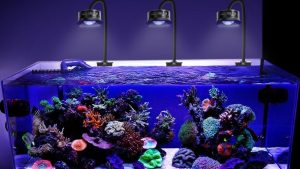
Reef lighting is uniquely demanding because corals host symbiotic algae called zooxanthellae that photosynthesize and provide much of the coral’s energy. To drive this process, corals need the right spectrum and intensity, not just visible brightness. Reef LEDs emphasize the blue and actinic wavelengths corals use most efficiently, which also make coral fluorescent pigments glow. The usable light energy is measured as PAR, and different corals have very different PAR requirements that determine where they should be placed in the tank.
Soft corals and many LPS corals are relatively low-light and thrive lower in the tank or under moderate PAR, while SPS corals like acropora demand high intensity and are typically placed higher up. Matching your light’s output to the corals you want to keep is essential, since too little light starves corals and too much can bleach them. Tank depth also matters, because light attenuates as it travels through water, so a deeper reef needs a more powerful fixture to deliver adequate PAR to the bottom.
Acclimation, Photoperiod, and Choosing a Fixture
Corals are sensitive to sudden lighting changes, so new corals and new fixtures both require gradual acclimation. When upgrading lights or adding livestock, start at lower intensity and increase it over several weeks to prevent bleaching from light shock. A typical reef photoperiod runs around eight to ten hours, often with a ramp-up and ramp-down that mimics natural sunrise and sunset, and many keepers add a short blue-only period at the dawn and dusk ends for both coral health and aesthetics.
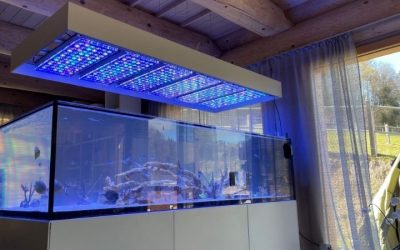
Modern reef LEDs offer programmable spectrum channels, dimming, and scheduling, giving precise control over intensity and color throughout the day. When choosing a fixture, consider your tank’s size and depth, the coral types you plan to keep, and whether you want app-based control for custom programs. Spreading multiple fixtures across a large tank avoids shadows and uneven coverage. Investing in quality reef lighting pays off in vibrant coral coloration and steady growth, since lighting is one of the most influential factors in long-term reef success.
Related Guides
- Quick Picks: Best Protein Skimmers for Reef Tanks
- Best Saltwater Aquarium Water Test Kit 2026
- Aquarium Sump Baffle Acrylic Divider Review
- Best Coral Foods for Reef Aquariums
Frequently Asked Questions
What is PAR and why does it matter for corals?
PAR measures the usable light energy corals need for photosynthesis. Different corals have different PAR requirements, so matching your light’s output to your corals and placing them at the right height is critical for their health.
How many hours should reef lights run each day?
A typical reef photoperiod is about eight to ten hours, often with gradual ramp-up and ramp-down phases. Programmable LEDs let you mimic natural sunrise and sunset, which benefits both corals and fish.
Why do reef lights look so blue?
Corals use blue and actinic wavelengths most efficiently for photosynthesis, and these wavelengths also make coral pigments fluoresce. That is why reef lighting emphasizes the blue end of the spectrum.
Do I need to acclimate corals to new lighting?
Yes. Sudden increases in light intensity can bleach corals, so start new fixtures or new corals at lower intensity and ramp up over several weeks. Gradual acclimation prevents light shock.
Can I keep SPS corals under any reef light?
SPS corals demand high PAR and a strong, quality fixture, especially in deeper tanks. Low-output lights may suit soft corals but will not provide enough intensity for demanding SPS species.
Final Thoughts
Reef aquarium lighting is a long-term investment that directly determines which corals you can successfully keep. Match your light choice to your coral goals — soft coral systems can work with mid-range LEDs while SPS-dominant tanks benefit from premium fixtures with verified PAR output and full-spectrum coverage. Whichever fixture you choose, introduce new corals gradually and use a PAR meter to confirm appropriate light levels at each coral's placement depth.
Related Reviews & Guides


AI Nero 3 vs Nero 7 Which Wavemaker: Best Compared Reef Guide
6 Best Saltwater Aquariums With Sump 2026