Last Updated: October 4, 2026

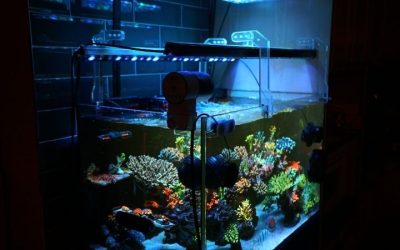
Nitrate and phosphate — the twin nemeses of every reef tank — are relentless. Even with pristine husbandry, a well-fed reef system accumulates these nutrients faster than most biological filtration can process them. Elevated nitrate (above 5–10 ppm in SPS systems) stresses coral tissue and fuels nuisance algae; phosphate above 0.05–0.1 ppm suppresses calcification in stony corals and feeds cyano outbreaks. The good news is that the removal media category has matured considerably — modern options are more efficient, more predictable, and easier to dose than earlier generations. Here are the best nitrate and phosphate removal media for reef tanks, covering granular ferric oxide, biopellets, zeolite, and specialized polymer blends.
🛒 Best Price Today on Amazon
Prime members get fast, free shipping on everything above, plus member-only deals. New members get a 30-day free trial — cancel anytime.
As an Amazon Associate we earn from qualifying purchases.



Quick Picks
Two Little Fishies NPX Bioplastics Biopellets
- Reduces both nitrate and phosphate
- Self-sustaining bacterial bed
- Well-established reef hobby standard


As an Amazon Associate we earn from qualifying purchases. Product prices and availability are accurate as of the date/time indicated.
Seachem PhosGuard Aluminum Oxide Phosphate Remover
- Fast-acting phosphate and silicate removal
- Rechargeable with Seachem Prime
- Works in both fresh and saltwater




As an Amazon Associate we earn from qualifying purchases. Product prices and availability are accurate as of the date/time indicated.
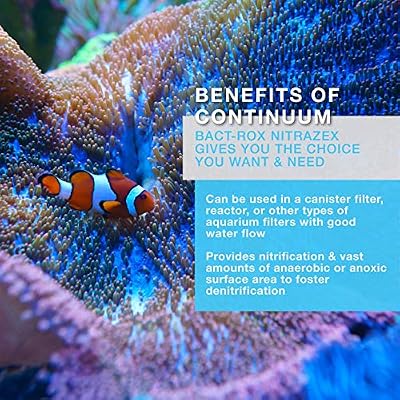
Bulk Reef Supply ROX 0.8 Carbon & GFO Combo
- High-quality GFO at competitive price
- Excellent phosphate binding capacity
- Trusted brand in the reef community


As an Amazon Associate we earn from qualifying purchases. Product prices and availability are accurate as of the date/time indicated.
Why Trust Our Picks
Nutrient control media is a topic with strong opinions and real consequences in the reef hobby — dose too much GFO too fast and you can crash your phosphate into negative territory, causing RTN events in SPS corals. Our recommendations are grounded in established reef chemistry knowledge, real-world community feedback across multiple reef forums, and practical experience running these media in systems ranging from nano reefs to 200-gallon mixed reef displays.
Best Nitrate & Phosphate Removal Media: In-Depth Reviews
1. Two Little Fishies NPX Bioplastics Biopellets — Best Overall
Biopellets represent one of the most elegant solutions to nutrient management in reef aquariums — rather than physically adsorbing nitrate and phosphate onto a chemical media, they cultivate a bacterial biofilm that consumes dissolved organics (and therefore both nitrate and phosphate) as part of the bacteria’s metabolic process. The bacteria are then exported from the system via skimming, completing the nutrient removal cycle without media exhaustion or replacement.
Two Little Fishies’ NPX Bioplastics are one of the oldest and most tested biopellet products on the market — the formulation has been refined over years of community use, and the pellet size is optimized for fluidization in a tumbling biopellet reactor. Results take four to eight weeks to fully establish as the bacterial colony matures, but once stabilized, the nutrient reduction is consistent and self-sustaining as long as the skimmer runs efficiently. A strong, well-tuned protein skimmer is essential for biopellets to work — the skimmer exports the bacteria-laden skimmate that carries the actual nutrients out of the system.
- Pros: Reduces both nitrate and phosphate simultaneously; self-sustaining once established — no media replacement; elegant biological approach; well-tested in the reef community; cost-effective long-term
- Cons: Requires a biopellet reactor; 4–8 week establishment period; requires a well-tuned skimmer to export bacteria; overdosing can cause oxygen depletion — start conservatively
2. Seachem PhosGuard — Runner-Up
Seachem PhosGuard uses aluminum oxide as its active binding agent — it’s highly effective at adsorbing both phosphate and silicate from the water column, and it works in both freshwater and marine systems. The spherical bead format flows well in a reactor or media bag, and the product is genuinely fast-acting — noticeable phosphate reduction within 24–48 hours of introduction.
A key differentiator from GFO (granular ferric oxide): PhosGuard can be recharged using Seachem Prime, extending its usable life beyond the single-use nature of most phosphate media. The aluminum oxide base is considered safe for reef invertebrates when used as directed, though — as with all phosphate media — rapid, large drops in phosphate can stress SPS corals, so a gradual introduction approach is recommended.
- Pros: Fast-acting phosphate and silicate removal; rechargeable with Seachem Prime; works in fresh and saltwater; spherical beads flow well in reactors; widely available
- Cons: Aluminum oxide — not ferric oxide — has a different binding mechanism; must be introduced gradually to avoid phosphate crashes; recharging adds complexity; more expensive per gram than GFO
3. Bulk Reef Supply High Capacity GFO — Best Budget
Granular ferric oxide (GFO) is the most widely used chemical phosphate removal media in the reef hobby — it’s straightforward, effective, and well-understood. BRS (Bulk Reef Supply) produces one of the most respected GFO products available: high-purity iron oxide granules with a documented phosphate binding capacity that outperforms many cheaper alternatives. BRS ships directly and sells in bulk quantities, making the per-gram cost significantly lower than retail-packaged alternatives from Seachem or Two Little Fishies.
GFO is a single-use media — it adsorbs phosphate until exhausted, then must be replaced (typically every 4–8 weeks depending on system load). Running it in a dedicated media reactor with gentle tumbling (not aggressive churning, which creates fine dust) gives the best results. Never introduce GFO into a system with already-low phosphate without testing first — crashing phosphate below 0.02 ppm can trigger RTN events in sensitive SPS colonies.
- Pros: Proven reef hobby standard; BRS quality is consistently high; bulk purchasing reduces cost significantly; fast-acting and predictable; well-documented dosing guidelines available
- Cons: Single-use only — must be replaced when exhausted; requires media reactor for best results; must be introduced gradually; does not reduce nitrate (phosphate only)
4. Seachem DeNitrate — Nitrate-Specific Media
Seachem DeNitrate addresses the nitrate side of the equation specifically — it’s a porous silicate media that creates anaerobic zones within each granule, cultivating denitrifying bacteria that convert nitrate to nitrogen gas. It works passively in low-flow areas of a sump or in a slow-flow media reactor, making it one of the simpler nitrate-reduction approaches available. Establishment takes several weeks, and results are gradual — this is a long-game solution rather than a quick fix for acute nitrate spikes.
- Pros: Passive nitrate reduction — no reactor required if used in low-flow areas; long-lasting media that doesn’t need frequent replacement; suitable for both fresh and saltwater; addresses nitrate specifically without affecting phosphate
- Cons: Slow establishment (4–8 weeks); results are gradual; requires consistent low-flow placement; not a standalone solution for heavily loaded systems
5. Warner Marine EcoBAK Biopellets
Warner Marine’s EcoBAK pellets are a well-regarded alternative to the Two Little Fishies NPX formula — the pellet density and size are optimized for fluidization, and the carbon-to-nitrogen ratio is tuned for efficient bacterial growth without the oxygen-depletion risk that comes with overdosing lower-quality biopellet media. For reefers who want to try biopellets but are concerned about the Two Little Fishies supply chain (which can be inconsistent on Amazon), EcoBAK is a reliable alternative from a reef-specialist brand.
- Pros: Optimized pellet density for reactor fluidization; tuned C:N ratio for safer bacterial establishment; reef-specialist brand with strong community reputation; effective dual nitrate/phosphate reduction
- Cons: Same requirements as all biopellets — reactor and strong skimmer essential; 4–8 week establishment period; slightly more expensive than NPX per unit volume
Buyer’s Guide: Choosing the Right Nutrient Removal Media
Test Before You Treat — Never add nutrient removal media without a baseline reading of your current nitrate and phosphate levels. Without knowing your starting point, you can’t dose appropriately, can’t track progress, and — critically — can’t catch a dangerous over-correction before it damages your livestock. A reliable phosphate test kit (Hanna Checker HI713 is the reef community standard) and nitrate test kit are essential companions to any nutrient media program.
GFO is exhausted when phosphate levels stop declining despite its presence — typically every 4–8 weeks in a moderately loaded reef system. Testing phosphate weekly while using GFO lets you identify exactly when the media is nearing exhaustion and needs replacement before levels begin to rise again.
Will nitrate and phosphate removal media harm my corals?
Used correctly — introduced gradually, with regular testing — they won’t. The primary risk is over-correction: dropping phosphate or nitrate too quickly can stress SPS corals, causing bleaching or RTN. Start at half the recommended dose, test every 48–72 hours during the first two weeks, and increase dosing only after confirming the rate of change is controlled.
Do I need a media reactor for GFO?
Technically no — GFO can be used in a passive media bag in the sump. However, a media reactor significantly improves efficiency by ensuring consistent water flow through the media and preventing channeling. For serious reef systems, the investment in a two-chamber media reactor (one chamber for carbon, one for GFO) is worthwhile.
Final Verdict
For a comprehensive, long-term nutrient management strategy, Two Little Fishies NPX Biopellets offer the most elegant solution — self-sustaining biological reduction of both nitrate and phosphate simultaneously, with no media replacement once established. For immediate phosphate control (while biopellets establish, or as a standalone solution), BRS High Capacity GFO is the reef community’s proven standard at the best available price. Pairing these two approaches gives most reef systems robust, predictable nutrient control across the full nitrate-and-phosphate spectrum.
Gradual Introduction Is Always Safer — Whether using GFO, PhosGuard, or biopellets, the universal reef chemistry rule applies: slow changes are safe, rapid changes are dangerous. Start with half the recommended dose and allow 2–4 weeks to assess the response before increasing. A phosphate crash from aggressive initial dosing can cause more coral loss than the elevated phosphate you were trying to fix.
Matching Media to Your System’s Nutrient Profile — GFO and PhosGuard address phosphate only. Biopellets and DeNitrate address nitrate (with biopellets also pulling some phosphate). Most reef systems benefit from a combination approach: GFO or PhosGuard for phosphate control, paired with either biopellets, vodka dosing, or a refugium for nitrate management.
Media Reactors vs. Passive Use — GFO and PhosGuard perform significantly better when tumbled slowly in a dedicated media reactor than when placed in a static media bag. Reactor tumbling maximizes surface area contact and prevents channeling (water flowing around rather than through the media). For biopellets, a dedicated biopellet reactor with consistent tumbling is non-negotiable.
Frequently Asked Questions
What phosphate level is safe for SPS corals?
Most SPS-dominant reef systems target 0.02–0.08 ppm phosphate. Below 0.02 ppm can cause starvation stress in corals that depend on symbiotic zooxanthellae; above 0.1 ppm consistently suppresses calcification and can cause browning in Acropora species. The ideal range varies somewhat by system and coral collection — some reefers successfully maintain SPS at slightly higher phosphate with no ill effects.
Can I use GFO and biopellets at the same time?
Yes — they work through different mechanisms and complement each other well. GFO handles phosphate chemically while biopellets cultivate bacteria that process both nitrate and some phosphate biologically. Using both simultaneously gives more comprehensive nutrient control, though you’ll need to monitor phosphate closely to avoid crashing it too low.
How often should GFO be replaced?
GFO is exhausted when phosphate levels stop declining despite its presence — typically every 4–8 weeks in a moderately loaded reef system. Testing phosphate weekly while using GFO lets you identify exactly when the media is nearing exhaustion and needs replacement before levels begin to rise again.
Will nitrate and phosphate removal media harm my corals?
Used correctly — introduced gradually, with regular testing — they won’t. The primary risk is over-correction: dropping phosphate or nitrate too quickly can stress SPS corals, causing bleaching or RTN. Start at half the recommended dose, test every 48–72 hours during the first two weeks, and increase dosing only after confirming the rate of change is controlled.
Do I need a media reactor for GFO?
Technically no — GFO can be used in a passive media bag in the sump. However, a media reactor significantly improves efficiency by ensuring consistent water flow through the media and preventing channeling. For serious reef systems, the investment in a two-chamber media reactor (one chamber for carbon, one for GFO) is worthwhile.
Final Verdict
For a comprehensive, long-term nutrient management strategy, Two Little Fishies NPX Biopellets offer the most elegant solution — self-sustaining biological reduction of both nitrate and phosphate simultaneously, with no media replacement once established. For immediate phosphate control (while biopellets establish, or as a standalone solution), BRS High Capacity GFO is the reef community’s proven standard at the best available price. Pairing these two approaches gives most reef systems robust, predictable nutrient control across the full nitrate-and-phosphate spectrum.
Related Guides
- Beginner Reef Tank Starter Kit Review
- Best Chiller For Saltwater Aquarium 2026
- Quick Picks: Best Protein Skimmers for Reef Tanks
- Best LED Lighting For Reef Tank 2026
Related Reviews & Guides



Best Calcium Reactor for a Frag System: Top Expert Guide

Aquarium Sump Filter Wet Dry Review