Last Updated: October 9, 2026
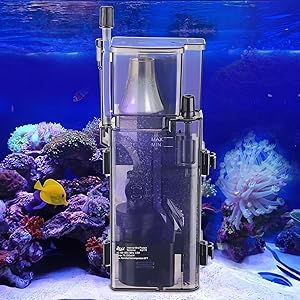
TL;DR: An aquarium cone protein skimmer uses a conical reaction chamber to increase contact time between air bubbles and water, producing drier, more concentrated skimmate with less energy. This guide covers how cone skimmers outperform cylinder models, what to look for, and top picks for reef tanks of all sizes.
Aquarium Cone Protein Skimmer: Cleaner Water, Drier Skimmate, Better Reefs
In a mature reef tank, dissolved organic compounds (DOCs) — protein fragments, amino acids, lipids — accumulate faster than biological filtration alone can process them. Left unchecked, DOC build-up drives algae growth, depresses pH, and stresses corals. The protein skimmer is the primary export mechanism for these compounds, pulling them out of the water column before they oxidise into nitrate.
As an Amazon Associate we earn from qualifying purchases at no extra cost to you.


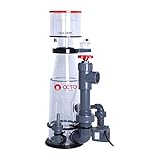

Cone skimmers specifically address the main inefficiency of cylindrical skimmer bodies: the water column narrows as it rises, crowding bubbles together and forcing them to merge and collapse before they carry their organic load into the collection cup. A cone body widens toward the base of the reaction chamber, slowing upward flow and extending the time each bubble spends in contact with water — the core variable that determines skimmate concentration and extraction efficiency.
🛒 Best Price Today on Amazon
Prime members get fast, free shipping on everything above, plus member-only deals. New members get a 30-day free trial — cancel anytime.
Start 30-Day Prime Free Trial →See Today’s Amazon DealsHow Cone Skimmers Outperform Cylinder Models
The physics are straightforward. In a cylindrical skimmer, water and bubble velocity increases as the bubble column rises (fixed diameter, increasing back-pressure). In a cone skimmer, the expanding body volume decreases velocity as the foam rises — bubbles slow down, persist longer, and have more time to adsorb dissolved organics onto their surface film before reaching the neck and collection cup.
Practical results: cone skimmers typically produce darker, thicker skimmate at lower air input volumes compared to equivalent-rated cylinder skimmers. This means the pump works less hard, consumes less energy, and adds less heat to the sump — a meaningful advantage for tanks where chiller load is already high.
Top Cone Protein Skimmer Picks




As an Amazon Associate we earn from qualifying purchases. Product prices and availability are accurate as of the date/time indicated.



As an Amazon Associate we earn from qualifying purchases. Product prices and availability are accurate as of the date/time indicated.


As an Amazon Associate we earn from qualifying purchases. Product prices and availability are accurate as of the date/time indicated.
Sizing a Cone Skimmer for Your Tank
Manufacturer ratings are optimistic — a skimmer labelled for 500 L performs best on lightly to moderately stocked systems of that volume. For heavily fed reef tanks with large fish, rate down 20–30%: a 600 L-rated skimmer on a 450 L display is a practical guideline.
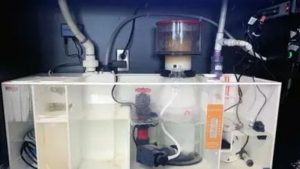
Skimmer footprint in the sump is often the limiting factor. Measure your available sump chamber before purchasing — cone bodies are typically wider at the base than cylinder models of the same rating. Consider sump water depth too: most in-sump cone skimmers operate in a specific water depth range (typically 15–25 cm); too shallow or too deep and the neck adjustment cannot compensate.
Spec Comparison: Cone vs Cylinder Skimmers
| Feature | Cone Skimmer | Cylinder Skimmer |
|---|---|---|
| Bubble contact time | Extended (decelerating flow) | Standard |
| Skimmate concentration | Higher / drier | Moderate / wetter |
| Air input required | Lower for same DOC export | Higher |
| Energy use (pump) | Lower | Higher |
| Sump footprint | Wider base | Uniform |
| Break-in period | 3–10 days | 3–7 days |
| Typical price premium | 20–40% over equivalent cylinder | Baseline |
| Cup cleaning frequency | Less frequent (concentrated skimmate) | More frequent |
Break-In, Tuning, and Maintenance
All new skimmers require a break-in period during which the acrylic or polycarbonate body off-gasses manufacturing residues that suppress foam formation. During this phase (typically 3–10 days), the skimmer will produce little or no skimmate — this is normal. Set the neck adjustment to produce a wet skim during break-in, then gradually raise it to dry skim once the foam head stabilises.
Adjust the collection cup neck so the foam-water interface sits approximately 2–3 cm below the cup rim. Too high and the cup overflows with liquid; too low and only residue collects. Water changes, new tank additives, or sudden increases in feeding can shift the foam level — check tuning after any significant tank event.
Clean the neck and cup interior weekly with a dedicated skimmer cleaning brush and plain fresh water. Residue build-up narrows the neck and disrupts foam formation far more than most hobbyists realise — a clean neck is the single most impactful maintenance step for consistent skimmer performance.
For a deeper look at how skimmers fit into an overall export strategy, our aquarium filtration systems guide covers refugium chaeto, carbon dosing, and biopellet reactors as complementary export methods.
If you’re planning a new reef build around a cone skimmer, read our sump setup guide for chamber sizing recommendations that ensure proper water depth for in-sump skimmer placement.
Struggling with green algae despite running a skimmer? Check our aquarium algae control guide — skimmer sizing, nutrient input, and light schedule are the three levers that matter most.
FAQ: Aquarium Cone Protein Skimmer
Can I use a cone protein skimmer on a freshwater planted tank?
Protein skimmers are rarely used on freshwater tanks because freshwater’s lower surface tension makes stable foam production difficult, and the DOC levels in a well-maintained planted tank are usually manageable through biological filtration and regular water changes. Skimming is primarily a saltwater/reef tool where surface tension properties of saltwater support stable micro-bubble foam columns.
Why is my cone skimmer overflowing the collection cup?
Cup overflow — known as “skimmer crash” — typically results from sudden introduction of surfactants (liquid coral foods, new additives, medications, or even hand soap residue from tank maintenance). Raise the neck adjustment immediately to reduce foam level and allow the surfactant to process through. Reduce or eliminate the new additive and the skimmer should stabilise within 12–24 hours.
How dark should the skimmate be from a cone protein skimmer?
Healthy skimmate from a well-tuned cone skimmer is dark brown to nearly black and has a noticeably unpleasant odour — this is the organic waste you want removed. Light yellow or clear liquid in the cup indicates wet skimming (the neck is set too low) or insufficient organic load. Very dark, tar-like skimmate daily suggests you are over-feeding or the tank’s bioload exceeds the skimmer’s capacity.
Does a cone protein skimmer remove beneficial elements from reef water?
Skimmers remove dissolved organics non-selectively, which means trace elements and some amino acids exit with the skimmate. In a heavily skimmed reef with corals consuming trace elements, regular dosing of two-part, kalkwasser, or a calcium reactor compensates for this removal. Test alkalinity, calcium, and magnesium weekly in skimmer-driven systems to establish your tank’s specific depletion rate.
What is the ideal sump water level for a cone skimmer?
Most in-sump cone skimmers specify an operating water depth range — commonly 18–22 cm. Outside this range, the pump intake depth changes the bubble production characteristics and the neck adjustment cannot compensate. Use a sump baffle or gate valve on the skimmer chamber drain to maintain a stable depth regardless of return pump flow or evaporation between top-offs.
Frequently Asked Questions
What does a protein skimmer actually remove?
It strips dissolved organic compounds before they break down into nitrate and phosphate, using fine bubbles that organics cling to and that carry them into a collection cup as skimmate. That lowers nutrient load, boosts dissolved oxygen and redox, and clears the yellow tint dissolved organics cause.
Why a cone body rather than a cylinder?
The tapered cone funnels the bubble column smoothly into the neck without the turbulence a flat-topped cylinder creates, so foam is more stable and skimmate drier. Cones also tune more easily and cope better with changing load. Modern hybrid bodies close much of the gap, so pump quality matters more.
How do I size a skimmer for my tank?
Size by actual bioload rather than the optimistic figure printed on the box. A skimmer rated for around double your display volume is a safe choice on a moderately stocked reef. Also check it physically fits the sump section and that its required water depth matches your baffle height.
Do freshwater tanks need a skimmer?
No. Skimming depends on the ionic properties of salt water to form persistent microbubbles; in fresh water those bubbles collapse and almost nothing is collected. Freshwater systems achieve the same nutrient export through mechanical filtration, live plants and regular water changes instead.
Why is my new skimmer overflowing or not foaming?
New skimmers need a break-in of one to two weeks while surfaces wet and the tank settles. Adjust the water level or air valve in small steps and wait a day between changes. Overflow usually means the water level is too high or you recently fed or dosed; no foam usually means too low a level or a blocked air intake.
Ready to decide? Our #1 pick for 2026 is the Bubble contact time.
Live price & availability on Amazon.
Related Reviews & Guides

Best Reef LED Light for LPS Corals: Top Expert Buying Guide
Best pH and ORP Monitor for a Reef Tank: Top Compared Guide