Last Updated: October 4, 2026
- Top Pick: hygger Mini Wave Maker for 15-40 Gallon Aquarium with Magnetic Mount Quiet Powerhead for Saltwater and Freshwater Fish Tank 530 GPH
- Best Value: hygger Aquarium Wave Maker, Adjustable Cross Flow Pump with LED Display Controller, Magnetic DC 24V Aquarium Powerhead for Freshwater and Marine Reef Aquariums Up to 135 Gallon (18w)
- Premium Choice: hygger Intelligent Wave Maker for Aquarium, Saltwater Freshwater Circulation Pump Adjustable 6 Waves/Night/Feed/Wireless Connection Mode, Magnetic Holder Display Controller Memory Function (35W)

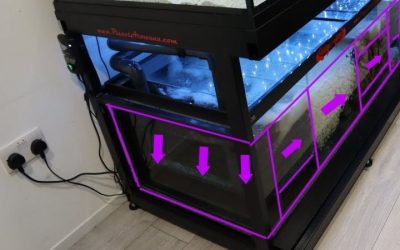
Water movement is one of the most underappreciated variables in a successful reef tank. Corals evolved in environments where currents are constant and complex — stagnant water leads to detritus accumulation, oxygen depletion in low-flow zones, and the kind of stress responses in SPS corals that no amount of perfect chemistry can fix. A quality wave maker or powerhead creates the chaotic, multidirectional flow that reef inhabitants genuinely need. The market has matured considerably in the past few years, with smart controllable units becoming increasingly accessible — here are the picks worth your money.
🛒 Best Price Today on Amazon
Prime members get fast, free shipping on everything above, plus member-only deals. New members get a 30-day free trial — cancel anytime.
As an Amazon Associate we earn from qualifying purchases.




Quick Picks
Ecotech Marine Vortech MP40
- External motor keeps heat out of water
- Reef-optimized flow patterns
- EcoSmart app and Apex/Neptune integration



As an Amazon Associate we earn from qualifying purchases. Product prices and availability are accurate as of the date/time indicated.
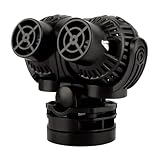
Maxspect Gyre XF350
- Gyre crossflow technology
- Wide flow coverage per unit
- Controller included, whisper-quiet operation


As an Amazon Associate we earn from qualifying purchases. Product prices and availability are accurate as of the date/time indicated.
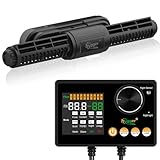
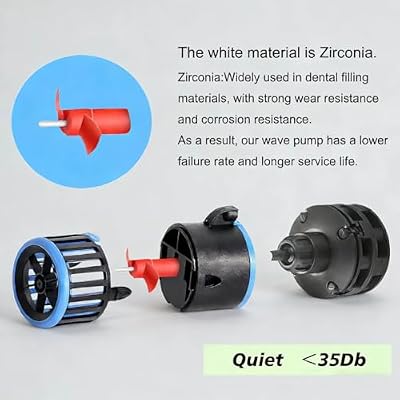
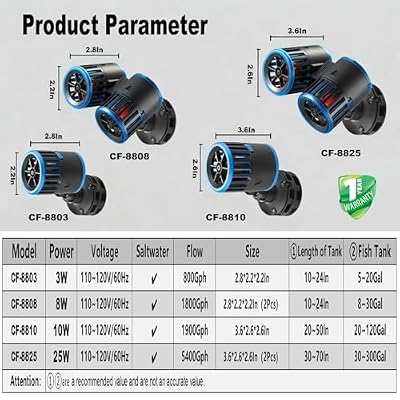
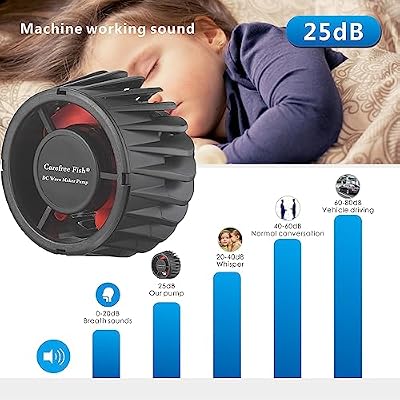
Hygger Aquarium Wave Maker
- Controllable flow with included controller
- Quiet magnetic mount
- Excellent value for nano to mid-size tanks




As an Amazon Associate we earn from qualifying purchases. Product prices and availability are accurate as of the date/time indicated.
Why Trust Our Picks
Our aquarium team has maintained reef tanks ranging from 20-gallon nano systems to 180-gallon mixed reef displays. We evaluate powerheads and wave makers on flow pattern quality (random vs. pulsing vs. gyre), noise level, heat addition to the water column, ease of cleaning, controller functionality, and long-term reliability. We also draw on community consensus from Reef2Reef and Nano-Reef forums, where these products get thousands of hours of real-world evaluation.
Best Aquarium Wave Makers for Reef Tanks: In-Depth Reviews
1. Ecotech Marine Vortech MP40 — Best Overall
The Vortech MP40 is the benchmark that every other reef powerhead gets measured against — and it maintains that position for good reasons. Its most distinctive engineering feature is the external motor design: the driver unit mounts outside the glass, connected magnetically to the propeller inside the tank. This means zero motor heat enters the water column — a genuinely significant advantage in reef systems where temperature stability is critical.
The EcoSmart controller app offers an impressive suite of flow modes: Reef Crest (chaotic, high-energy), Lagoon (gentler, broader), Short Pulse, Long Pulse, and Tidal Swell (which simulates natural tidal patterns over a 24-hour cycle). Integration with Apex, GHL, and other reef controllers makes the MP40 a natural choice for automated, data-driven systems. For SPS-dominant tanks in particular, the high-velocity yet adjustable flow pattern is hard to beat. The price is substantial — but so is the engineering.
- Pros: External motor (no heat addition), exceptional flow patterns, deep controller integration, proven long-term reliability, industry-standard choice
- Cons: Premium price; external motor requires dry mounting surface; overkill for tanks under 75 gallons
2. Maxspect Gyre XF350 — Runner-Up
Maxspect pioneered the gyre flow concept for aquariums, and the XF350 remains one of the best implementations of the technology. Rather than a traditional spinning propeller, the Gyre uses two counter-rotating propellers on an elongated axle to generate a laminar crossflow pattern — a sheet of water that moves across the tank rather than a cone of turbulence from a single point. This produces exceptionally even flow distribution, reaching dead spots that traditional powerheads often miss.
The XF350 ships with a dedicated controller offering pulse, alternating, and feeding modes. It’s notably quiet in operation and can be run in reverse to create a genuine gyre circulation effect when paired with a second unit. For rectangular tanks in the 60–120 gallon range, the gyre pattern often outperforms traditional propeller powerheads in terms of whole-tank flow coverage. It runs slightly warmer than the Vortech but not problematically so for most systems.
- Pros: Gyre crossflow technology, excellent tank-wide coverage, quiet operation, controller included, effective in alternating pair setups
- Cons: Elongated profile can be visually obtrusive; some heat addition; less community support integration than Ecotech
3. Hygger Aquarium Wave Maker — Best Budget
For nano and mid-size reef tanks — say, 20 to 75 gallons — the Hygger Wave Maker delivers controllable, quiet flow at a price point that makes it genuinely accessible. The included controller allows adjustment of flow rate and offers wave and pulse modes, which is more functionality than most budget alternatives provide. The magnetic mount is secure and low-profile, and the propeller design produces reasonably natural turbulent flow rather than the focused jet of cheaper powerheads.
It’s not in the same tier as the Vortech or Gyre in terms of flow pattern sophistication — but for a soft coral or LPS-dominated nano reef, it provides adequate circulation without the cost premium of professional-grade units. Many hobbyists use a pair of Hygger units to create opposing flows in smaller systems, achieving reasonable gyre-like circulation at a fraction of the cost.
- Pros: Excellent value, controller included, quiet, magnetic mount, suitable for nano to mid-size tanks
- Cons: Less sophisticated flow patterns; not suitable for large or SPS-heavy tanks; longevity less proven than premium brands
Buyer’s Guide: Choosing a Wave Maker for Your Reef
Tank Size and Flow Rate: A common guideline is 20–40x tank volume per hour for reef tanks. A 100-gallon reef ideally has 2,000–4,000 GPH of total flow — distributed across multiple powerheads rather than one large unit to avoid dead spots.
Flow Pattern Type: Randomized flow (Vortech’s Reef Crest mode) is best for SPS corals. Gyre/crossflow suits mixed reefs well. Steady laminar flow is adequate for FOWLR tanks but insufficient for demanding coral systems.
Heat Addition: Every in-tank motor adds heat. In warm climates or small tanks, the cumulative heat from multiple powerheads can push temperatures above the safe range for corals — factor this into your cooling budget.
Controller Compatibility: If you run an Apex or GHL controller, verify that your powerhead integrates natively — this enables automated storm modes, feeding pauses, and temperature-triggered flow reductions.
Frequently Asked Questions
How many powerheads do I need for a reef tank?
Most reefkeepers use two powerheads positioned on opposing sides to create crossing flow patterns. This eliminates dead spots and produces more natural, turbulent water movement than a single unit can achieve.
Can a wave maker be too strong for corals?
Yes — very high direct flow can damage coral tissue, particularly softer LPS corals. The goal is strong, random, indirect flow rather than a sustained jet aimed directly at any colony. Position powerheads to bounce flow off rockwork and glass.
How often should I clean my powerhead?
Monthly cleaning is a good baseline — coralline algae and detritus buildup reduces flow efficiency significantly over time. Many reefers soak propellers in a diluted vinegar solution to remove mineral deposits.
Is a wave maker necessary for a FOWLR tank?
For fish-only tanks, a simpler return pump and one or two basic powerheads is generally sufficient. The sophisticated flow patterns of premium wave makers are most impactful for coral systems.
What is a gyre and why does it matter?
A gyre is a circular flow pattern — water moves in one direction across the tank, turns at the end walls, and returns along the opposite side. This creates a continuous circuit that dramatically reduces dead spots compared to traditional powerhead placement.
Final Verdict
For serious reef tanks — especially SPS systems where flow quality directly determines coral health — the Ecotech Marine Vortech MP40 remains the gold standard and justifies its price. For excellent whole-tank coverage with a unique flow pattern, the Maxspect Gyre XF350 is a compelling alternative, particularly in rectangular tanks. And for nano reefs or hobbyists building their first controllable flow system without premium expenditure, the Hygger Wave Maker punches well above its price. Whatever your choice, prioritize randomized flow over steady jets — your corals will thank you.
Related Reviews & Guides
Best Protein Skimmer for 200 Gallon System: How to Pick
Best Reef Light for a 75 Gallon Tank: Proven Top 4 Picks