Last Updated: October 4, 2026
- Top Pick: Salifert Master Reef Testing Combo Kit – Saltwater Aquariums
- Best Value: Salifert Calcium (Ca) Test Kit – 50 to 100 Tests
- Premium Choice: Salifert Magnesium (MG) Test Kit
As an Amazon Associate we earn from qualifying purchases at no extra cost to you.
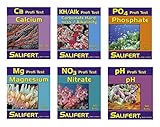




Reliable aquarium saltwater and reef test kits are the foundation of successful marine fishkeeping — without accurate water parameter readings, maintaining the delicate chemical balance that corals, invertebrates, and marine fish require becomes guesswork. From ammonia and nitrate to alkalinity, calcium, and phosphate, each parameter requires a test kit precise enough to detect meaningful changes before they stress your livestock. Salifert has long been the benchmark brand in the reef hobby, but several strong competitors now challenge that dominance across specific parameters. We compared the top reef water testing options to identify the best choices for accuracy, ease of use, and value.
🛒 Best Price Today on Amazon
Prime members get fast, free shipping on everything above, plus member-only deals. New members get a 30-day free trial — cancel anytime.
Start 30-Day Prime Free Trial →See Today’s Amazon DealsQuick Picks
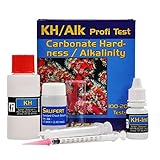
Salifert Profi Test Kit — Alkalinity/KH
Salifert’s alkalinity test kit has been the industry standard in reef keeping for over two decades, offering end-point titration accuracy to 0.1 dKH that no colorimetric test strip or basic kit can match. Clear, repeatable color changes and a large number of tests per kit make it the go-to choice for serious reefers monitoring alkalinity swings.
- Titration accuracy to 0.1 dKH — finest resolution available
- 50–100 tests per kit — long-lasting value
- Clear end-point color change for consistent readings


As an Amazon Associate we earn from qualifying purchases. Product prices and availability are accurate as of the date/time indicated.
Red Sea Reef Foundation ABC+ Test Kit
Red Sea’s bundled Reef Foundation test kit covers alkalinity, calcium, and magnesium in a single purchase — the three core parameters that drive coral skeletal growth — making it the most practical starting point for new reef tank owners who need broad parameter coverage without buying multiple separate kits.
- Covers alkalinity, calcium, and magnesium in one kit
- Color-reference card included for accurate reading
- Designed specifically for reef parameter ranges




As an Amazon Associate we earn from qualifying purchases. Product prices and availability are accurate as of the date/time indicated.
API Saltwater Master Test Kit
API’s Saltwater Master Test Kit provides the widest parameter coverage per dollar of any option in this comparison — ammonia, nitrite, nitrate, and pH in a single kit — making it an excellent value choice for fish-only saltwater tanks and new reef setups where basic cycle monitoring is the priority.
- Four parameters in one kit: ammonia, nitrite, nitrate, pH
- Liquid reagent tests far more accurate than test strips
- Best value per test across all parameters covered


As an Amazon Associate we earn from qualifying purchases. Product prices and availability are accurate as of the date/time indicated.
Why Trust Our Recommendations
Our recommendations are grounded in reef chemistry expertise, comparative accuracy data from independent hobbyist testing against ICP (inductively coupled plasma) laboratory analysis, and long-term ease-of-use feedback from both beginner and experienced marine aquarists. We evaluated test kits for precision at reef-relevant parameter ranges, reagent shelf life, and instructions clarity.
Detailed Reviews
1. Salifert Profi Test Kits — Best for Precision Reef Monitoring
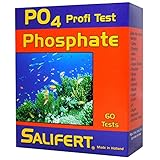
Salifert’s range of individual parameter test kits remains the benchmark against which other reef test kits are measured, particularly for the three parameters most critical to coral health: alkalinity (KH), calcium, and magnesium. The alkalinity kit uses a high-precision titration method with a clear blue-to-pink color endpoint that produces consistent results even for colorblind hobbyists. The calcium and magnesium kits use similar titration approaches that deliver accuracy within ±5 ppm at reef-relevant concentrations. Each kit provides between 50 and 100 tests depending on the parameter, and the reagents have a reasonable shelf life of 18–24 months when stored correctly. Salifert also makes phosphate, nitrate, ammonia, silicate, and iodine kits in the same precise format for comprehensive reef monitoring.
Pros: Titration accuracy to 0.1 dKH / ±5 ppm — best available in hobby testing | Clear endpoint color change for consistent readings | Full parameter range available in same kit series
Cons: Individual kits must be purchased per parameter; higher combined cost than bundled alternatives
2. Red Sea Reef Foundation ABC+ Test Kit — Best Bundled Reef Kit
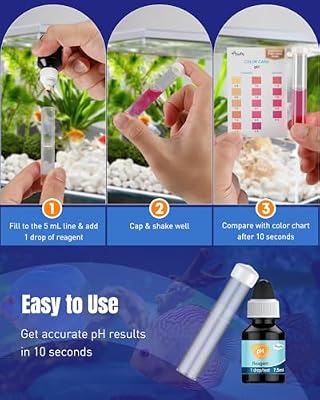
Red Sea’s Reef Foundation ABC+ kit is designed around the three parameters that coral skeleton deposition depends on most directly: alkalinity (A), calcium (B), and magnesium (C). Bundling all three in a single purchase at a lower combined price than three separate Salifert kits makes this the most practical entry point for new reef tank owners who need immediate coverage of the core reef chemistry parameters. The instructions are detailed and clearly illustrated, with printed color reference cards that help less experienced hobbyists read results consistently. Accuracy is slightly below Salifert’s titration precision but adequate for maintaining healthy coral growth parameters in the typical reef alkalinity range of 7–12 dKH.
Pros: Covers all three core reef parameters in one purchase | Lower combined cost than separate kits | Excellent instructions for beginners with printed color references
Cons: Slightly lower precision than Salifert titration kits at critical parameter boundaries
3. API Saltwater Master Test Kit — Best for Cycle Monitoring and FOWLR Tanks
The API Saltwater Master Test Kit is the best-value option for fish-only saltwater (FO) and fish-only-with-live-rock (FOWLR) setups, or for new reef tanks during the cycling phase when ammonia, nitrite, and nitrate monitoring is the primary concern. The four-parameter kit covers the full nitrogen cycle — ammonia, nitrite, nitrate, and pH — with liquid reagent drop tests that are significantly more accurate than test strips while remaining very affordable per test. The color comparison cards in the kit are clear and easy to read under normal room lighting. For established reef tanks, this kit supplements rather than replaces Salifert or Red Sea chemistry kits for alkalinity, calcium, and magnesium.
Pros: Best per-test cost of any kit in this comparison | Covers full nitrogen cycle in one purchase | Liquid reagents far more accurate than strips
Cons: Does not cover reef chemistry parameters (alkalinity, calcium, magnesium) needed for coral tanks
4. Hanna Instruments HI772 Checker HC — Best for Phosphate Testing
Phosphate is one of the most critical parameters in reef tanks — even low concentrations in the 0.02–0.05 ppm range can visibly inhibit coral coloration and calcification. Standard colorimetric test kits struggle to differentiate meaningfully at these ultra-low levels. The Hanna Checker HC for ULR phosphate uses a precise photometric reading method that detects phosphate down to 0.01 ppb, providing resolution that no manual color-match test can achieve. The small electronic reader uses single-use reagent cuvettes (sold separately), which adds ongoing cost, but for serious reefers managing SPS coral phosphate levels, this level of precision is indispensable.
Pros: Photometric accuracy to 0.01 ppb — unmatched precision for phosphate | Removes color-match subjectivity entirely | Compact handheld unit easy to store
Cons: Ongoing reagent cuvette cost; measures phosphate only
Buyer’s Guide
Which Parameters to Test and How Often
Testing frequency and parameter selection depend on your tank type and stocking level. For a new tank cycling, test ammonia and nitrite every two to three days until readings stabilize at zero. For an established FOWLR tank, monthly ammonia, nitrate, and pH testing is typically sufficient. For a reef tank with corals, alkalinity should be tested every two to three days — it is consumed rapidly by coral calcification and swings of even 1–2 dKH per day can cause coral stress. Calcium and magnesium are consumed more slowly and weekly testing is generally adequate. Phosphate and nitrate in reef tanks should be tested weekly to catch nutrient accumulation trends before they affect coral health.
Test Strips vs. Liquid Reagent Test Kits vs. Electronic Testers
Test strips are the least accurate option for reef tanks — color gradation is too coarse to detect the small parameter shifts that matter in a coral system, and results vary with the reader’s color perception and lighting conditions. Liquid reagent drop tests are the standard for most parameters and offer sufficient accuracy for the majority of reef applications when used carefully. Electronic testers like the Hanna Checker range eliminate color-match subjectivity entirely and provide the highest precision for specific parameters. A practical reef testing strategy typically uses liquid reagent kits for routine alkalinity, calcium, magnesium, and nitrate monitoring, supplemented by a Hanna Checker for phosphate where color discrimination is inadequate.
Reagent Shelf Life and Storage
Reagent shelf life directly affects test accuracy. Most liquid reagents in reef test kits carry an 18–24 month shelf life from manufacture date. Expired reagents produce unreliable readings — a particularly dangerous scenario in reef tanks where small parameter deviations cause significant livestock impact. Check the expiration date when purchasing, and avoid buying kits that will be stored unused for extended periods. Store all reagents in a cool, dark location away from temperature extremes. Reagent bottles should always be capped tightly after use, as oxidation and moisture contamination degrade reagent quality faster than age alone.
Frequently Asked Questions
How accurate are Salifert test kits compared to ICP lab analysis?
Salifert kits are consistently among the closest hobby-grade tests to ICP laboratory results in independent comparison testing. For alkalinity, Salifert titration kits typically agree with ICP results within 0.2–0.3 dKH. For calcium and magnesium, agreement within 10–20 ppm is common. These differences are generally within acceptable parameters for routine reef management. ICP testing remains valuable as a comprehensive quarterly check and for troubleshooting persistent water quality issues that standard test kits cannot fully characterize.
What is the ideal testing schedule for a mixed reef tank?
For a mixed reef tank with both LPS and SPS corals, a practical schedule is: alkalinity every two days; calcium and magnesium weekly; phosphate and nitrate weekly; salinity daily or with every top-off using a calibrated refractometer. After any significant change — adding new livestock, altering feeding amounts, equipment failure, or large water changes — re-test the most relevant parameters within 24 hours to confirm stability. Consistent testing cadence matters more than occasional precision — a weekly routine with a reliable kit catches trends that infrequent precision testing misses.
Why do my test results vary between tests on the same water sample?
Variability between repeated tests on the same water sample is usually caused by inconsistent reagent dropcount, improper mixing during the test procedure, color perception differences under different lighting conditions, or expired reagents. To minimize variability: always use the test under consistent, neutral white lighting; count reagent drops carefully and consistently; swirl sample and reagent for the full time specified in the instructions before reading; and compare results against a fresh water sample from a trusted hobbyist’s established tank as a calibration reference if you suspect your kit is producing systematically skewed readings.
Do I need a salinity test kit, or is a refractometer sufficient?
A calibrated optical refractometer or digital refractometer is the preferred tool for routine salinity monitoring and is more practical than chemical salinity test kits for daily or weekly use. Chemical test kits for salinity exist but are rarely used in the hobby because refractometers are faster and more reliable at the 1.025–1.026 specific gravity range that reef tanks maintain. Ensure your refractometer is calibrated with RODI water before each use and, ideally, verified against a known salinity reference solution to confirm reading accuracy.
Final Verdict
Salifert Profi Test Kits remain the precision benchmark for serious reef keepers, particularly for alkalinity monitoring where accuracy to 0.1 dKH can make a meaningful difference in coral health outcomes. The Red Sea Reef Foundation ABC+ kit is the most practical starting point for new reef tank owners who need bundled coverage of the three core chemistry parameters at lower combined cost. The API Saltwater Master Kit covers the full nitrogen cycle economically for fish-only and cycling tanks. Building a complete aquarium saltwater reef test kit lineup — combining Salifert or Red Sea chemistry kits with the API nitrogen cycle kit and a Hanna phosphate checker — gives you the testing arsenal to maintain a stable, thriving reef environment with confidence.
Related Reviews & Guides

Aquarium Refugium Light Chaeto Algae Review
Best Reef Tank Light: Compared by PAR, Spectrum and Cost